Creatinine Clearance vs eGFR: Why Two Kidney Numbers Disagree
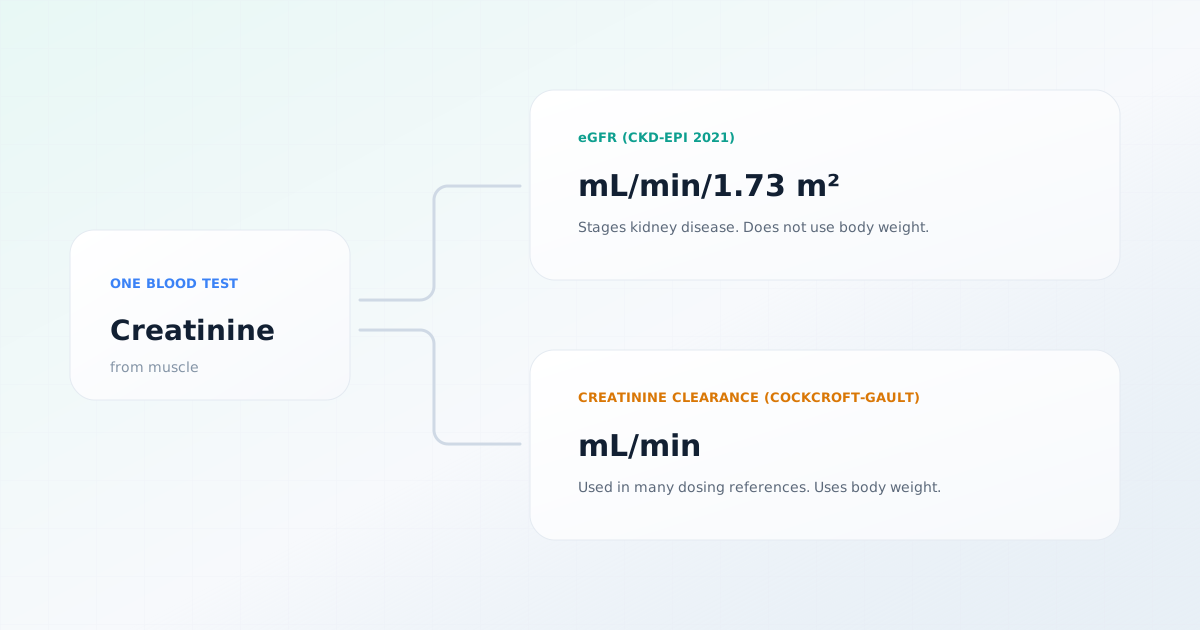
eGFR stages kidney function in mL/min/1.73 m², while Cockcroft-Gault creatinine clearance is in mL/min and is still used for many drug doses. They come from the same blood test and routinely give different answers, and they are not interchangeable.
One blood test, two different answers
People who look up their kidney function sometimes find two figures that do not match. One comes from the lab report and is labeled eGFR. Another comes from a pharmacist, a drug reference or an online calculator and is called creatinine clearance. Both are estimates of the same thing, the rate at which the kidneys filter blood, and both start from the serum creatinine level in the same blood sample. They disagree because they take different routes from that number to an answer.
Creatinine itself is a waste product from muscle that the kidneys remove, so a higher blood level suggests the kidneys are filtering less. MedlinePlus notes that creatinine comes from muscle and that reference ranges differ between men and women. Because the level also depends on muscle mass, neither equation can be treated as a precise measure, and the details of each equation decide how it handles that problem.
| Feature | eGFR (CKD-EPI 2021) | Creatinine clearance (Cockcroft-Gault) |
|---|---|---|
| Reported in | mL/min/1.73 m² | mL/min |
| Uses body weight | No; standardized to a body surface area of 1.73 m² | Yes |
| Uses age and sex | Yes | Yes (a 0.85 factor for women) |
| Published | 2021 | 1976, from 249 patients |
| Main use | Staging chronic kidney disease | Drug dosing in many references |
| Uses race | No | No |
eGFR: the number used to stage kidney disease
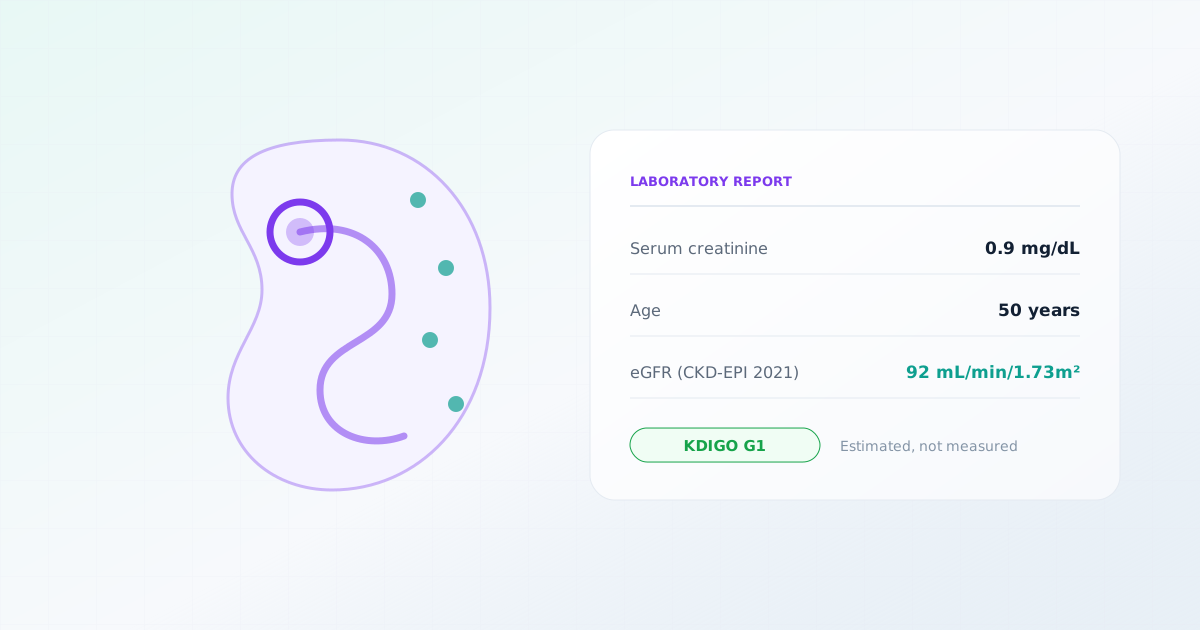
The estimated glomerular filtration rate, or eGFR, is the figure on most lab reports. It is calculated from serum creatinine, age and sex using the CKD-EPI equation, and the current version, published in 2021 in the New England Journal of Medicine, replaced an earlier equation that included a race coefficient. The National Kidney Foundation and American Society of Nephrology task force recommended adopting the race-free 2021 equation, and it is now the standard in US laboratories.
The result is expressed per 1.73 square meters of body surface area, a standard reference body size, so that it can be compared between people of different sizes. This standardization is deliberate: eGFR is designed to describe the function of the kidneys relative to a typical adult body, which suits staging a chronic condition across a population.
KDIGO, the international guideline body, defines chronic kidney disease by an eGFR below 60 mL/min/1.73 m², or by markers of kidney damage such as albumin in the urine, persisting for more than three months. It groups eGFR into categories G1 to G5, with G1 at 90 and above and G5 below 15, and pairs them with albuminuria categories. A single result is not a diagnosis, and a lab report that flags a low eGFR is a prompt for repeat testing and a urine albumin test.
Try the calculatorEstimate eGFR with the CKD-EPI 2021 equationCockcroft-Gault: why a 1976 equation is still in use
The Cockcroft-Gault equation estimates creatinine clearance as 140 minus age, multiplied by body weight in kilograms, divided by 72 times serum creatinine in mg/dL, with the result multiplied by 0.85 for women. It was published in 1976 from a study of 249 patients, and the National Kidney Foundation publishes the equation as a reference for clinicians.
It has persisted for a practical reason. Pharmaceutical companies tested many drugs in people whose kidney function was described with Cockcroft-Gault, and the dosing recommendations on the label, such as reducing a dose when clearance falls below a certain value, were calibrated to that equation. Swapping in a different equation means that a threshold was set against a different number, so many references continue to specify Cockcroft-Gault.
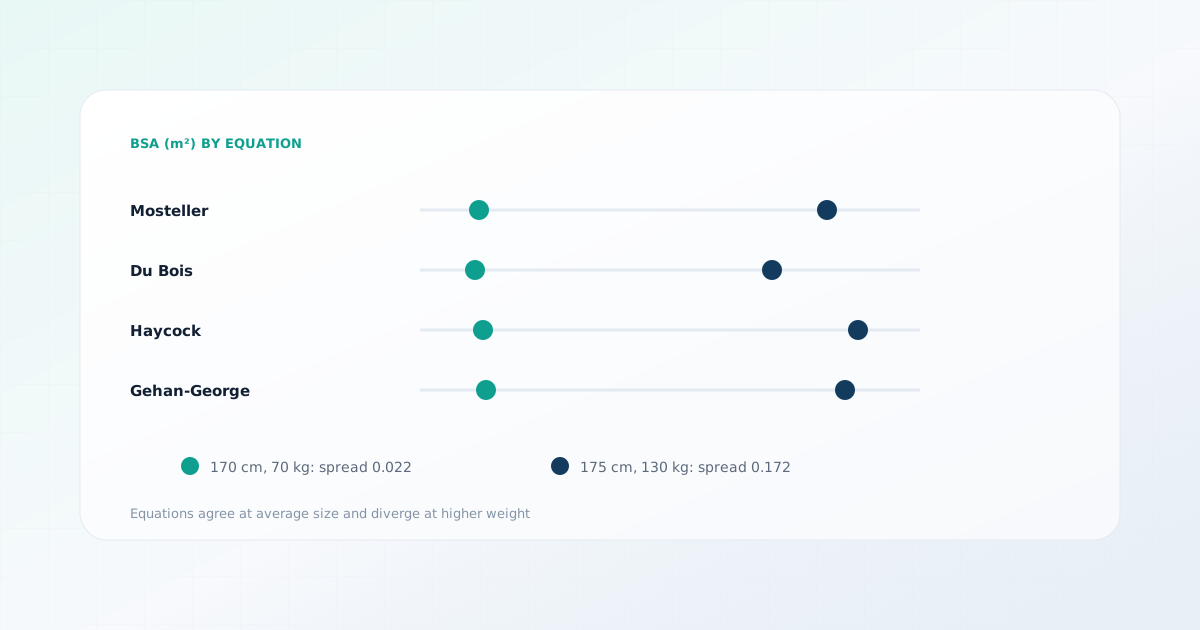
It also has known weaknesses. The equation predates the standardization of creatinine assays, and modern laboratory methods tend to give slightly lower creatinine values than the ones used in the original study, which tends to make the equation read higher than the true clearance. And the use of body weight raises an unsettled question: whether to use actual, ideal or adjusted body weight depends on the body size, the reference being followed, and the clinician’s judgment.
Try the calculatorSee Cockcroft-Gault with actual and ideal body weight side by sideA worked example of how far apart they can be
Consider a 60-year-old man with a serum creatinine of 1.0 mg/dL. Using the CKD-EPI 2021 equation, his eGFR is about 86 mL/min/1.73 m², regardless of his weight, because the equation does not include it. Using Cockcroft-Gault, his creatinine clearance depends on how much he weighs.
| Body weight | Cockcroft-Gault (mL/min) | eGFR (mL/min/1.73 m²) |
|---|---|---|
| 80 kg (176 lb) | About 89 | About 86 |
| 100 kg (220 lb) | About 111 | About 86 |
At 80 kilograms the two figures happen to be close. At 100 kilograms, the clearance estimate is more than 20 mL/min higher than the eGFR for the same blood test, which could place the same person in a different dosing band for a drug. That is why references that use Cockcroft-Gault specify which weight to use, and why a clinician or pharmacist, rather than a reader, should decide that for a specific medicine.
What both equations share: the limits of creatinine
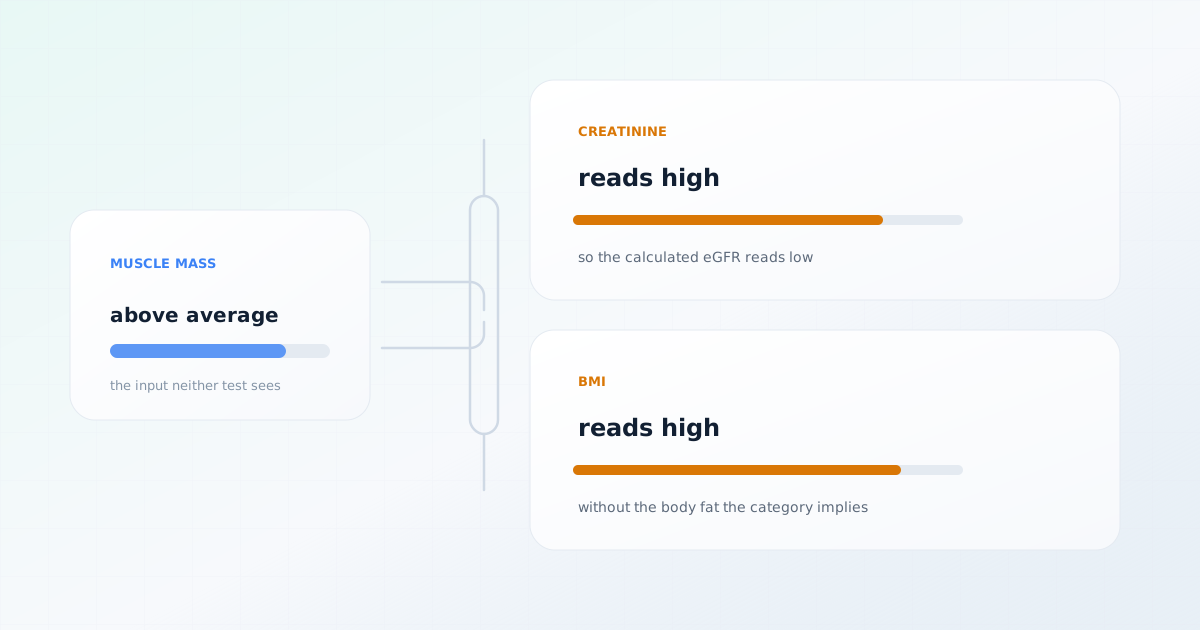
Because both start from creatinine, both inherit its limits. A person with a lot of muscle has a higher creatinine at the same kidney function and so can appear to have reduced filtration, while a person with little muscle, such as someone who is frail, malnourished or has lost a limb, has a lower creatinine and can appear to have better filtration than they really do.
- Both assume a steady state. They are not valid during acute kidney injury, when creatinine is changing faster than the equation can follow.
- Neither is validated in pregnancy, and neither is designed for children, who use different equations.
- A large cooked-meat meal or creatine supplements can raise creatinine temporarily without any change in the kidneys.
- Some medicines raise creatinine by blocking its secretion in the kidney without affecting filtration itself.
Where creatinine is unreliable, guidelines suggest confirming with a second marker, cystatin C, which is not produced by muscle in the same way. The 2021 research that produced the CKD-EPI creatinine equation also produced a combined creatinine and cystatin C equation for this purpose. Our guide to muscle mass and kidney numbers discusses the issue in more detail.
A single number is not a diagnosis
How to use the two numbers sensibly
The practical rule is to treat each number as belonging to the purpose it was built for. Use eGFR to understand where your kidney function sits on the staging scale and how it changes over time. Use creatinine clearance only where a drug reference or a clinician specifies it, and let them decide which body weight applies.
If you take a medicine whose label mentions kidney function, ask the prescriber or pharmacist which measure they used for the dose. And if you see two different figures for your own kidneys, the difference is expected, and it does not mean that one of them is wrong.
Frequently asked questions
Sources
This page is based on the following sources. Each was reviewed on the access date shown.
- Cockcroft-Gault Equation for Estimating Creatinine Clearance(opens in a new tab)
National Kidney Foundation
Professional societyAccessed September 27, 2026
- New Creatinine- and Cystatin C-Based Equations to Estimate GFR without Race(opens in a new tab)
New England Journal of Medicine
Peer-reviewed articlePublished November 4, 2021Accessed September 27, 2026DOI 10.1056/NEJMoa2102953
- A Unifying Approach for GFR Estimation: Recommendations of the NKF-ASN Task Force on Reassessing the Inclusion of Race in Diagnosing Kidney Disease(opens in a new tab)
American Journal of Kidney Diseases
Clinical guidelinePublished February 1, 2022Accessed September 27, 2026
- KDIGO 2024 Clinical Practice Guideline for the Evaluation and Management of Chronic Kidney Disease(opens in a new tab)
Kidney Disease: Improving Global Outcomes (KDIGO)
Clinical guidelinePublished March 1, 2024Accessed September 27, 2026
- Creatinine Test(opens in a new tab)
MedlinePlus (US National Library of Medicine)
Government health agencyAccessed October 1, 2026