Health library
35 in-depth guides, each written to answer one question directly and then explain the science behind the answer. Every guide names its sources, describes the formula where one exists, and says plainly what the measurement cannot tell you.
Browse all guides
Showing 35 of 35 guides
 Fitness
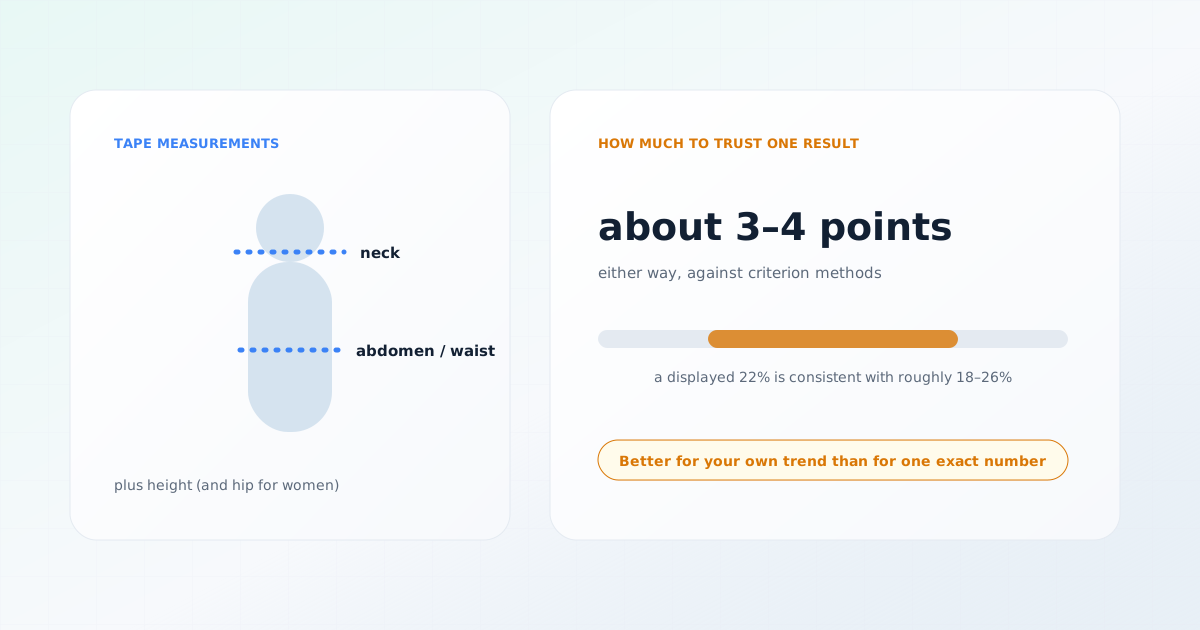
Body Fat Percentage and the Navy Tape Method: How Accurate Is It?
The tape-measure method used by the US military estimates body fat from neck, waist and height, and hip for women. It is typically accurate to within three to four percentage po…
8 min read
 Heart Health
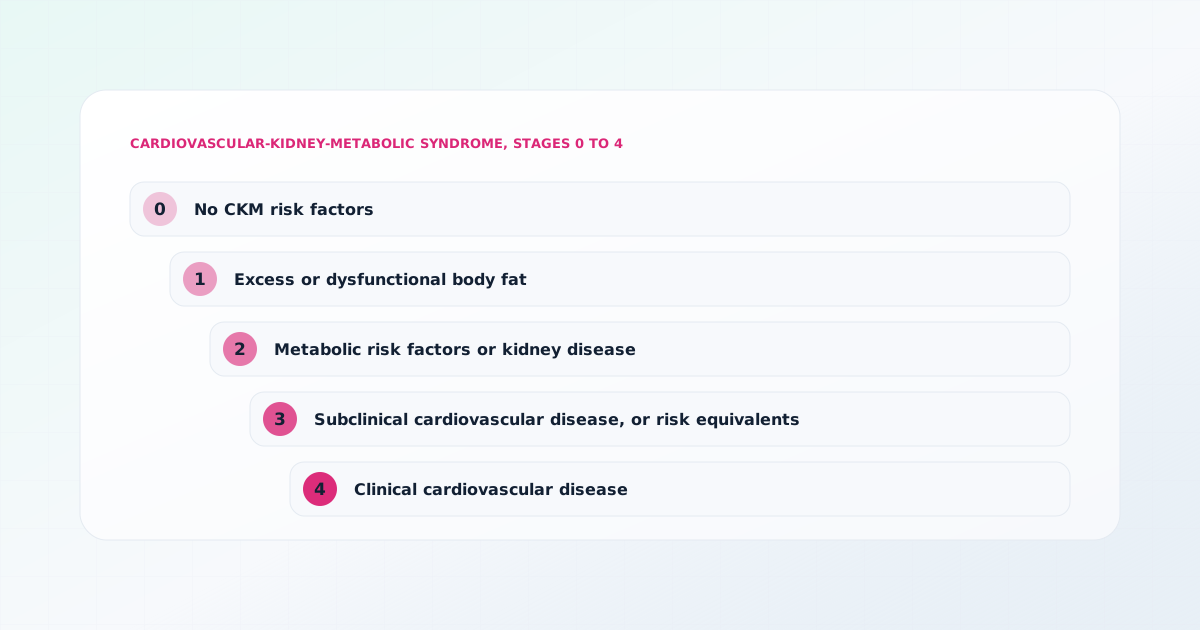
Cardiovascular-Kidney-Metabolic Syndrome: Why Doctors Now Link the Heart, Kidneys and Metabolism
The American Heart Association now describes weight, blood sugar, blood pressure, cholesterol, kidney function and heart disease as one connected syndrome with five stages. Here…
8 min read
 Kidney Health
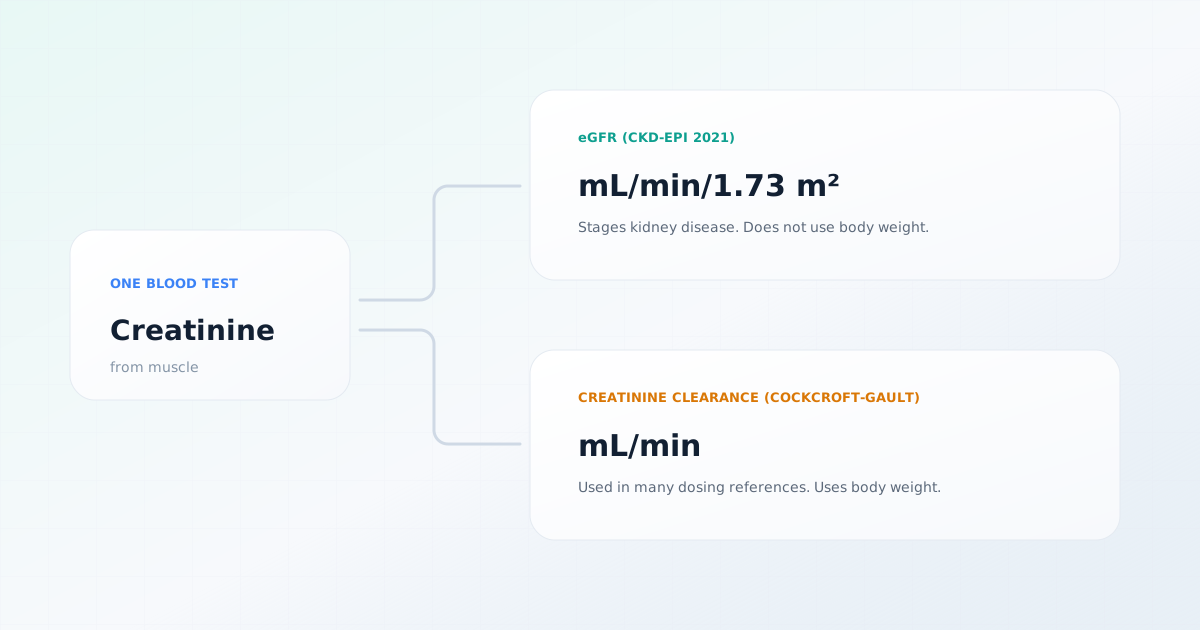
Creatinine Clearance vs eGFR: Why Two Kidney Numbers Disagree
eGFR stages kidney function in mL/min/1.73 m², while Cockcroft-Gault creatinine clearance is in mL/min and is still used for many drug doses. They come from the same blood test…
7 min read
 Fitness
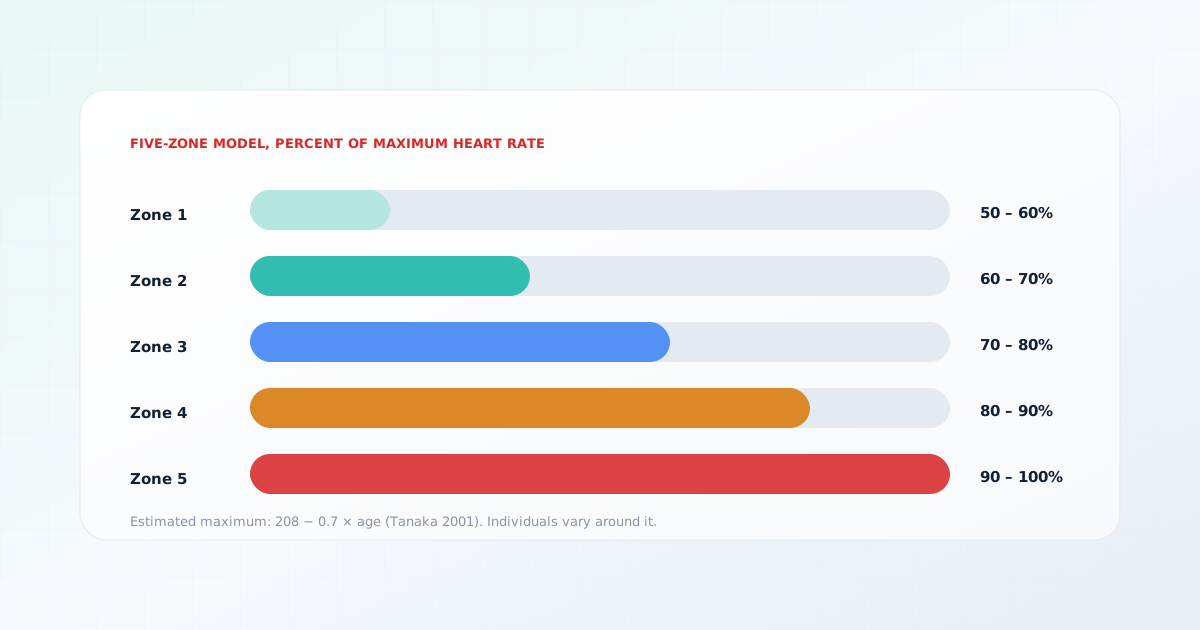
Heart Rate Zones and Maximum Heart Rate: How the Estimates Work
Maximum heart rate is usually estimated from age, using formulas such as 208 minus 0.7 times age, and training zones are percentages of that estimate. The estimate can be off by…
9 min read
 Nutrition
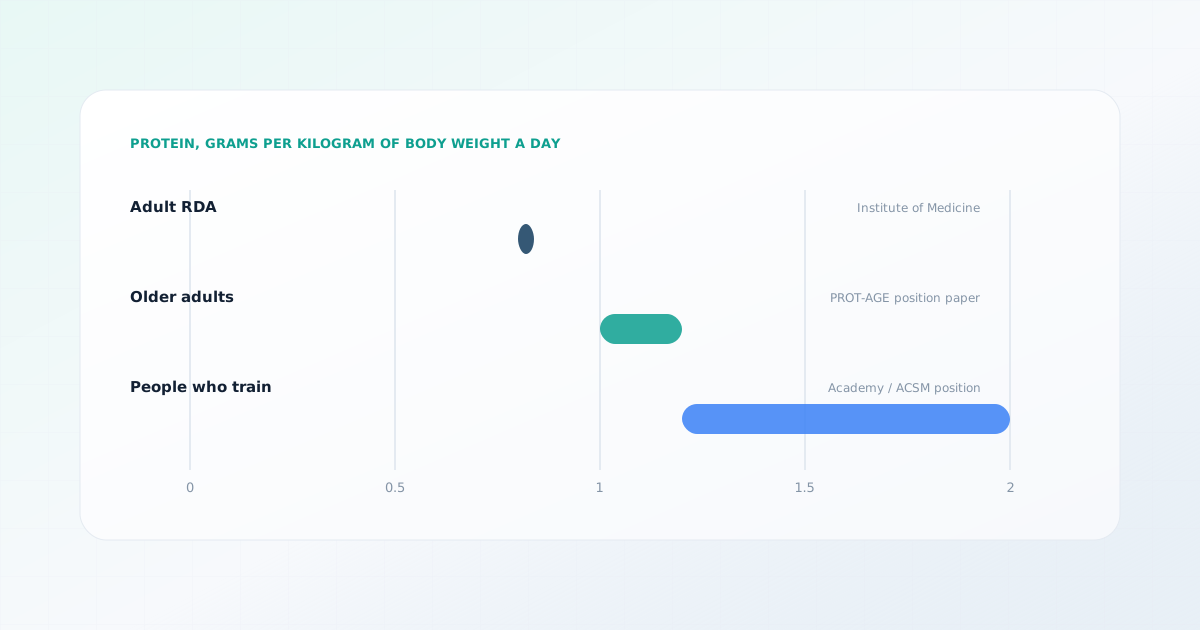
How Much Protein Do Adults Need? Three Different Answers
The US Recommended Dietary Allowance is 0.8 grams per kilogram a day, but the figure is a minimum for avoiding deficiency, and position statements for older adults and people wh…
8 min read
 Nutrition
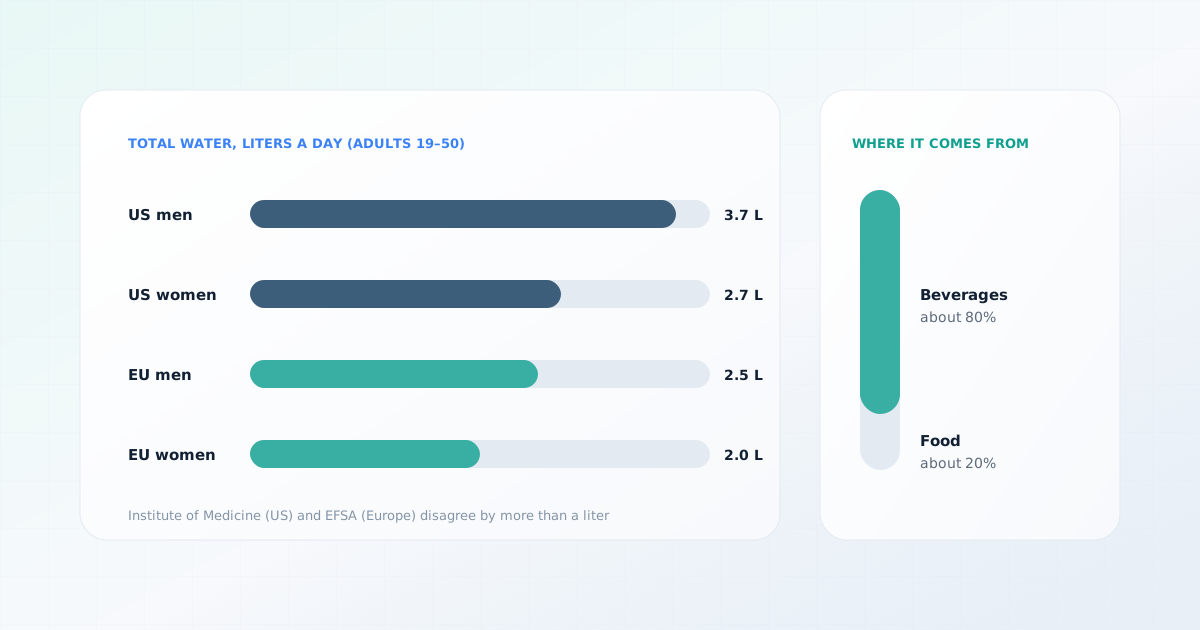
How Much Water Do You Need Each Day? What the Numbers Mean
US and European reference values for daily water intake differ by roughly a liter, they count water from food and every beverage, and thirst is a workable guide for most healthy…
8 min read
 Blood Tests
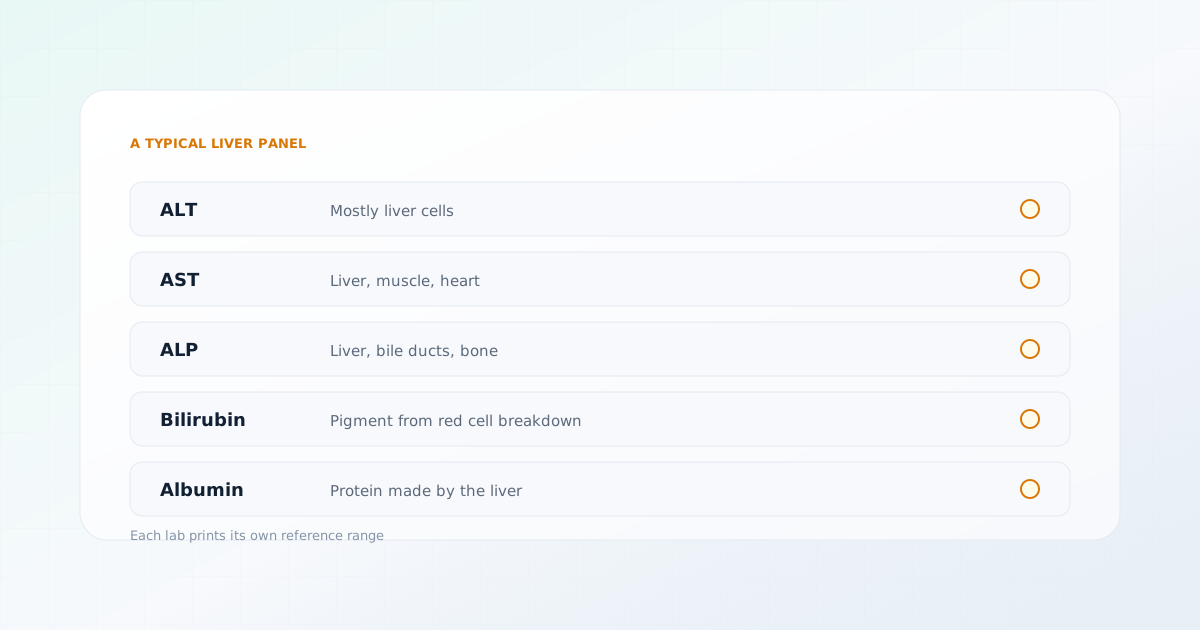
Liver Function Tests Explained: What ALT and AST Results Mean
ALT and AST are enzymes that leak into the blood when liver cells are irritated or damaged. A raised result is a prompt to look for a cause, not a diagnosis, and a result inside…
8 min read
 Nutrition
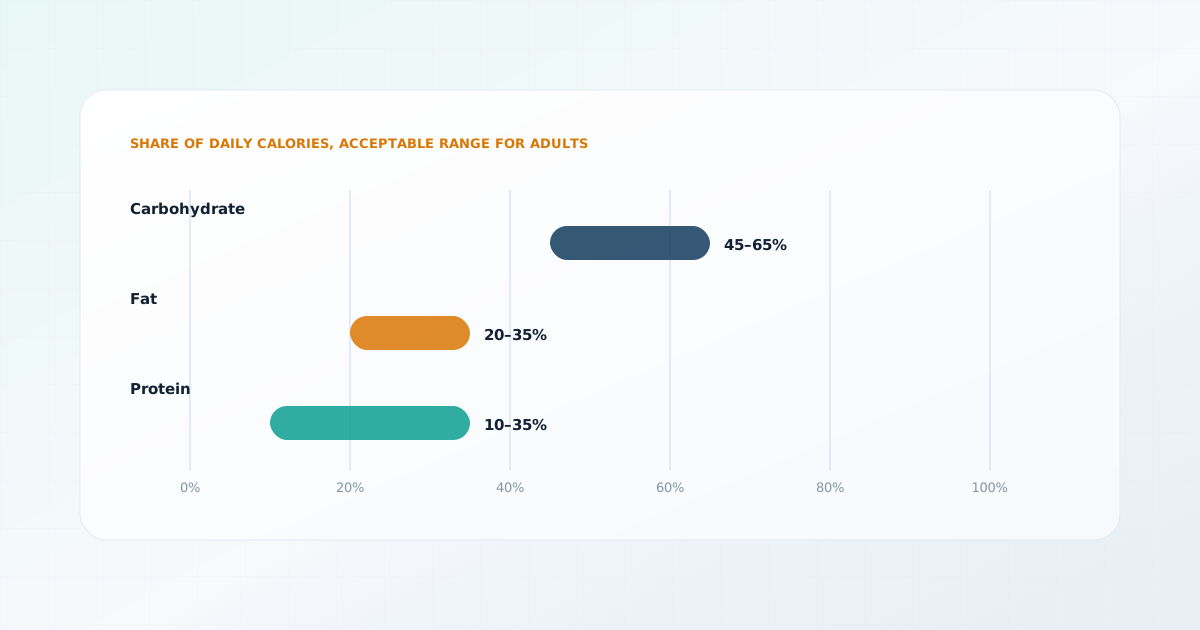
Carbs, Protein and Fat: What the Official Macronutrient Ranges Mean
US reference ranges allow carbohydrate to supply 45 to 65 percent of calories, fat 20 to 35 percent and protein 10 to 35 percent. The ranges are deliberately wide, and a split i…
8 min read
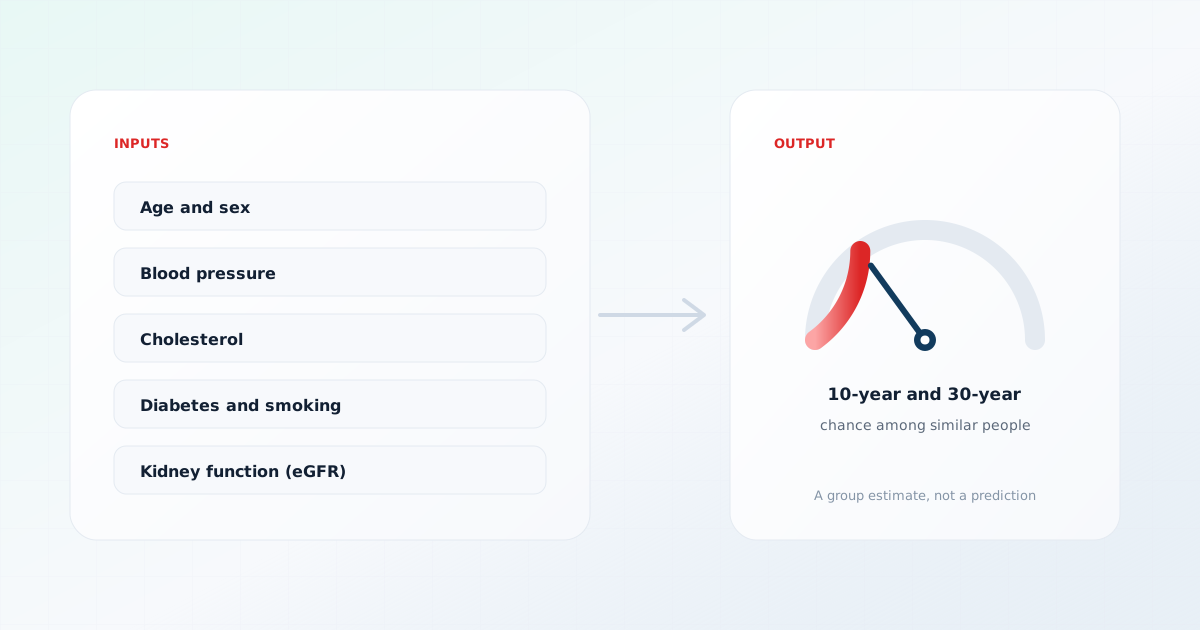 Heart Health
How Heart Disease Risk Is Estimated: The PREVENT Equations Explained
The American Heart Association’s PREVENT equations estimate a person’s 10- and 30-year risk of cardiovascular disease from blood pressure, cholesterol, diabetes, smoking, age an…
8 min read
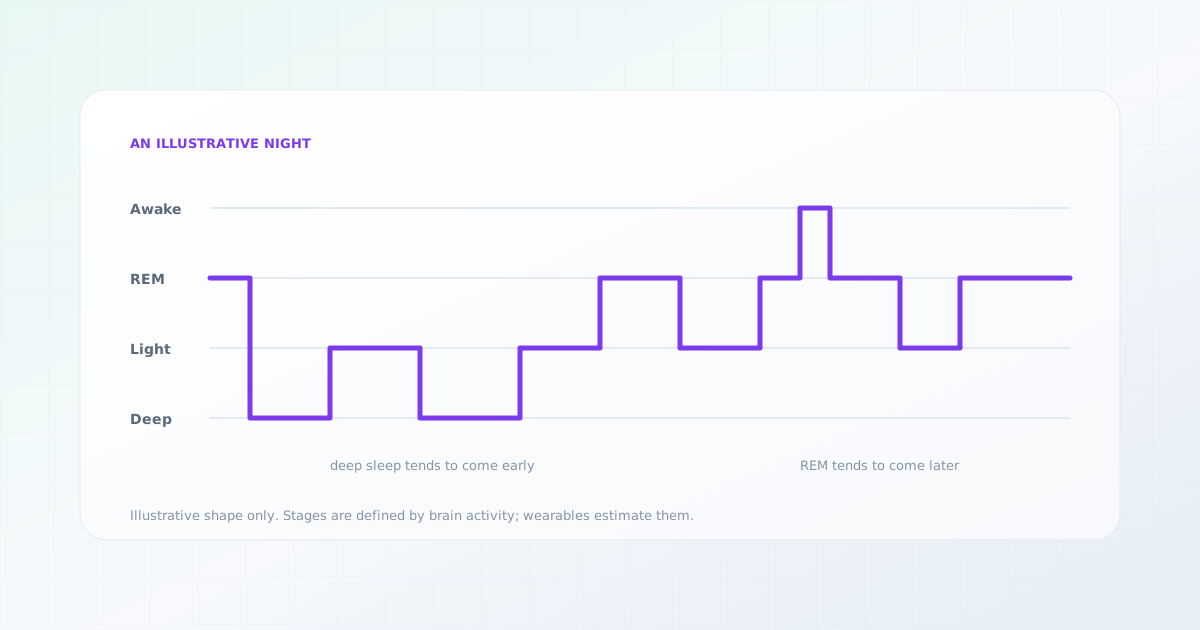 Sleep
Sleep Stages Explained: Light, Deep and REM Sleep
Sleep cycles through NREM stages and REM sleep, each defined by brain and muscle activity. Understanding what the stages are, and why a wrist device can only estimate them, help…
7 min read
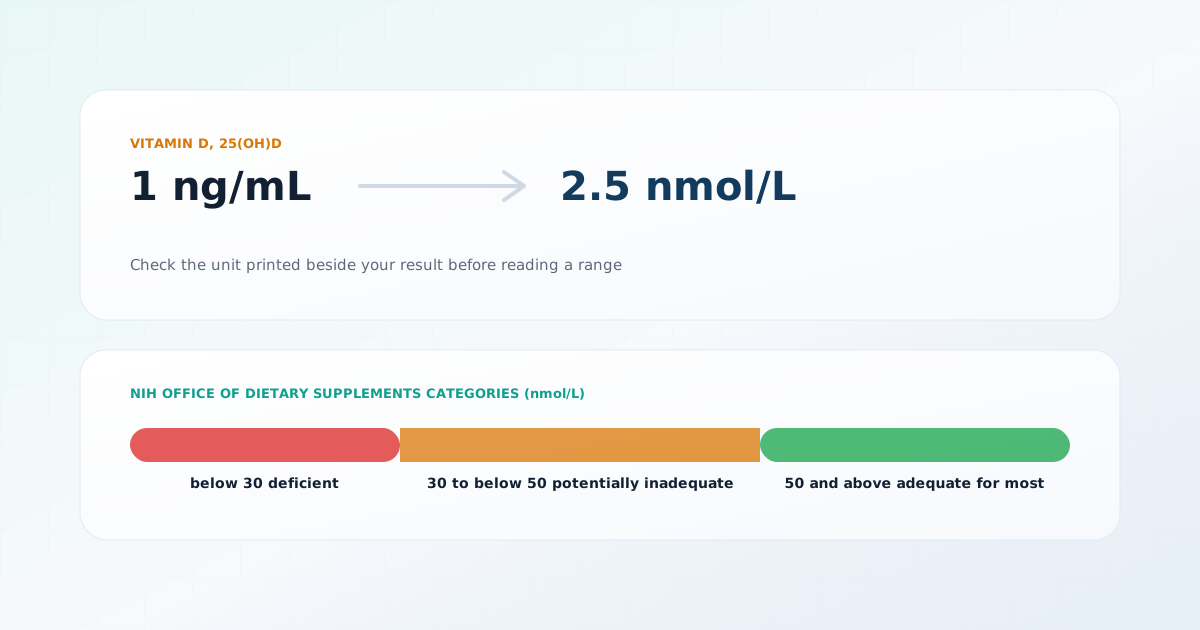 Blood Tests
Vitamin D and Vitamin B12 Blood Tests: Units, Ranges and Limits
Vitamin D is measured as 25-hydroxyvitamin D and reported in ng/mL or nmol/L, while B12 is judged from a blood level that sometimes needs a second test to interpret. Here is how…
9 min read
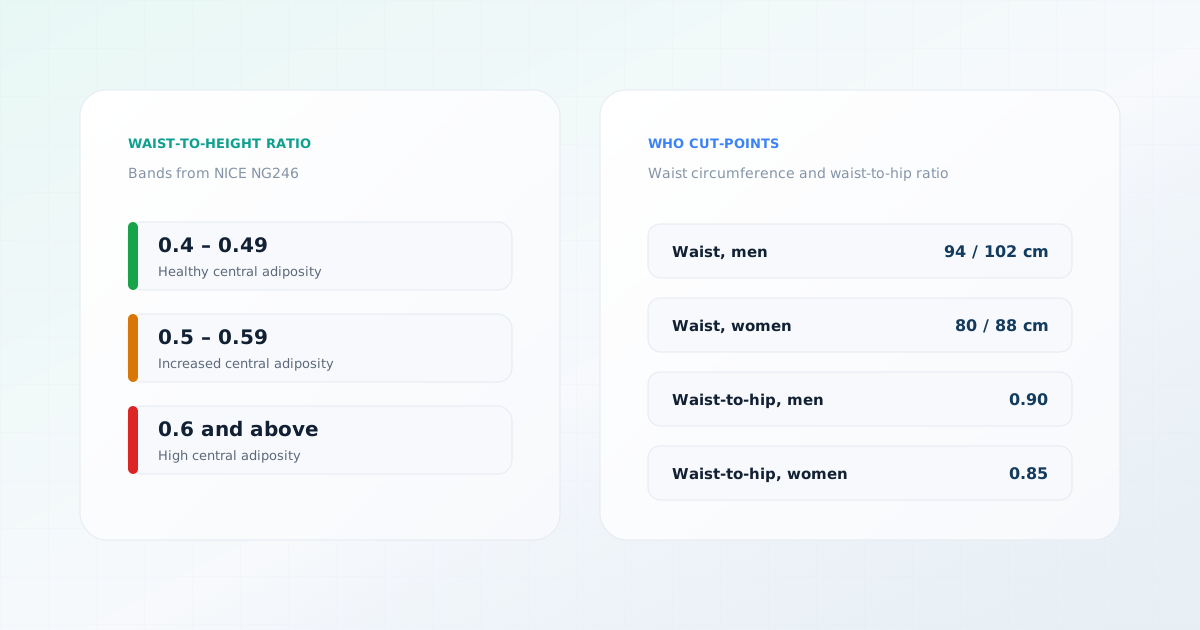 General Wellness
Waist Circumference, Waist-to-Height and Waist-to-Hip Ratio Explained
Where weight is carried says something that BMI cannot. Waist circumference, waist-to-height ratio and waist-to-hip ratio each measure central fat in a different way, with cut-p…
8 min read
 Diabetes & Metabolic Health
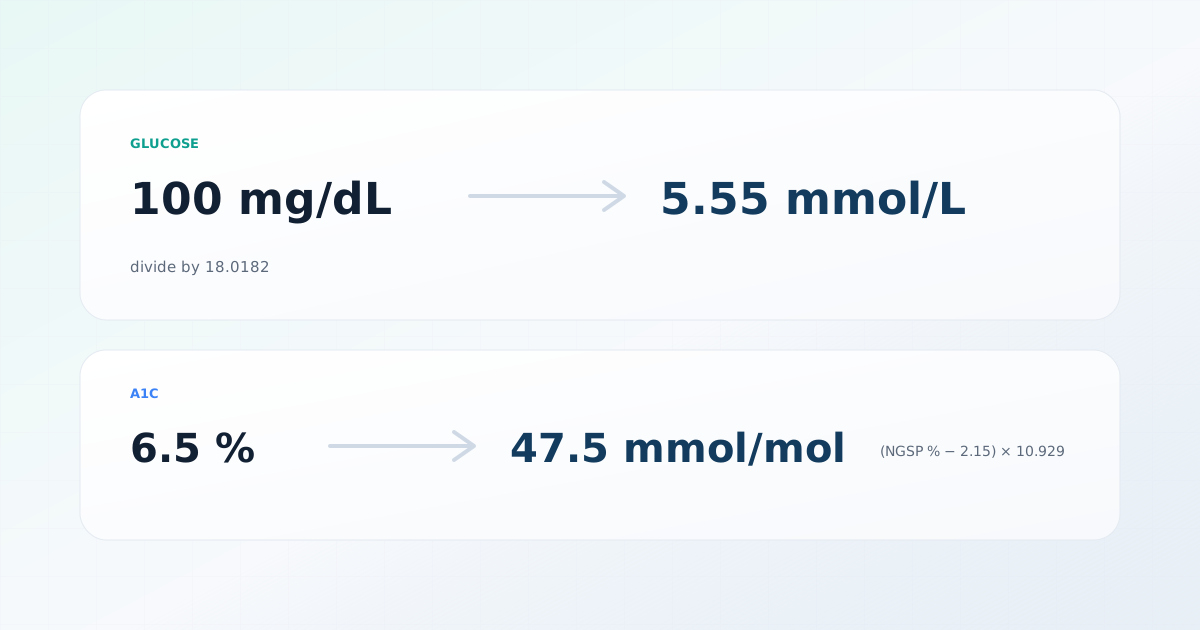
Blood Glucose Units Explained: mg/dL, mmol/L and A1C in mmol/mol
The same glucose result can be written in mg/dL or mmol/L, and A1C in percent or mmol/mol. The conversions are exact arithmetic, but they change how a number is written, not wha…
7 min read
 Heart Health
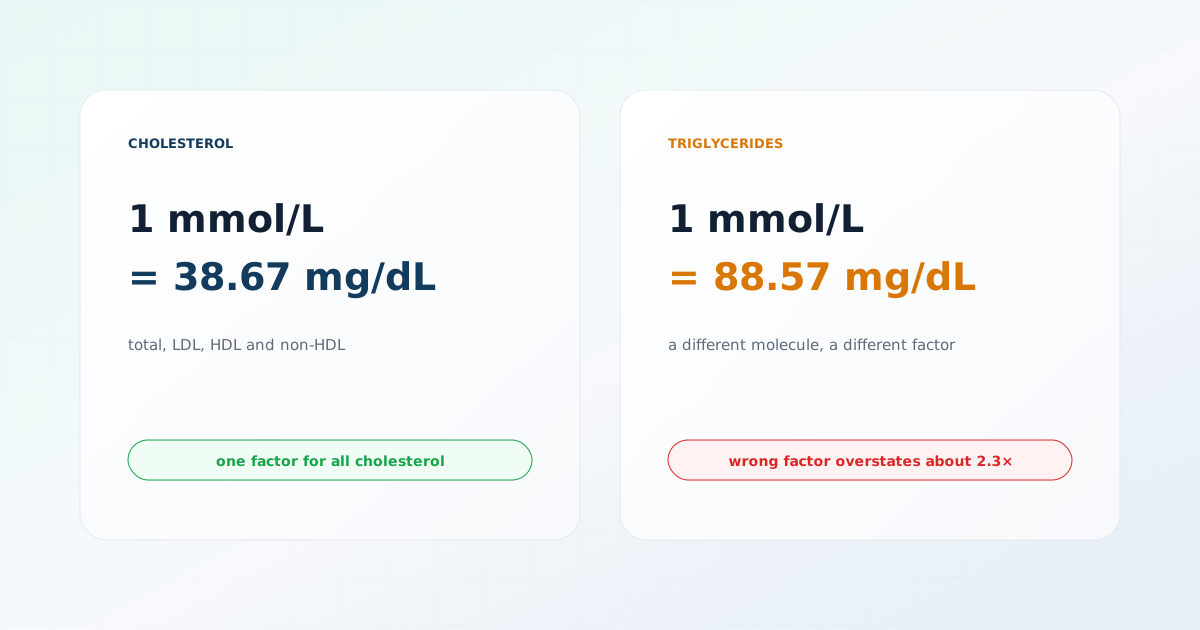
Cholesterol Units Explained: mg/dL vs mmol/L and Why Triglycerides Differ
US labs report cholesterol in mg/dL and most other countries use mmol/L. Cholesterol and triglycerides have different conversion factors, 38.67 and 88.57, and using the wrong on…
7 min read
 Heart Health
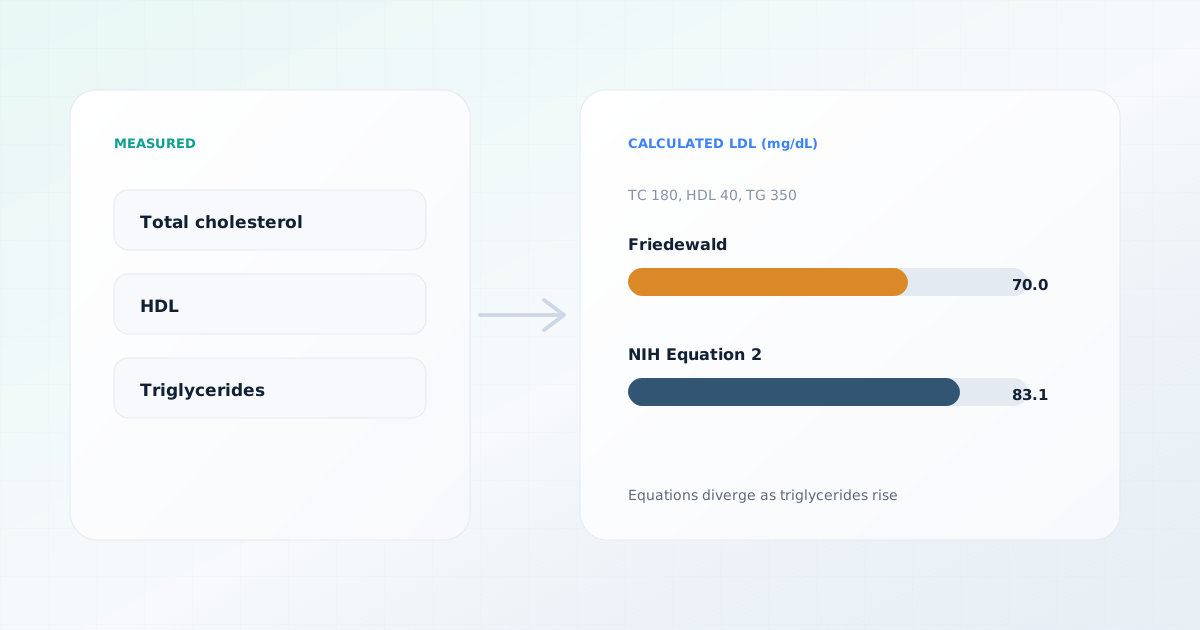
How LDL Cholesterol Is Calculated: Friedewald, NIH and Martin-Hopkins
Most labs calculate LDL cholesterol rather than measure it. The Friedewald equation from 1972 and the newer NIH Equation 2 can return different numbers for the same blood sample…
7 min read
 General Wellness
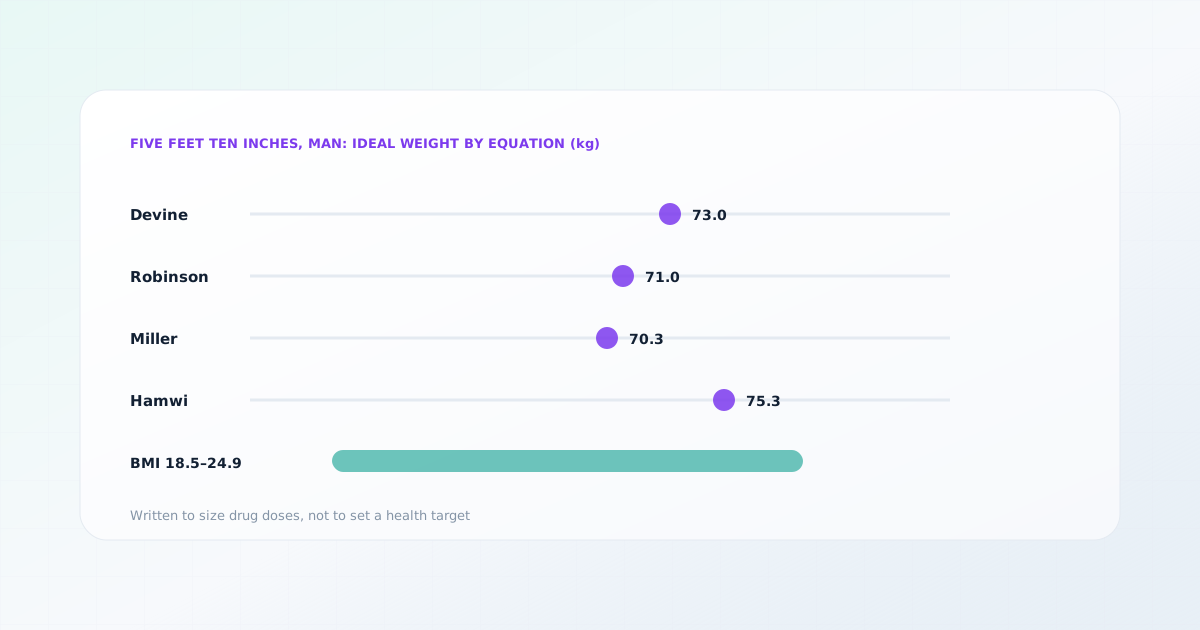
Ideal Body Weight Formulas: Where Devine, Robinson, Miller and Hamwi Came From
The four ideal body weight equations in common use were written to size drug doses, not to say what weight is healthiest. They disagree by several kilograms at the same height,…
7 min read
 Heart Health
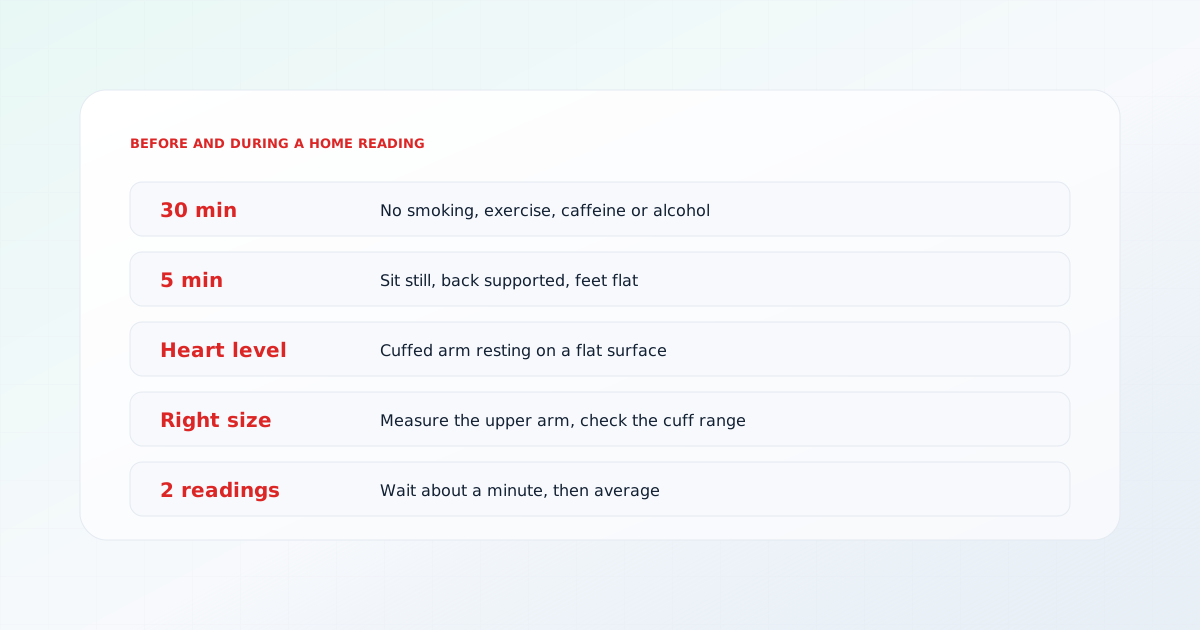
How to Measure Blood Pressure at Home Accurately: A Step-by-Step Guide
Posture, rest, cuff size and timing change a home blood pressure reading by enough to alter how it is classified. Here is the measurement routine the American Heart Association…
7 min read
 Kidney Health
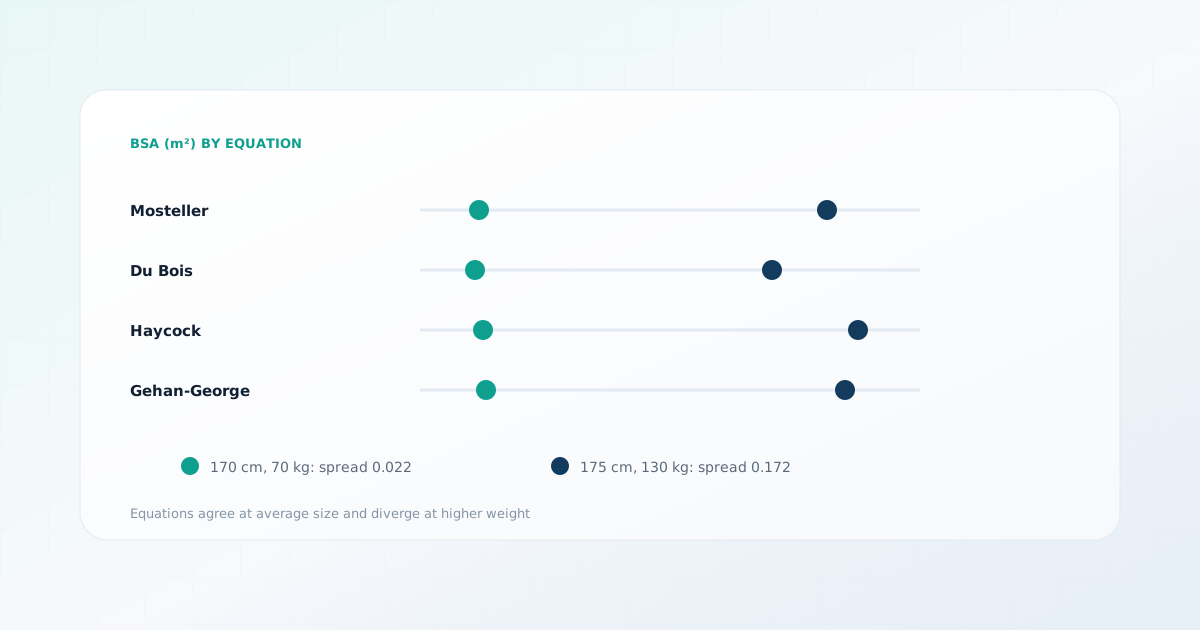
Body Surface Area Formulas: Mosteller, Du Bois, Haycock and Why They Differ
Body surface area scales drug doses and kidney measurements such as eGFR. Four published equations estimate it, they agree closely at average size and diverge at higher body wei…
7 min read
 General Wellness
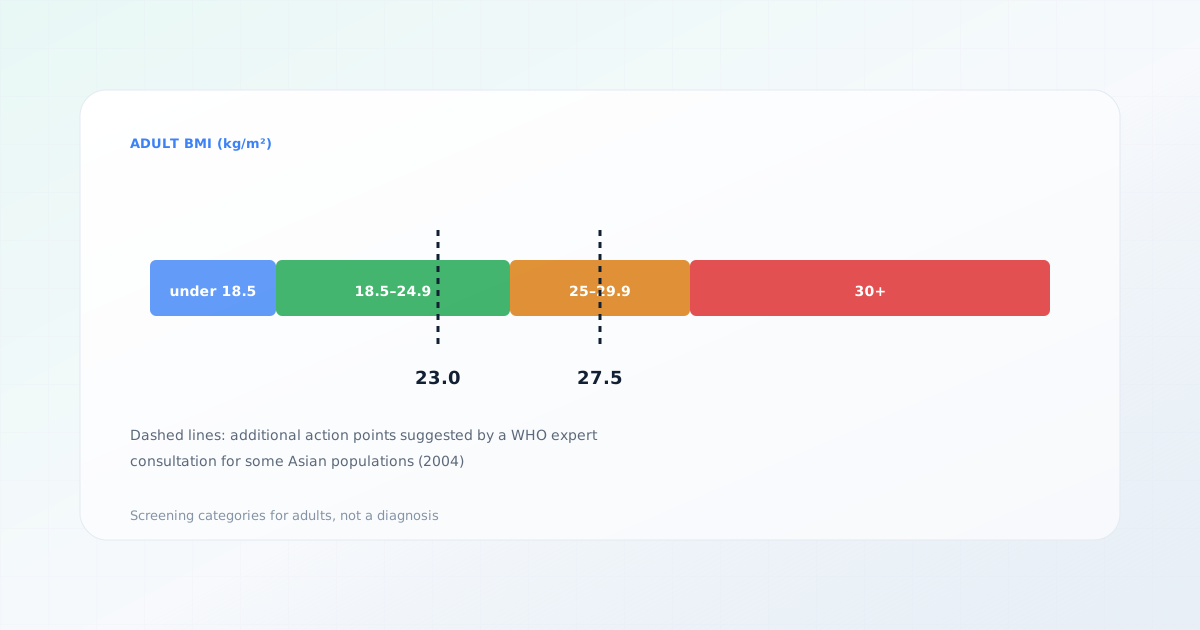
BMI Categories Around the World: WHO, CDC and the Asian Action Points
The adult BMI categories used by the WHO and the CDC are the same, but the WHO has also suggested additional action points at 23.0 and 27.5 for some Asian populations. Here is h…
7 min read
 General Wellness
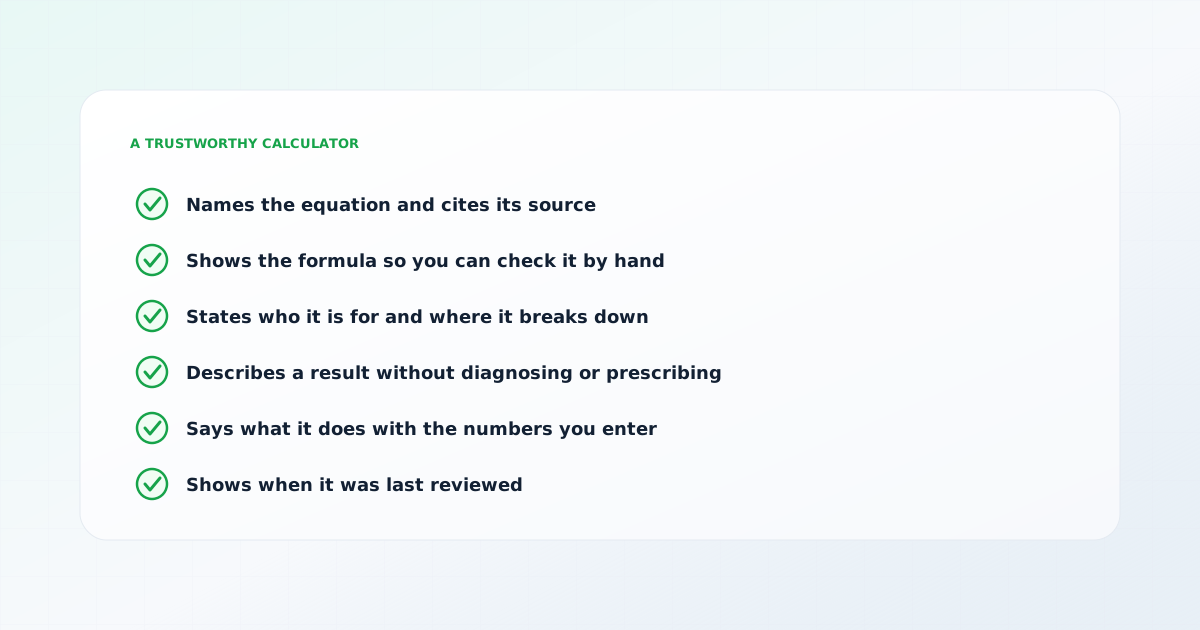
How to Judge an Online Health Calculator: A Checklist for Readers and Clinics
A health calculator is only as trustworthy as its equation, its limits and what it does with your data. This checklist shows how to tell a transparent tool from a risky one, wit…
8 min read
 Sleep
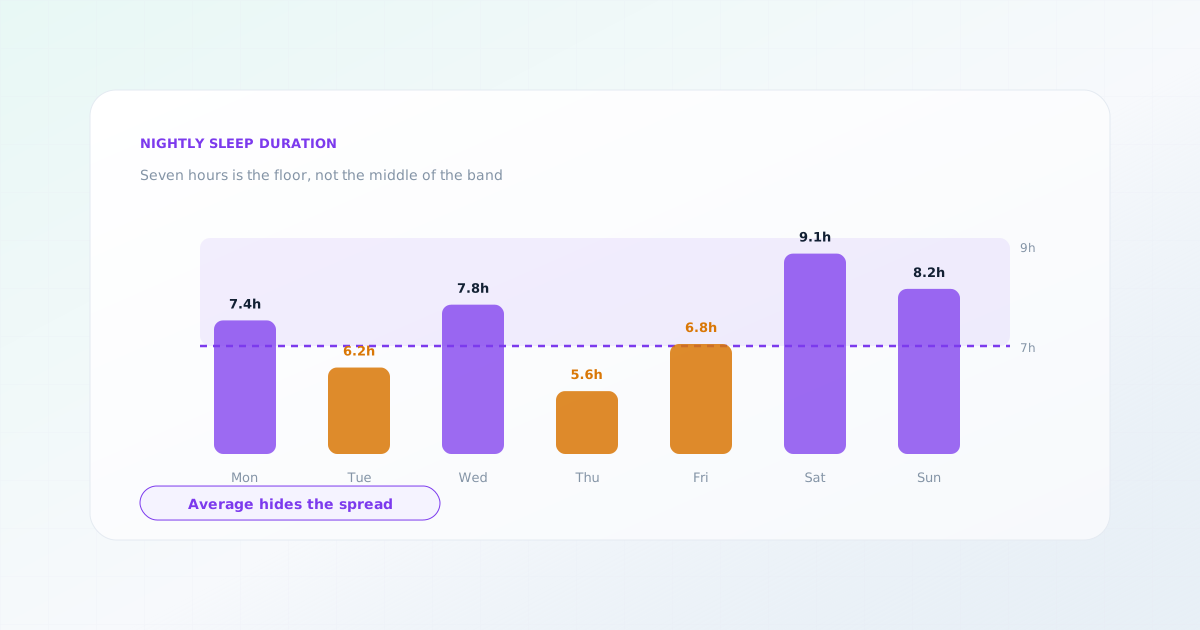
How Much Sleep Do Adults Actually Need?
Seven or more hours a night is the figure US sleep and public health bodies converge on for adults. It is a floor rather than a target, the evidence behind it is associative, an…
8 min read
 Sleep
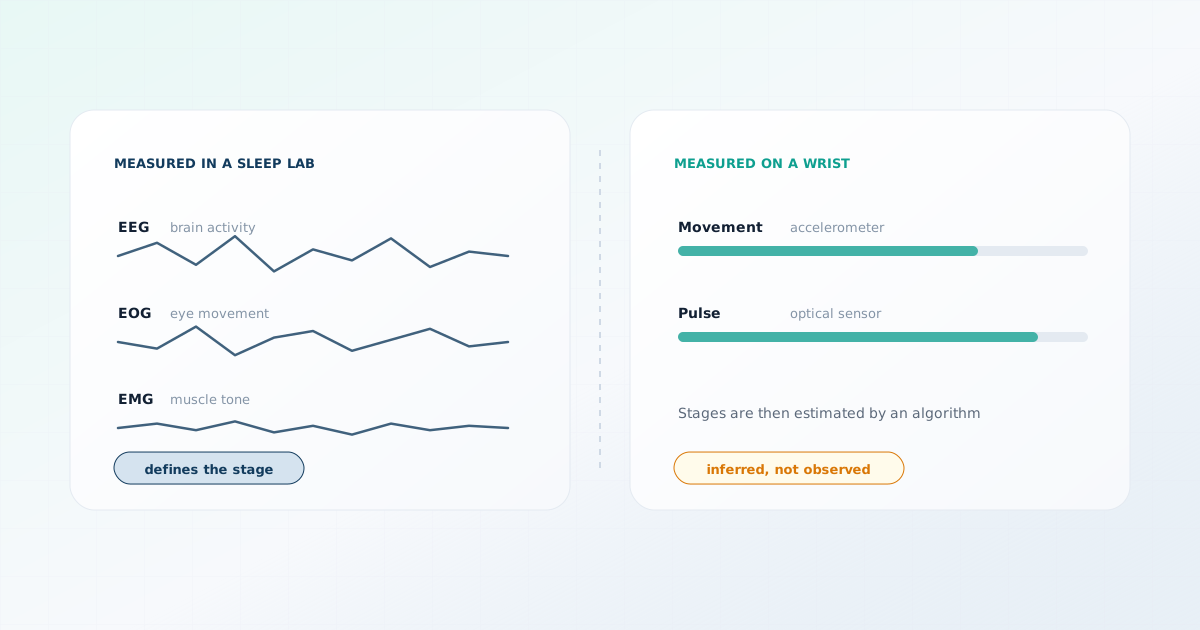
What Sleep Trackers Actually Measure
A wrist tracker measures movement and pulse, then infers sleep from them. Total sleep time comes out reasonably well; the stage percentages are estimates from an algorithm that…
8 min read
 Women's Health
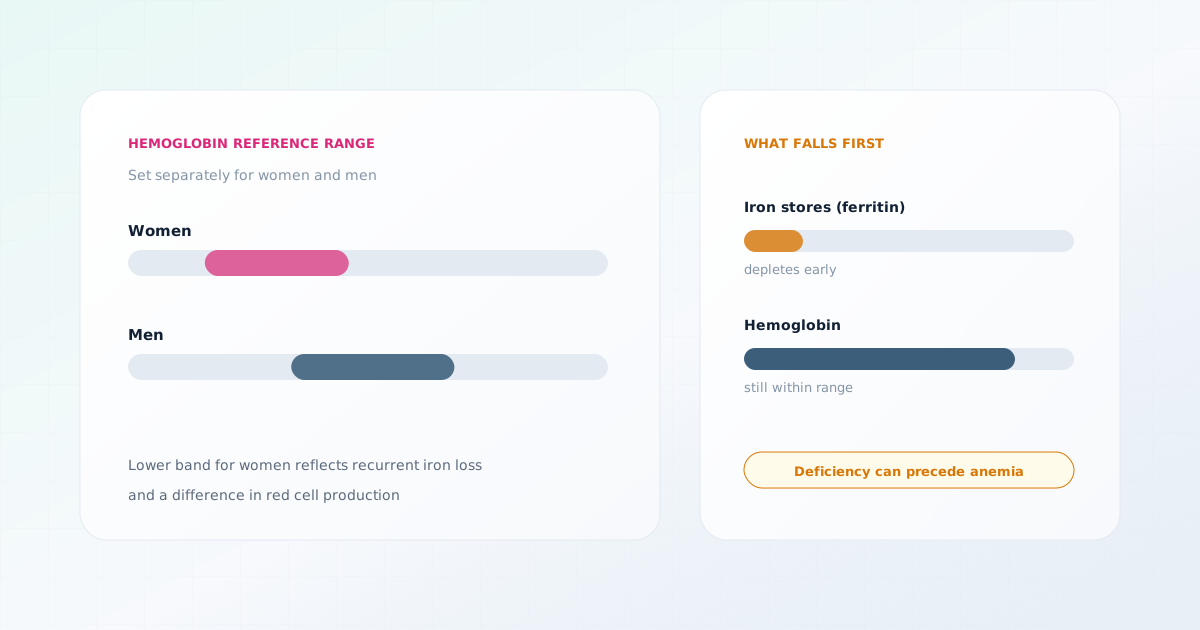
Iron, Hemoglobin and Ferritin: Why the Ranges Differ for Women
Hemoglobin reference ranges are lower for women and ferritin ranges differ too, largely because menstrual blood loss makes iron deficiency far more common before menopause. Ferr…
8 min read
 Women's Health
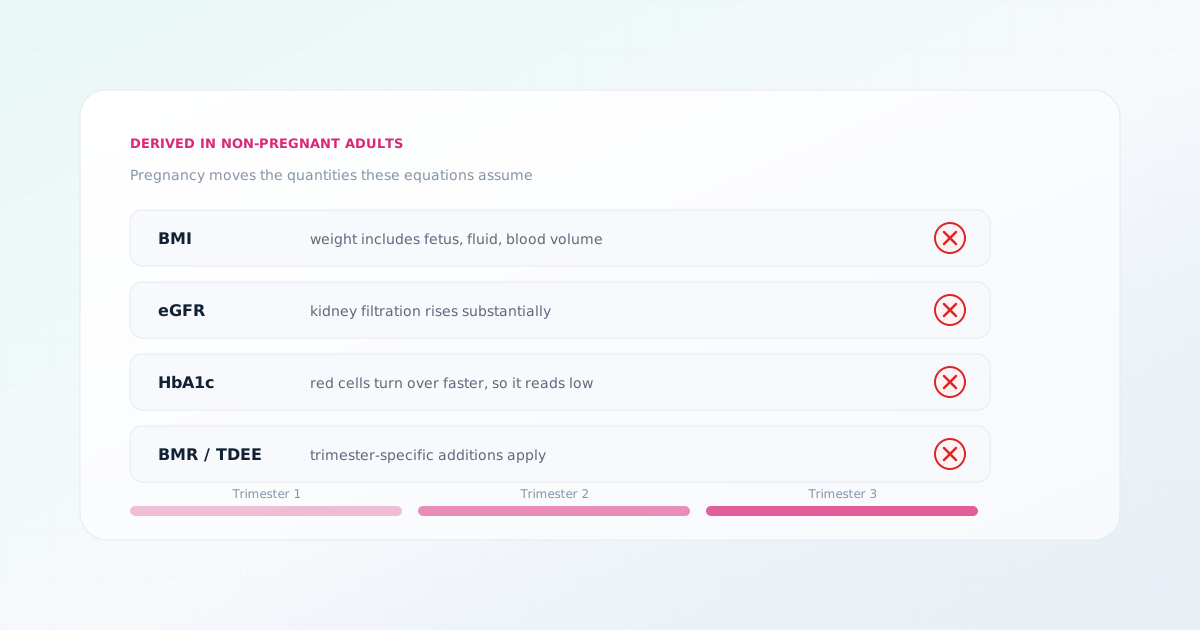
Which Health Calculators Do Not Apply During Pregnancy
Pregnancy changes blood volume, kidney filtration, red cell turnover and energy requirements, and most everyday health equations were derived in people who were not pregnant. He…
8 min read
 Men's Health
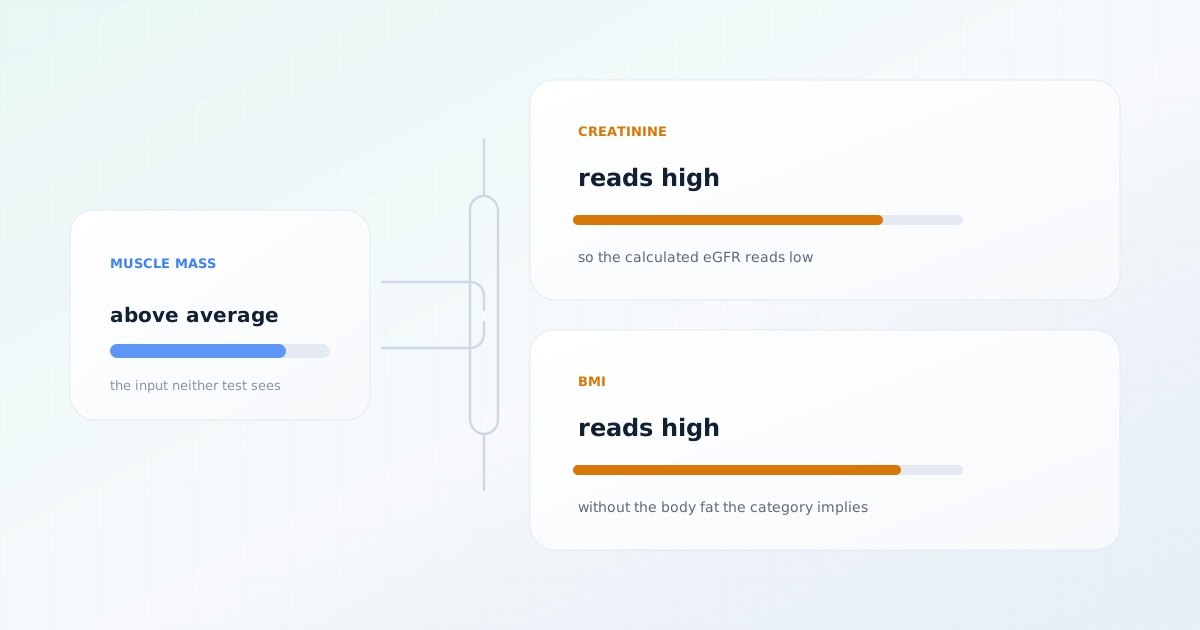
How Muscle Mass Distorts Creatinine, eGFR and BMI
Creatinine comes from muscle, so more muscle means a higher blood creatinine at the same kidney function — which is why eGFR equations carry a sex term. The same muscle shifts B…
8 min read
 Diabetes & Metabolic Health
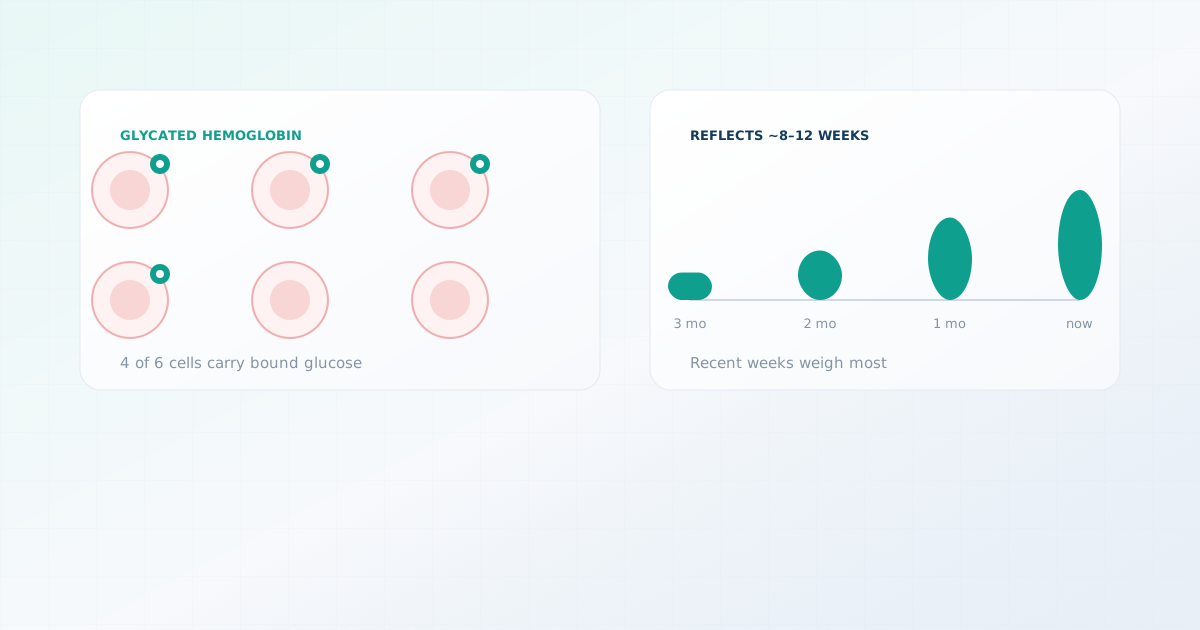
What Does HbA1c Mean?
HbA1c measures the percentage of your hemoglobin that has glucose attached to it, which reflects your average blood glucose over roughly the previous two to three months. It is…
9 min read
 Diabetes & Metabolic Health
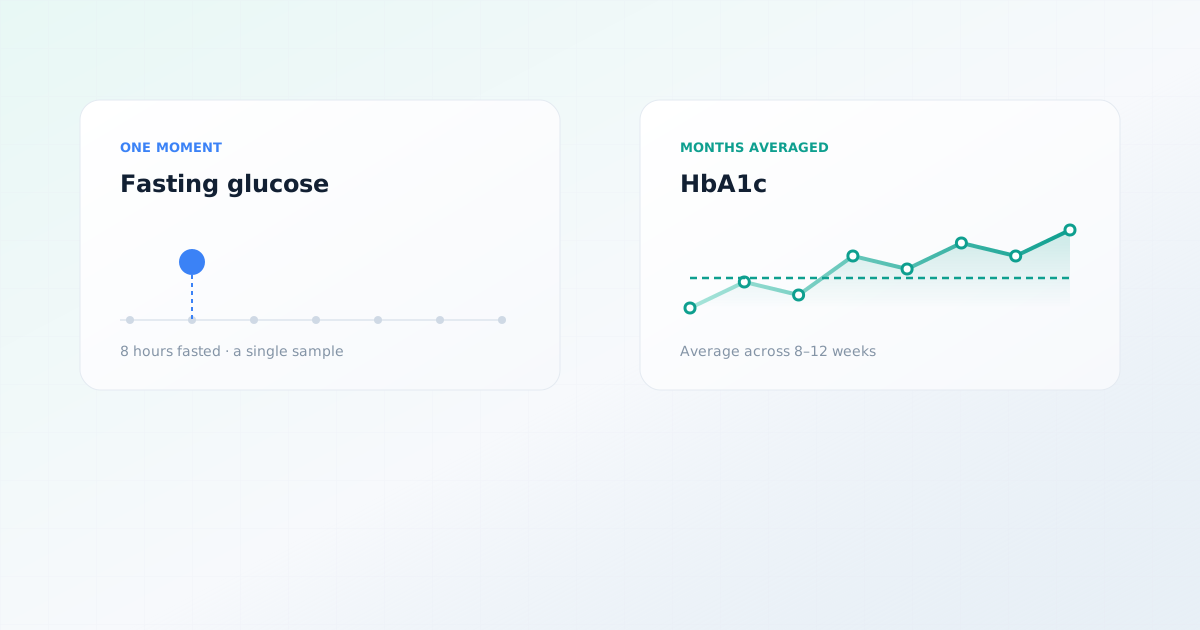
A1C vs Fasting Blood Sugar: What’s the Difference?
A fasting blood sugar test measures glucose at one moment after not eating; A1C reflects average glucose over two to three months. They answer different questions, they can disa…
7 min read
 Heart Health
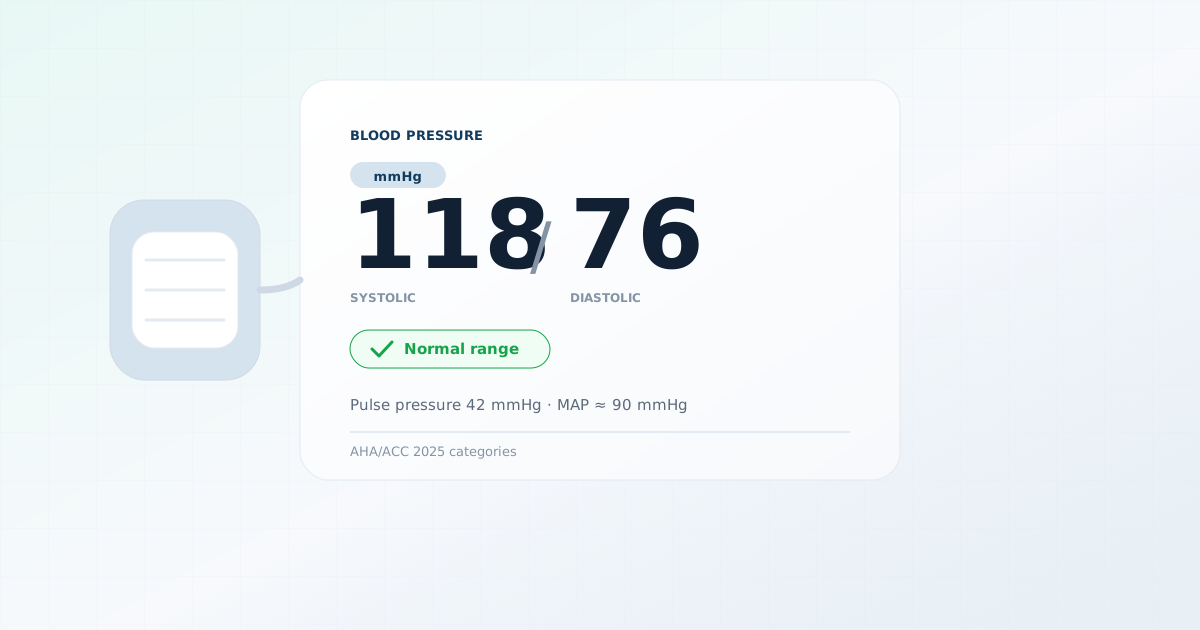
Understanding Blood Pressure Numbers
The top number is the pressure as your heart contracts, the bottom number is the pressure between beats. In the United States the categories come from the 2025 AHA/ACC guideline…
13 min read
 Heart Health
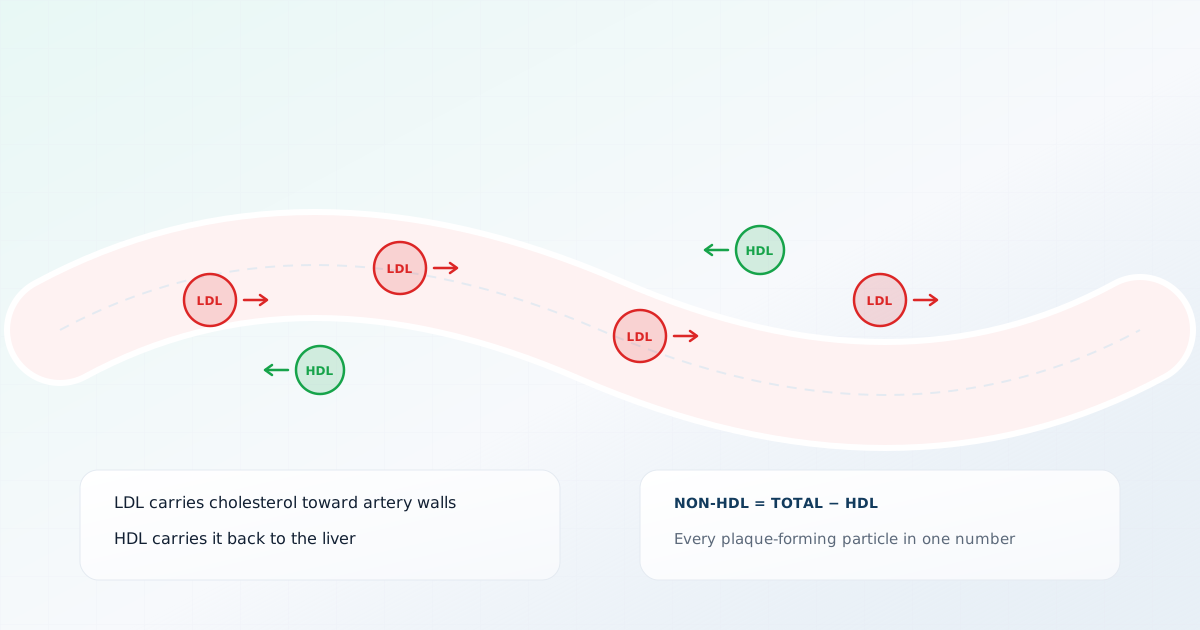
LDL, HDL, Triglycerides and Total Cholesterol Explained
Cholesterol travels in the blood inside particles. LDL carries it toward artery walls, HDL carries it away, and triglycerides are a separate fat in their own particles. The 2026…
13 min read
 General Wellness
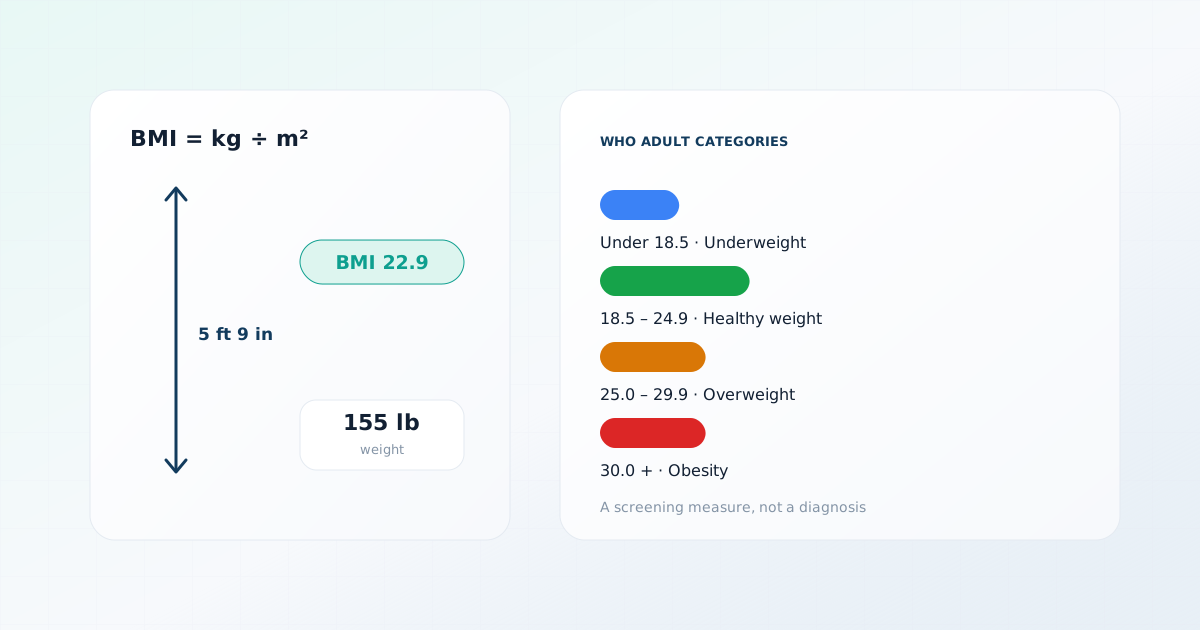
What Is BMI and What Does It Actually Tell You?
BMI is weight divided by height squared — a population screening tool invented in the 1830s, not a measure of an individual’s health. It cannot distinguish muscle from fat, says…
10 min read
 Kidney Health
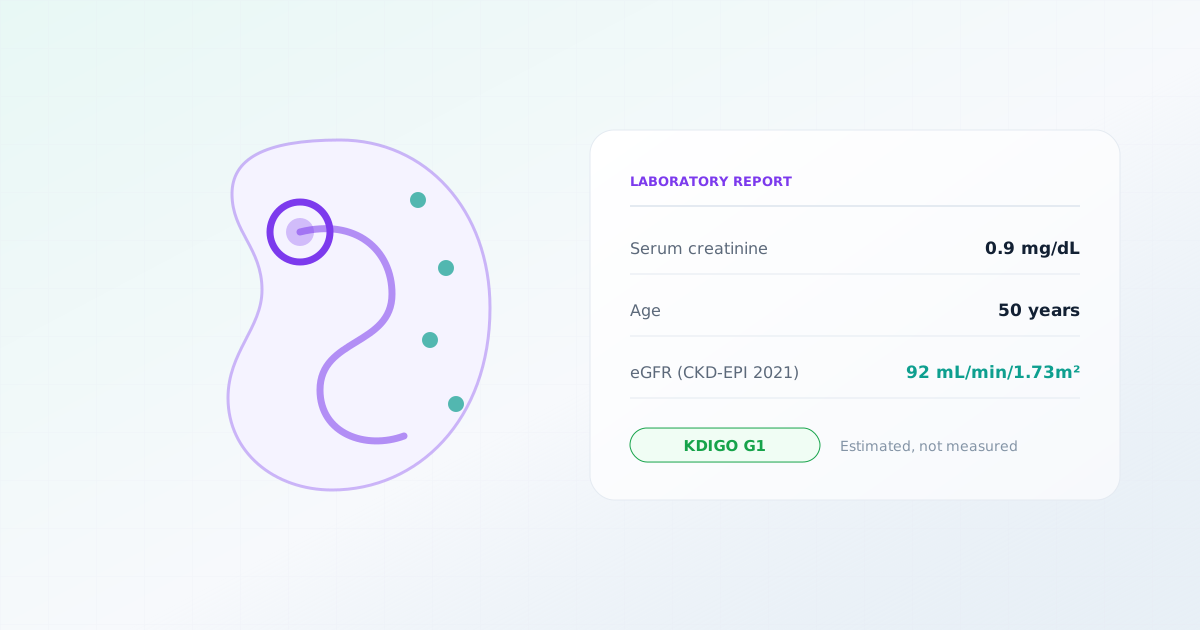
What Is eGFR? Understanding Kidney Function
eGFR estimates how much blood your kidneys filter each minute, calculated from creatinine, age and sex rather than measured directly. A single result does not establish kidney d…
9 min read
 Heart Health
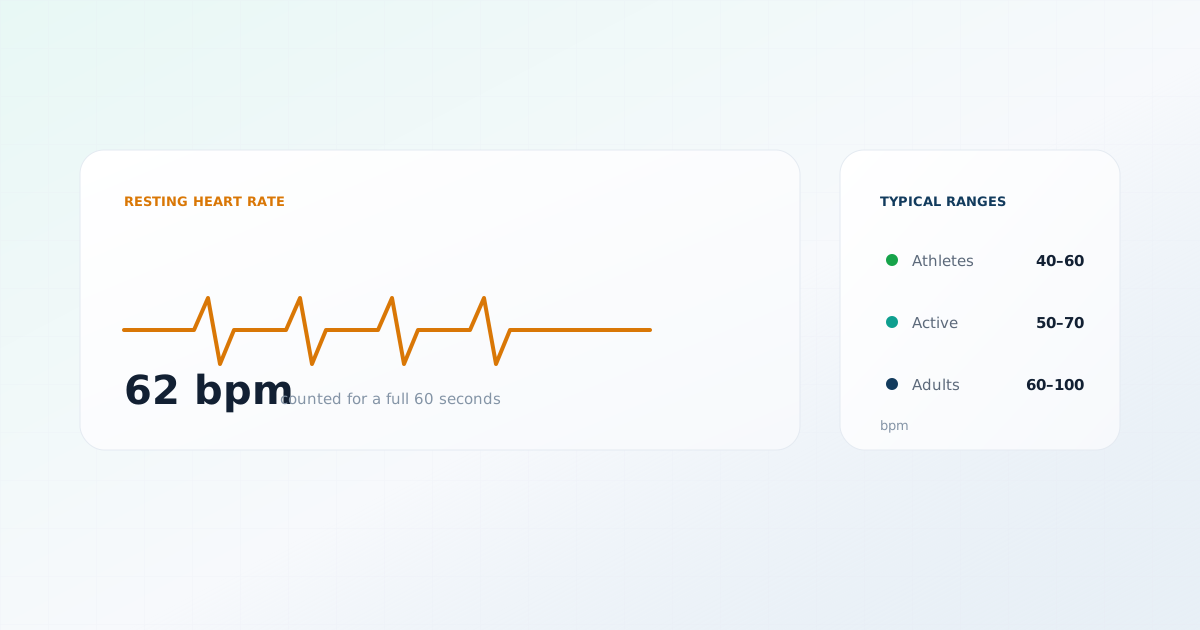
What Is a Normal Resting Heart Rate?
A resting heart rate of 60 to 100 beats per minute is the commonly cited adult range, though trained athletes often sit well below it. What matters more than the absolute number…
7 min read
 Heart Health
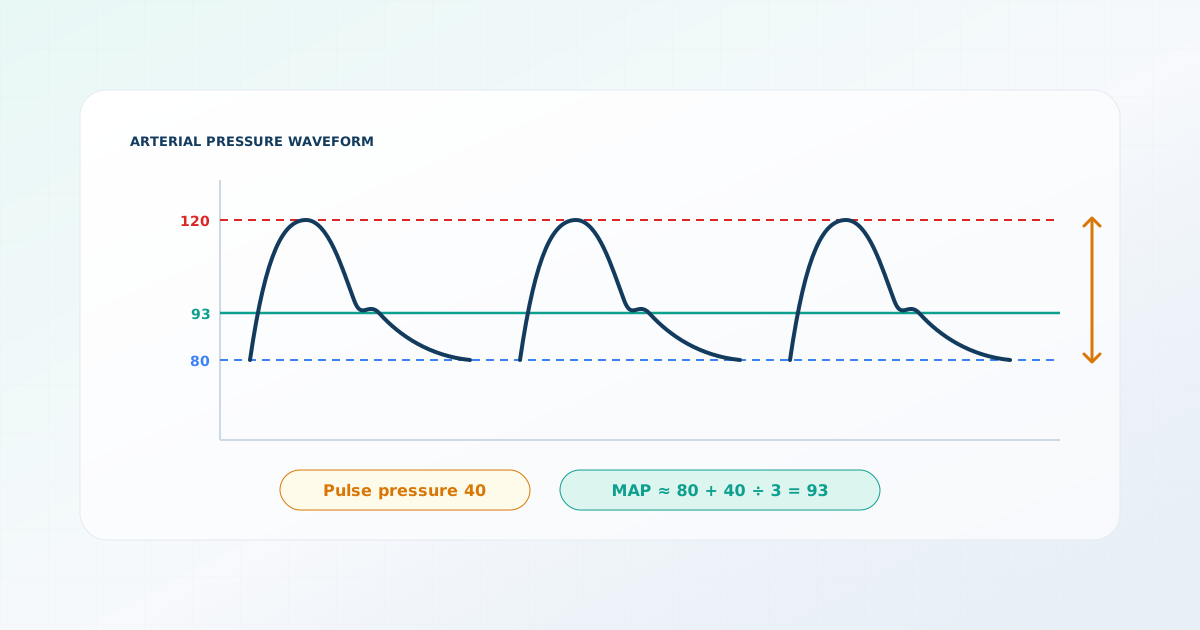
What Are Pulse Pressure and Mean Arterial Pressure?
Pulse pressure is the gap between your two blood pressure numbers and reflects large-artery stiffness. Mean arterial pressure is the average pressure across a full heartbeat, an…
8 min read
 Nutrition
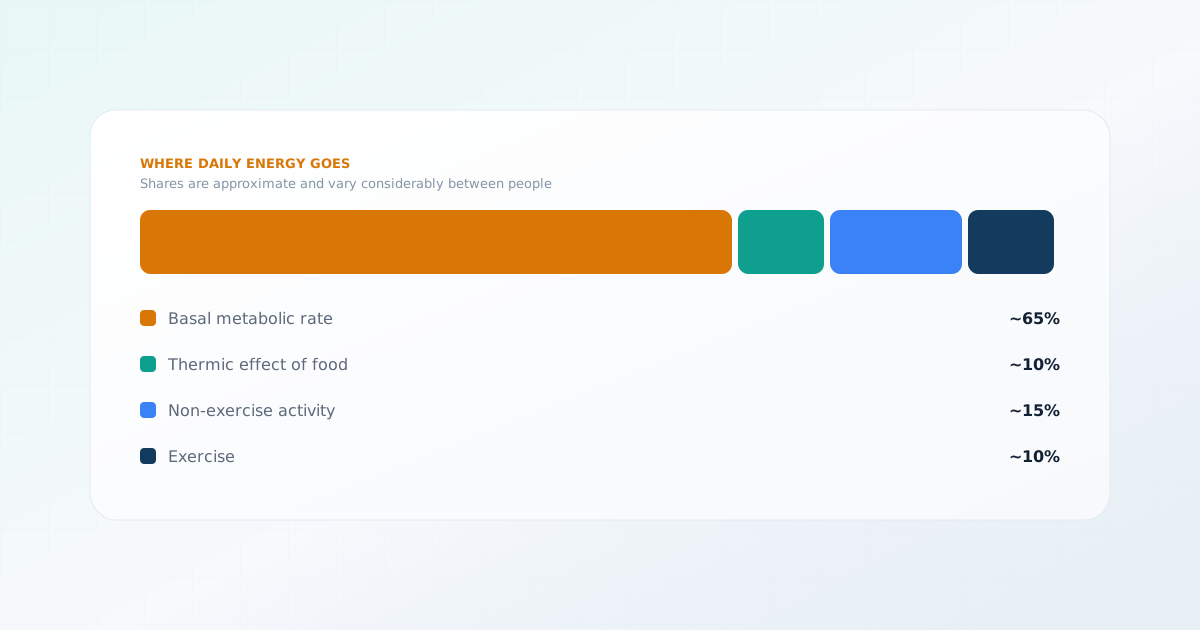
BMR vs TDEE: Understanding Daily Calorie Needs
BMR is the energy your body uses at complete rest; TDEE adds everything else you do. Both are predicted from equations rather than measured, and the predictions carry a margin o…
8 min read
 Blood Tests
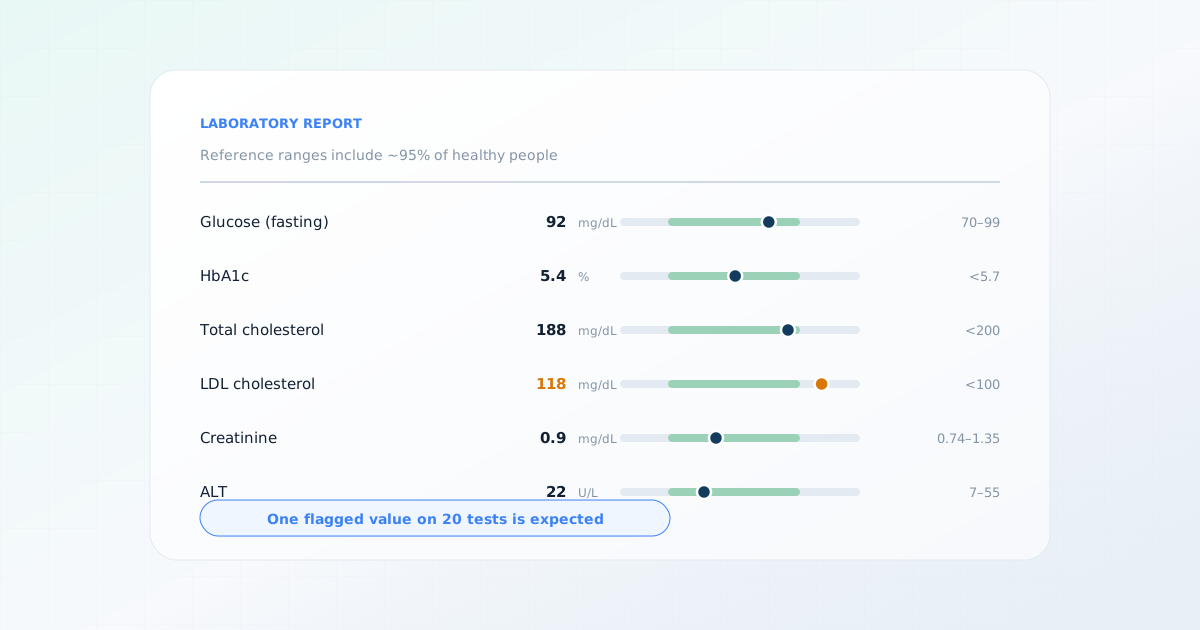
How to Read Common Blood Test Results
A reference range is built to include about 95% of a healthy population, which means roughly one result in twenty falls outside it by design. This guide explains what the most c…
9 min read