How Muscle Mass Distorts Creatinine, eGFR and BMI
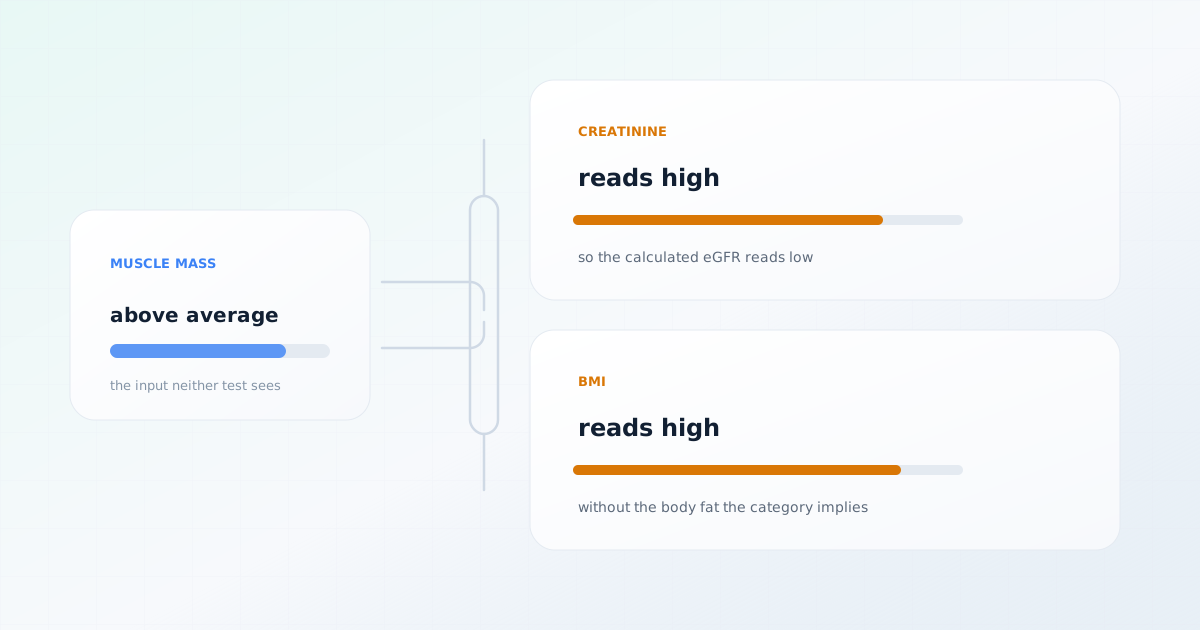
Creatinine comes from muscle, so more muscle means a higher blood creatinine at the same kidney function — which is why eGFR equations carry a sex term. The same muscle shifts BMI upward without the body composition the category implies.
Where creatinine comes from
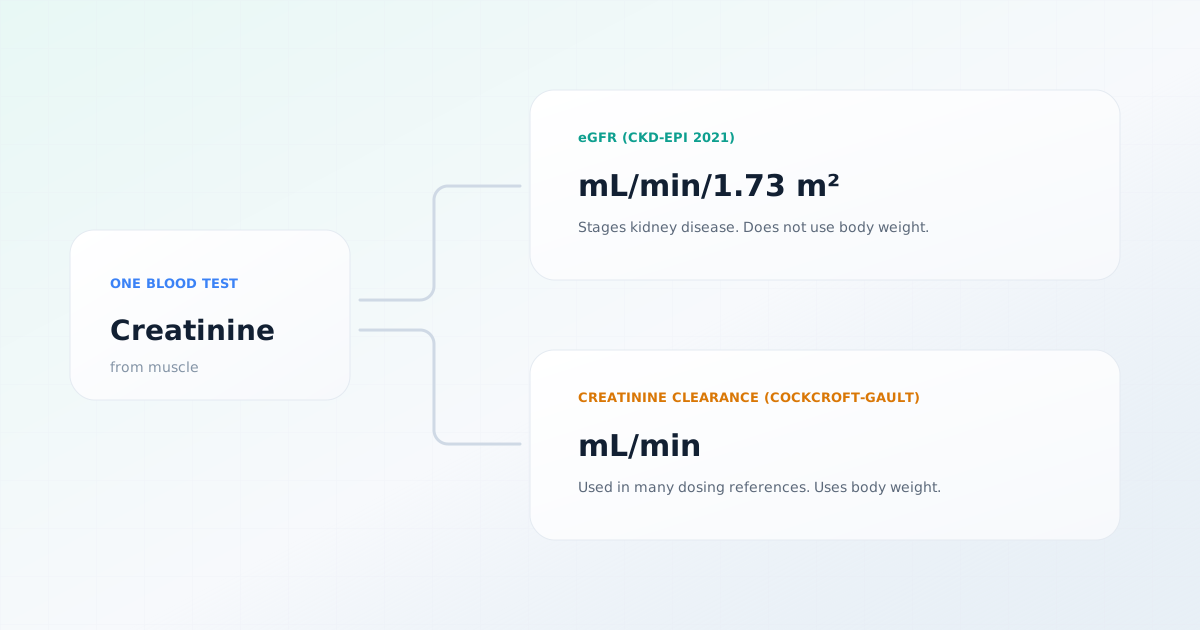
Creatinine is not something the body makes on purpose. It is the breakdown product of creatine phosphate, the rapid energy store held in skeletal muscle, and it is produced at a rate that is roughly proportional to how much muscle tissue a person carries. The kidneys filter it out of the blood at a fairly steady rate.
That gives blood creatinine two determinants rather than one: how much is being produced, and how well it is being cleared. A kidney test built on creatinine is therefore reading a signal that muscle mass contributes to directly, and separating the two is the central difficulty in interpreting it.
- eGFR
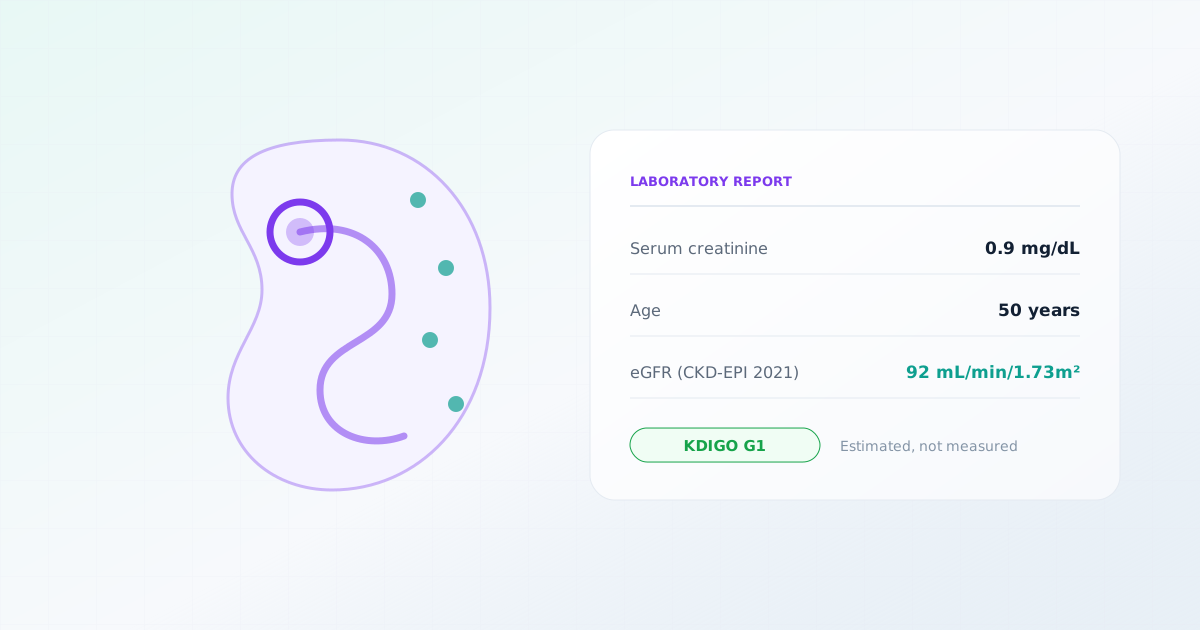
- Estimated glomerular filtration rate — how much blood the kidneys filter per minute, estimated from blood creatinine plus age and sex rather than measured directly. The estimate is only as good as the assumption that creatinine production is typical for those inputs.
The chain in one line
Why the equation has a sex term
The CKD-EPI 2021 creatinine equation, which US laboratories use to report eGFR, includes a term for sex. The reason is the mechanism above: average muscle mass differs between men and women, so the same creatinine concentration implies a different filtration rate depending on which group the equation is fitted for.
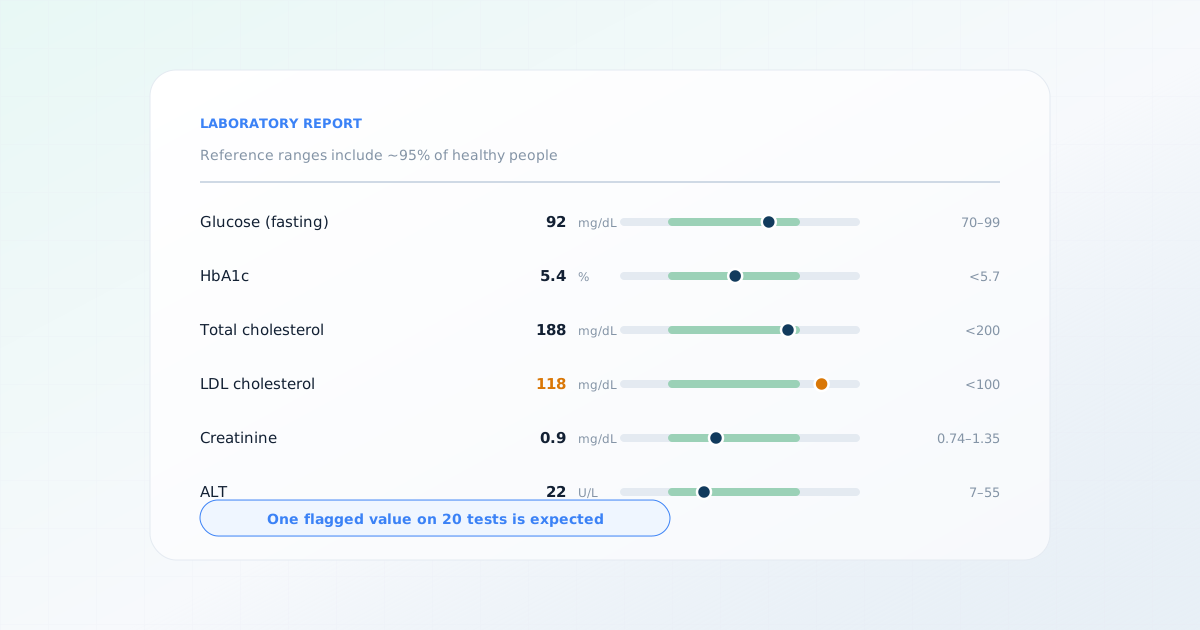
This is also why laboratory creatinine reference ranges are printed with separate male and female bands. A creatinine of 1.1 mg/dL sits in different parts of the two ranges, and the difference reflects expected production rather than expected kidney function.
It is worth being precise about what the sex term is doing. It is a population-average adjustment standing in for a muscle mass measurement that nobody takes. For a person whose muscle mass is far from the average for their sex — in either direction — the adjustment is applied anyway, and the estimate is correspondingly less accurate.
The race coefficient was removed in 2021
What raises creatinine without touching kidney function
Several ordinary things move creatinine upward through the production side of the equation. None of them represents reduced filtration, and all of them lower a calculated eGFR.
| Influence | Effect on creatinine | Mechanism |
|---|---|---|
| High muscle mass | Raises | More tissue producing creatinine |
| Creatine supplementation | Raises | Directly increases the precursor pool |
| A large cooked meat meal | Raises, transiently | Dietary creatinine absorbed directly |
| Intense exercise shortly before the test | Raises, transiently | Increased muscle turnover |
| Dehydration | Raises | Less plasma to dilute it, plus reduced renal perfusion |
| Low muscle mass, frailty, limb loss | Lowers | Less tissue producing creatinine |
| Some medications | Raises | Block tubular secretion without reducing filtration |
The low-production direction deserves equal attention, because it is the one that produces false reassurance. In a frail older person with little muscle, creatinine can sit comfortably within the reference range while kidney function is genuinely reduced — the production has fallen as much as the clearance has.
- If you take creatine, say so before a kidney test, and ask whether to pause it beforehand.
- Avoid a heavy meat meal and intense training in the day before a planned blood test where creatinine matters.
- A single result outside the range is a reason to repeat the test under ordinary conditions rather than a conclusion.
- A persistent trend over several results is far more informative than any one value.
Cystatin C, and why guidelines reach for it
Cystatin C is a small protein produced by nucleated cells throughout the body at a relatively constant rate, and cleared by the kidneys. Because its production is not tied to muscle, it sidesteps the main confounder in creatinine-based estimation.
Current kidney guidance recommends a cystatin C-based estimate as a confirmatory test when a creatinine-based eGFR is likely to be unreliable or when the result would change a decision. A combined equation using both markers is generally more accurate than either alone.
- Situations where it is commonly considered include unusually high or low muscle mass, significant weight loss, limb amputation, and discordance between the eGFR and the clinical picture.
- Cystatin C has its own confounders — thyroid disease, corticosteroid treatment and some inflammatory states affect it — so it replaces one set of caveats with another rather than removing them.
- It is not a routine test everywhere, and availability varies, so it is something to ask about rather than assume.
A number that disagrees with you is worth a question
The same muscle, the same problem, in BMI
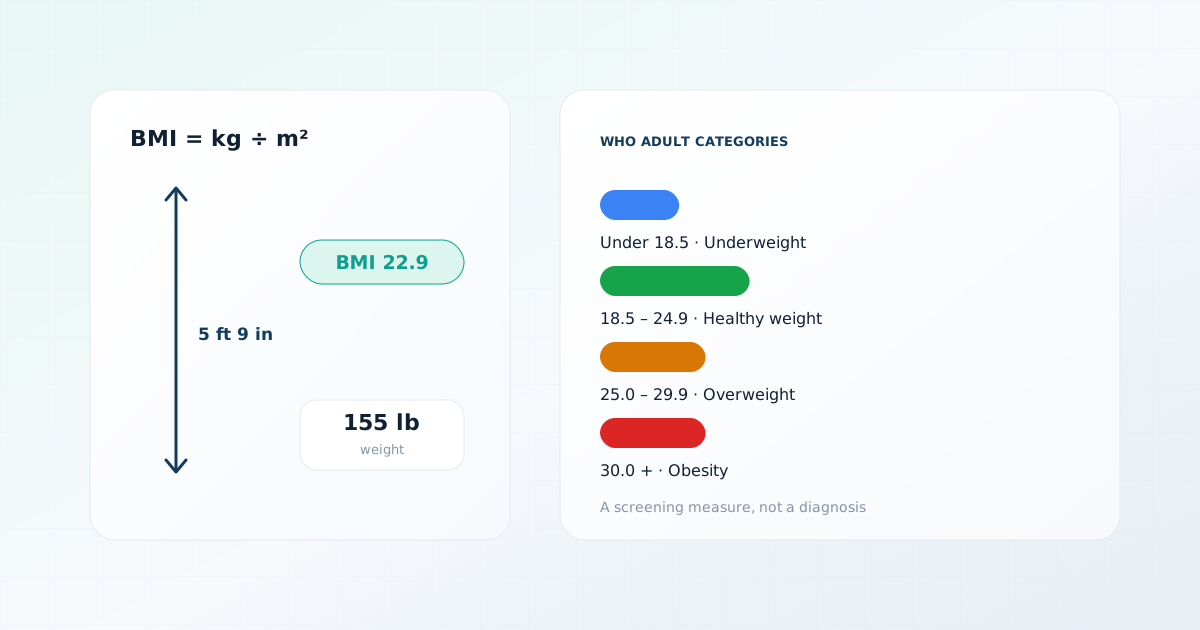
BMI divides weight by height squared. Muscle is denser than fat, so adding muscle adds weight and raises BMI exactly as adding fat would. The index has no way to tell the two apart, because the only inputs it has are height and weight.
The result is a well-recognized misclassification: a muscular person is frequently placed in the overweight or obesity category on the basis of body composition that carries none of the risk those categories were derived to flag. This is BMI’s clearest failure mode and it is acknowledged by the agencies that publish the categories.
The usual correction is not to abandon the measurement but to add one that captures something BMI cannot: where weight is carried. Waist circumference and waist-to-height ratio both address abdominal fat specifically, and a muscular person with a low waist-to-height ratio is in a visibly different position from someone with the same BMI and a high one.
| Measurement | Captures | Blind to |
|---|---|---|
| BMI | Weight relative to height | Muscle versus fat; where fat is carried |
| Waist circumference | Abdominal fat | Height; overall mass |
| Waist-to-height ratio | Abdominal fat relative to frame | Muscle elsewhere on the body |
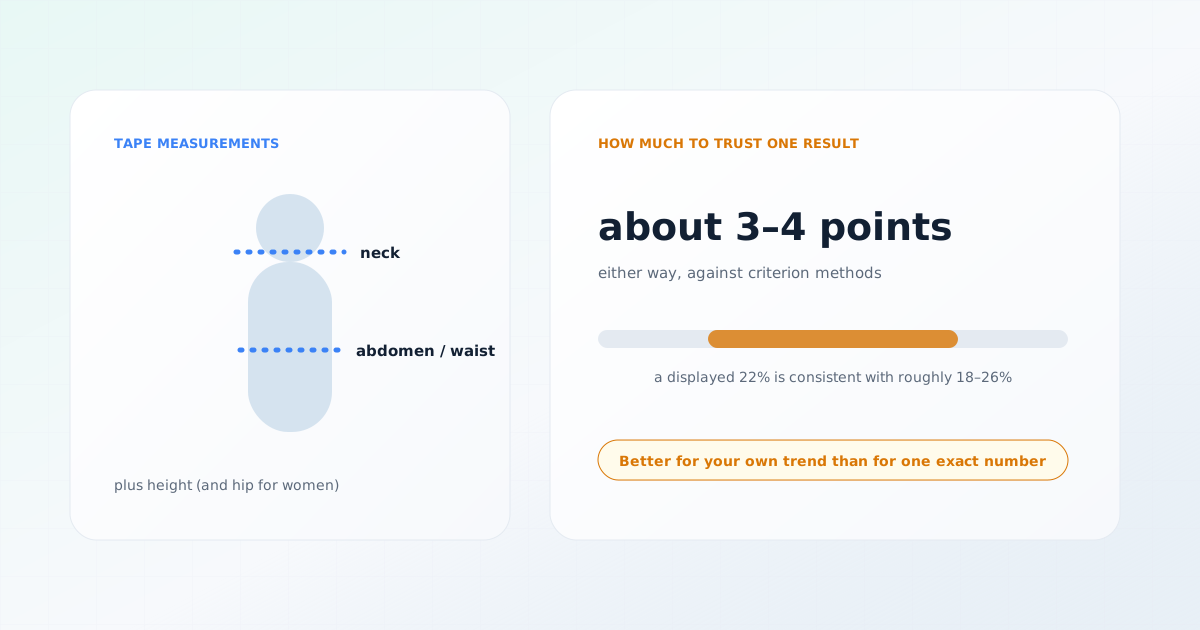
| Circumference body fat equations | An estimate of fat percentage | Accuracy at the extremes of body composition |
The other ranges that differ, and why
Creatinine is the clearest case of a sex-specific range with a mechanical explanation, but it is not the only one. Hemoglobin and hematocrit reference ranges are also set higher for men, for a different reason: testosterone stimulates red blood cell production.
The distinction between these two cases is worth holding onto. Both ranges differ by sex, and in one the difference is downstream of body composition while in the other it is downstream of hormonal signaling. Neither is a judgment about which value is better; both are descriptions of where most people in a group sit.
What a sex-specific range is not
What follows practically is modest but real: read a result against the range printed beside it, expect your own trend to be more informative than any single value, and tell whoever ordered the test about the things — training, supplements, a recent heavy meal — that are known to move it.
Frequently asked questions
Sources
This page is based on the following sources. Each was reviewed on the access date shown.
- New Creatinine- and Cystatin C-Based Equations to Estimate GFR without Race(opens in a new tab)
New England Journal of Medicine
Peer-reviewed articlePublished November 4, 2021Accessed September 27, 2026DOI 10.1056/NEJMoa2102953
- A Unifying Approach for GFR Estimation: Recommendations of the NKF-ASN Task Force on Reassessing the Inclusion of Race in Diagnosing Kidney Disease(opens in a new tab)
American Journal of Kidney Diseases
Clinical guidelinePublished February 1, 2022Accessed September 27, 2026
- KDIGO 2024 Clinical Practice Guideline for the Evaluation and Management of Chronic Kidney Disease(opens in a new tab)
Kidney Disease: Improving Global Outcomes (KDIGO)
Clinical guidelinePublished March 1, 2024Accessed September 27, 2026
- Creatinine Test(opens in a new tab)
MedlinePlus (US National Library of Medicine)
Government health agencyAccessed October 1, 2026
- About Adult BMI(opens in a new tab)
Centers for Disease Control and Prevention
Government health agencyAccessed September 27, 2026
- Overweight and obesity management: identifying and assessing overweight, obesity and central adiposity (NG246)(opens in a new tab)
National Institute for Health and Care Excellence (NICE)
Clinical guidelinePublished January 14, 2025Accessed September 27, 2026