Blood Tests
Reading a laboratory report without a medical degree.
A routine blood panel can return twenty or more numbers, each with a reference range, and very little explanation. Reference ranges are not verdicts: they are constructed so that roughly 95% of a healthy reference population falls inside them, which means a result slightly outside the range is common and often unremarkable. Ranges also differ between laboratories, because they depend on the specific analyser and method used. This hub explains what the most common tests measure, why the units and ranges vary, and how a clinician reads a panel as a pattern rather than a list.
Blood Tests tools
Calculators and converters for the measurements in this area.
HbA1c to eAG
Diabetes & Metabolic Health
Convert an HbA1c percentage into an estimated average blood glucose.
Open calculator
Glucose Converter
Diabetes & Metabolic Health
Convert blood glucose between mg/dL and mmol/L in either direction.
Open calculator
Cholesterol Ratio
Heart Health
Calculate your total-cholesterol-to-HDL ratio and non-HDL cholesterol.
Open calculator
LDL
Heart Health
Calculate LDL cholesterol with the NIH Equation 2 or Friedewald method.
Open calculator
eGFR
Kidney Health
Estimate kidney filtration rate with the race-free CKD-EPI 2021 equation.
Open calculator
Creatinine Clearance
Kidney Health
Estimate creatinine clearance with Cockcroft-Gault, and see why it differs from eGFR.
Open calculator
Cholesterol Converter
Blood Tests
Convert a whole lipid panel between mg/dL and mmol/L, with the correct factor for each value.
Open calculator
Blood Tests guides
Plain-English explanations of what these measurements mean.
 Kidney Health
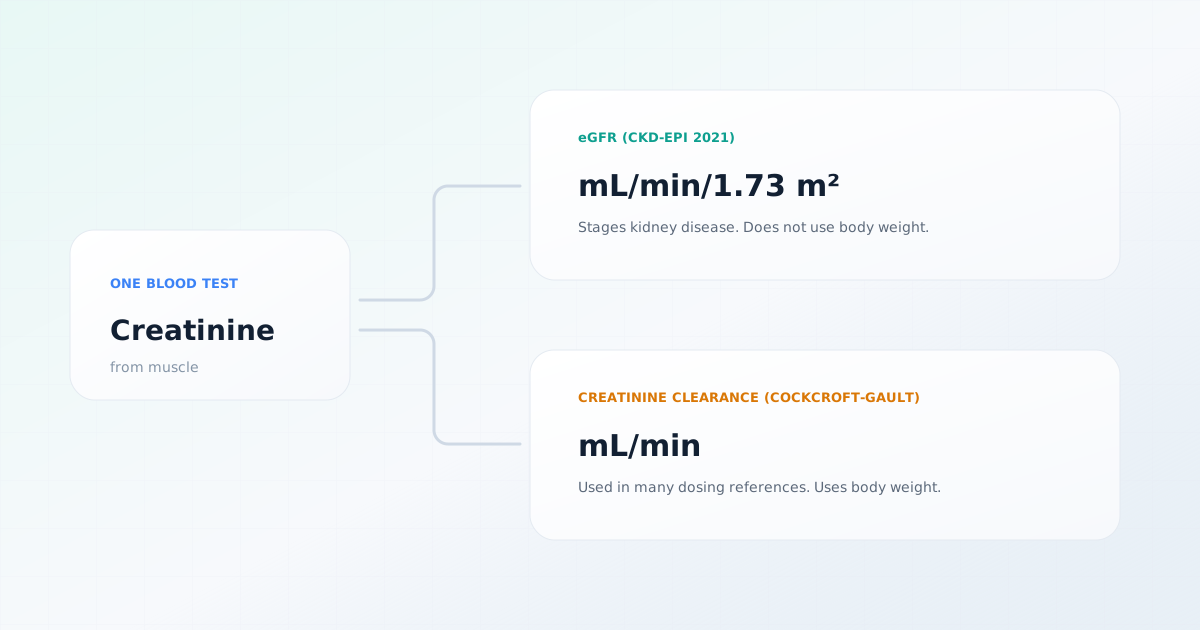
Creatinine Clearance vs eGFR: Why Two Kidney Numbers Disagree
eGFR stages kidney function in mL/min/1.73 m², while Cockcroft-Gault creatinine clearance is in mL/min and is still used for many drug doses. They come from the same blood test…
7 min read
 Blood Tests
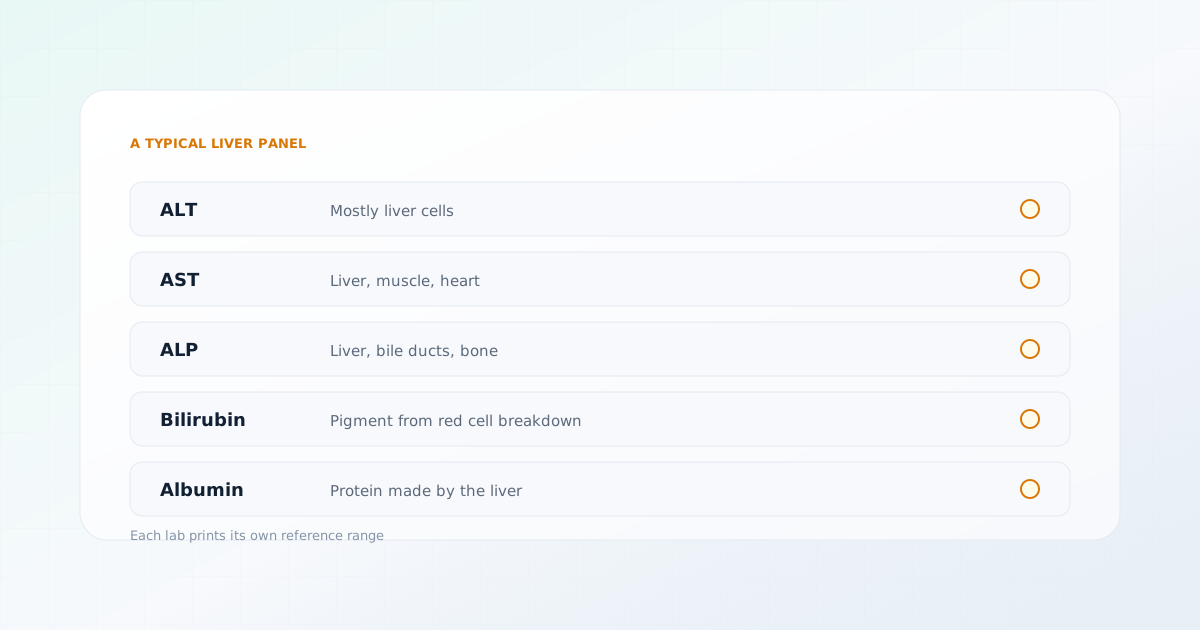
Liver Function Tests Explained: What ALT and AST Results Mean
ALT and AST are enzymes that leak into the blood when liver cells are irritated or damaged. A raised result is a prompt to look for a cause, not a diagnosis, and a result inside…
8 min read
 Blood Tests
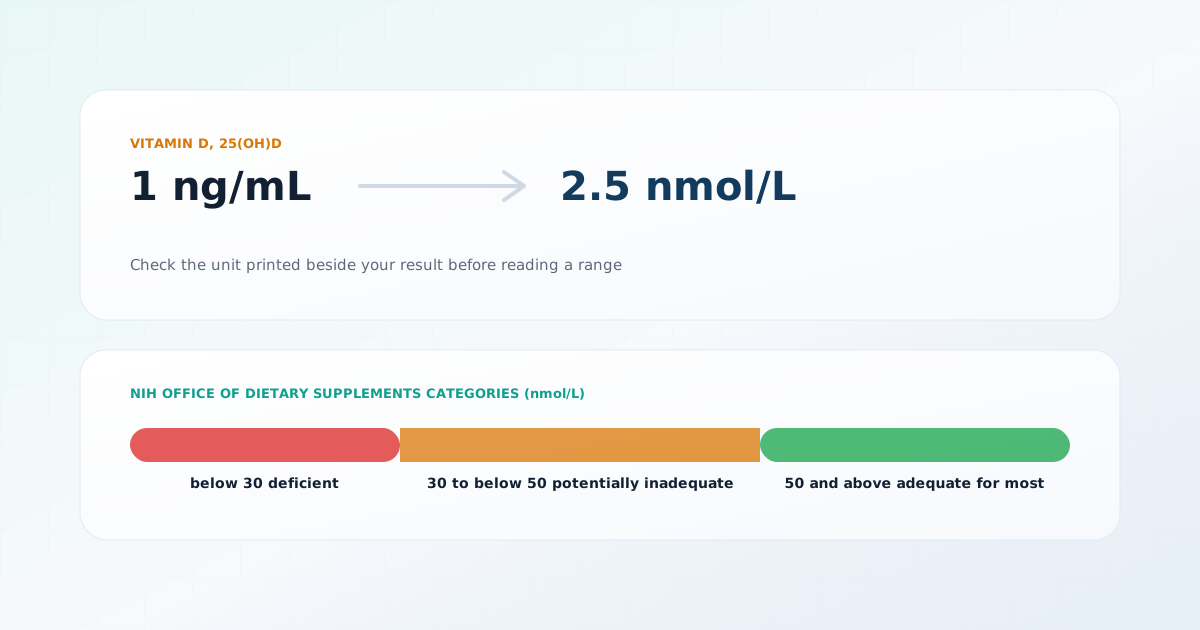
Vitamin D and Vitamin B12 Blood Tests: Units, Ranges and Limits
Vitamin D is measured as 25-hydroxyvitamin D and reported in ng/mL or nmol/L, while B12 is judged from a blood level that sometimes needs a second test to interpret. Here is how…
9 min read
 Diabetes & Metabolic Health
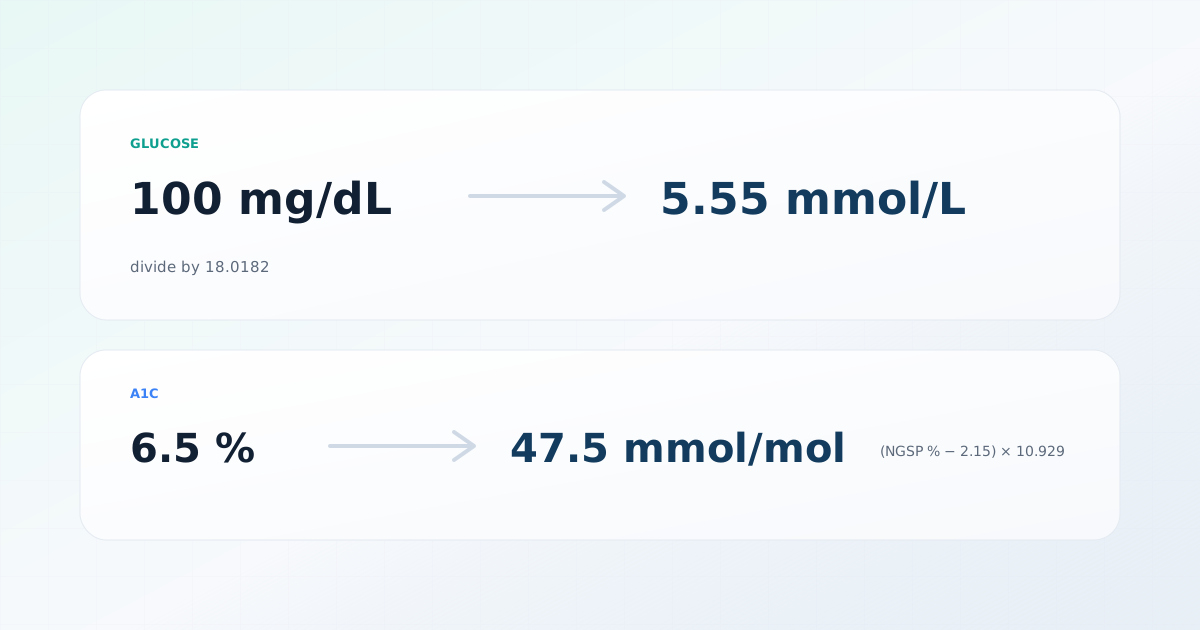
Blood Glucose Units Explained: mg/dL, mmol/L and A1C in mmol/mol
The same glucose result can be written in mg/dL or mmol/L, and A1C in percent or mmol/mol. The conversions are exact arithmetic, but they change how a number is written, not wha…
7 min read
 Heart Health
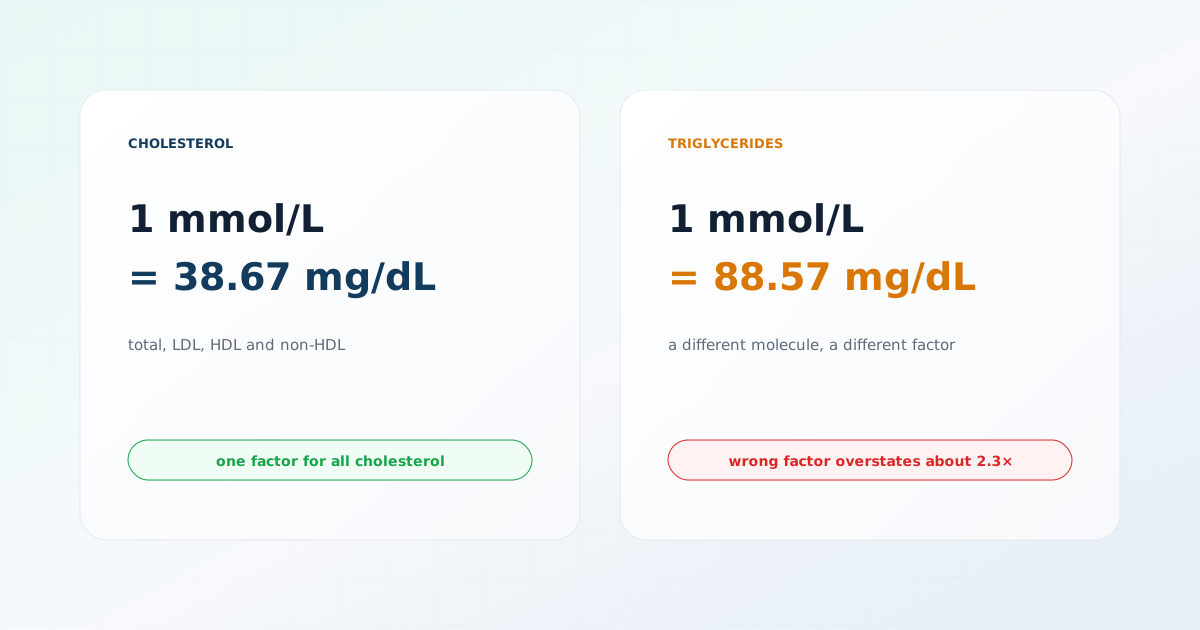
Cholesterol Units Explained: mg/dL vs mmol/L and Why Triglycerides Differ
US labs report cholesterol in mg/dL and most other countries use mmol/L. Cholesterol and triglycerides have different conversion factors, 38.67 and 88.57, and using the wrong on…
7 min read
 Heart Health
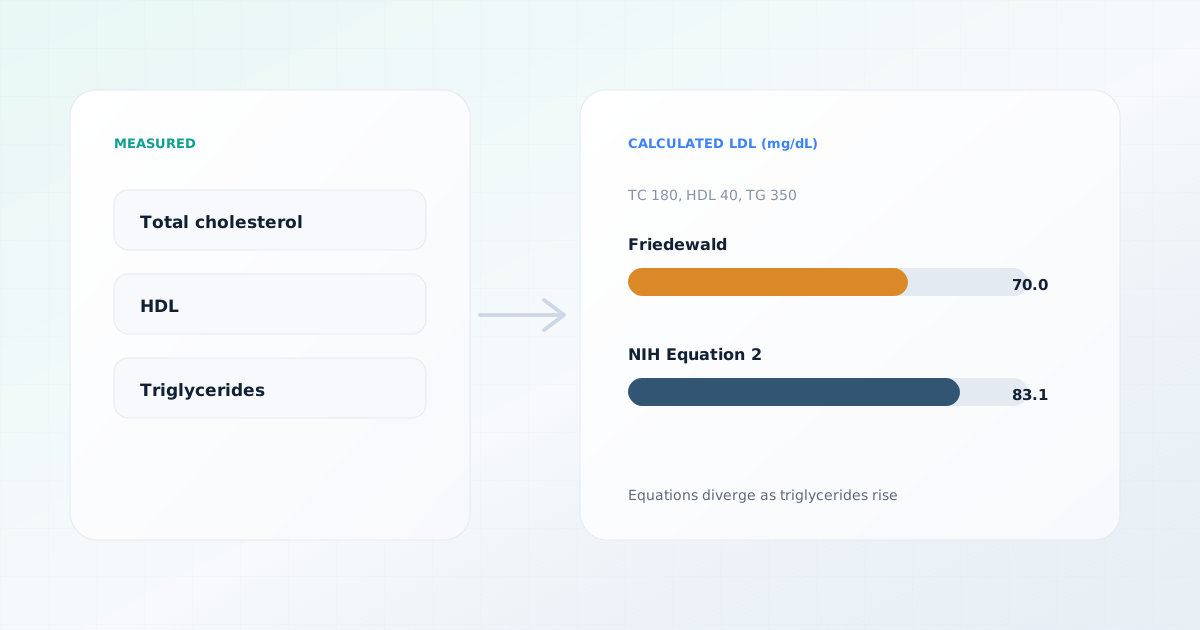
How LDL Cholesterol Is Calculated: Friedewald, NIH and Martin-Hopkins
Most labs calculate LDL cholesterol rather than measure it. The Friedewald equation from 1972 and the newer NIH Equation 2 can return different numbers for the same blood sample…
7 min read
 Kidney Health
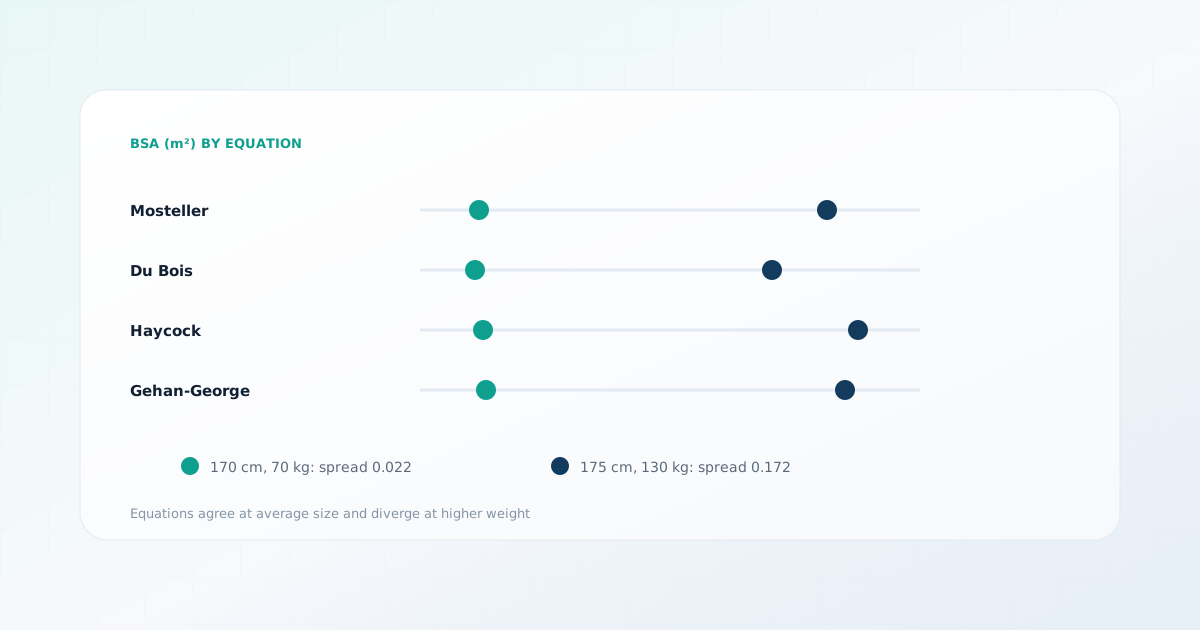
Body Surface Area Formulas: Mosteller, Du Bois, Haycock and Why They Differ
Body surface area scales drug doses and kidney measurements such as eGFR. Four published equations estimate it, they agree closely at average size and diverge at higher body wei…
7 min read
 General Wellness
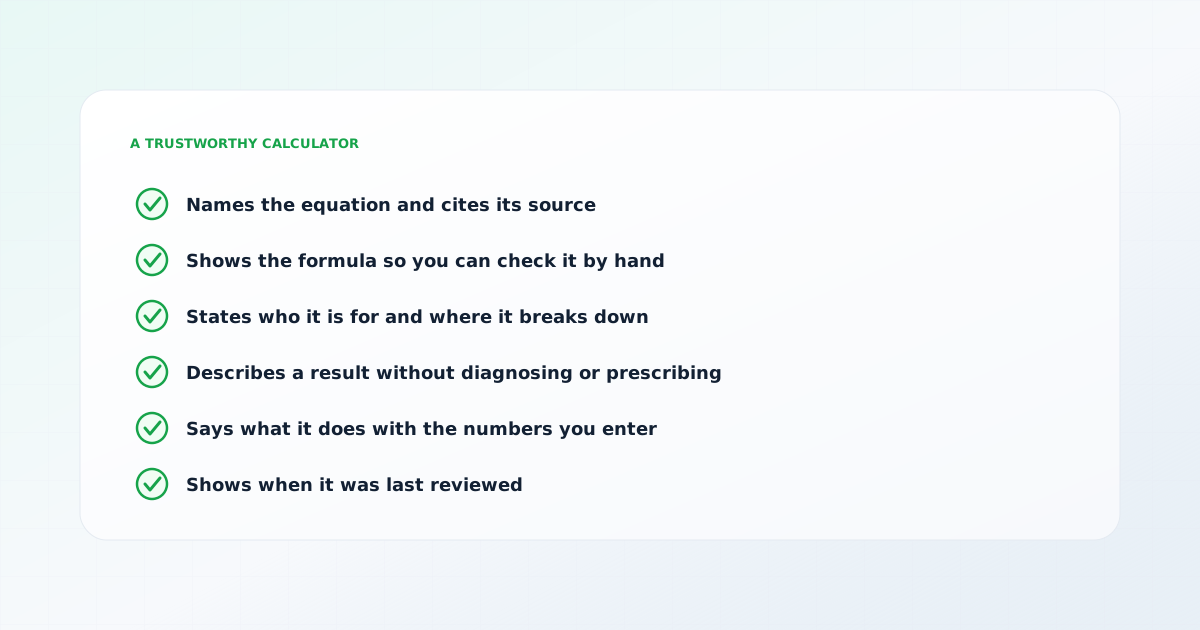
How to Judge an Online Health Calculator: A Checklist for Readers and Clinics
A health calculator is only as trustworthy as its equation, its limits and what it does with your data. This checklist shows how to tell a transparent tool from a risky one, wit…
8 min read
 Women's Health
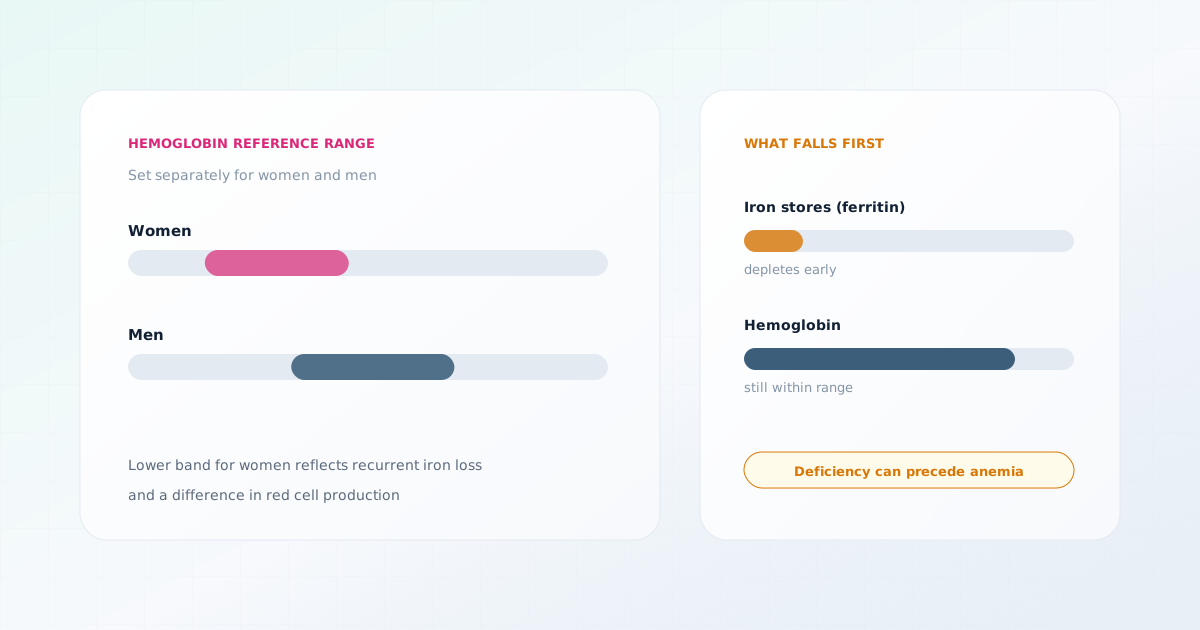
Iron, Hemoglobin and Ferritin: Why the Ranges Differ for Women
Hemoglobin reference ranges are lower for women and ferritin ranges differ too, largely because menstrual blood loss makes iron deficiency far more common before menopause. Ferr…
8 min read
 Men's Health
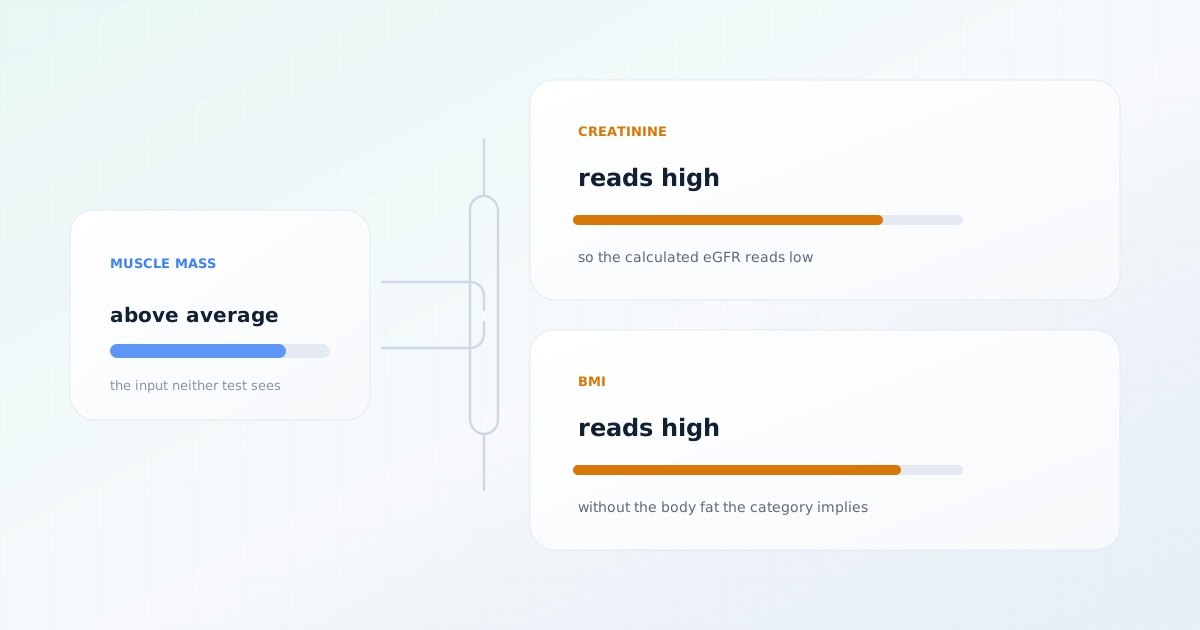
How Muscle Mass Distorts Creatinine, eGFR and BMI
Creatinine comes from muscle, so more muscle means a higher blood creatinine at the same kidney function — which is why eGFR equations carry a sex term. The same muscle shifts B…
8 min read
 Diabetes & Metabolic Health
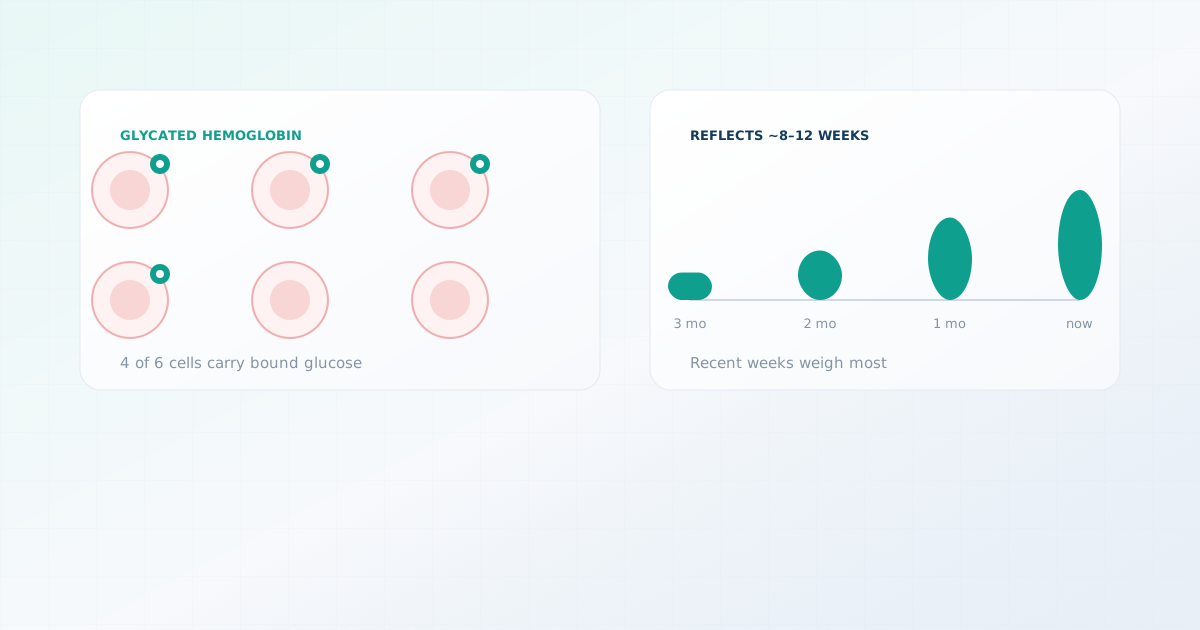
What Does HbA1c Mean?
HbA1c measures the percentage of your hemoglobin that has glucose attached to it, which reflects your average blood glucose over roughly the previous two to three months. It is…
9 min read
 Diabetes & Metabolic Health
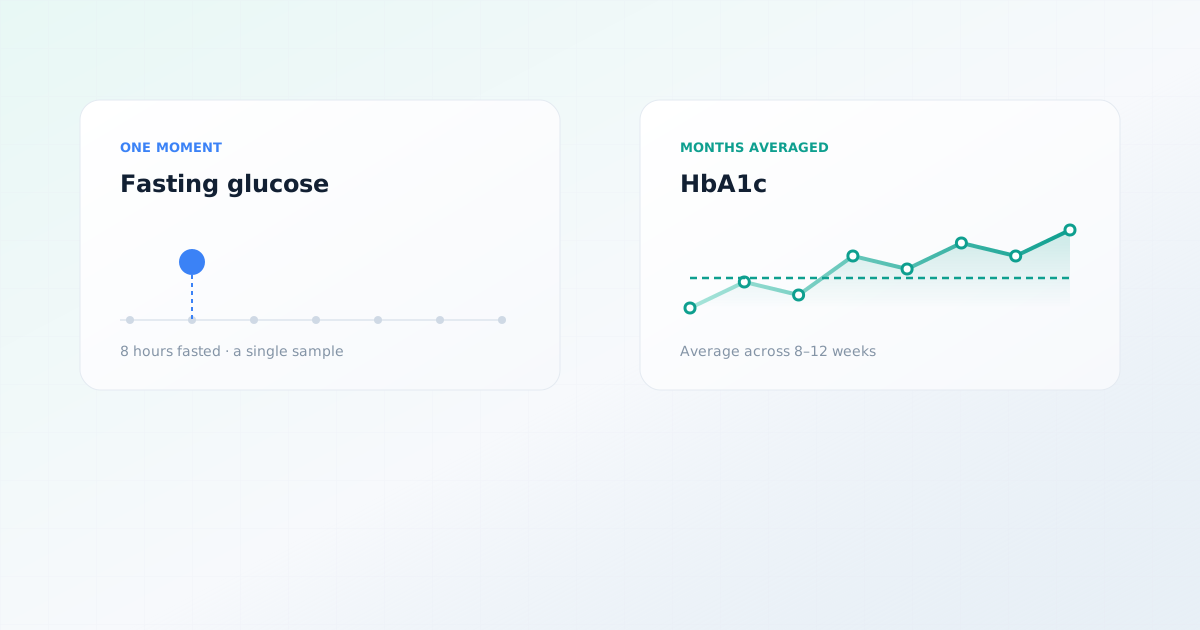
A1C vs Fasting Blood Sugar: What’s the Difference?
A fasting blood sugar test measures glucose at one moment after not eating; A1C reflects average glucose over two to three months. They answer different questions, they can disa…
7 min read
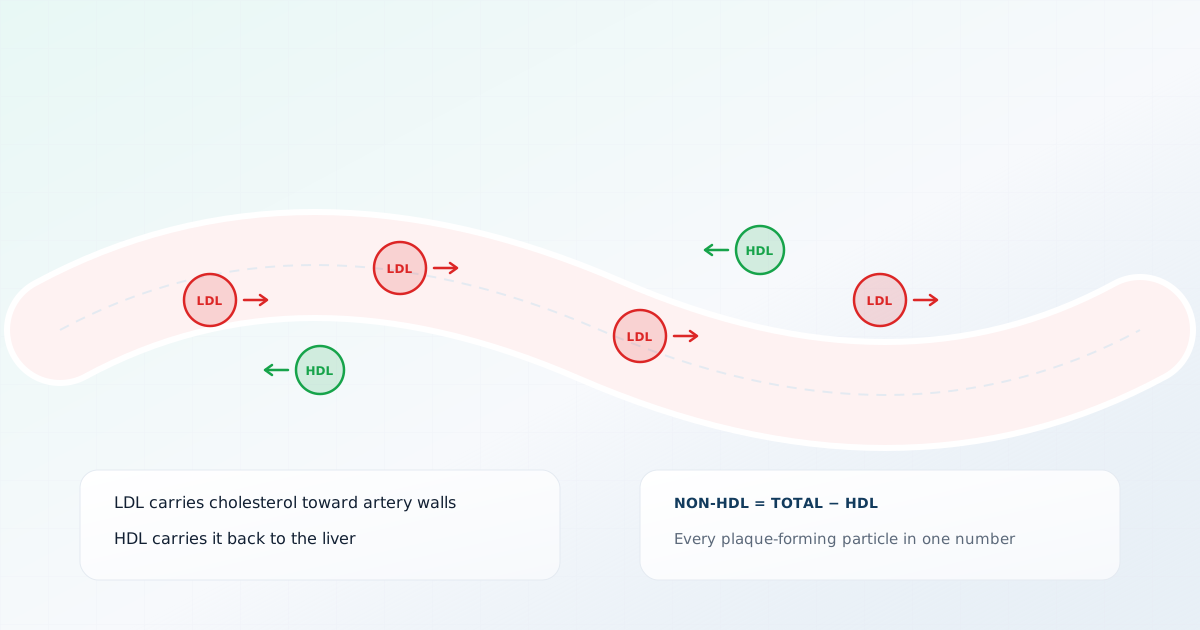 Heart Health
LDL, HDL, Triglycerides and Total Cholesterol Explained
Cholesterol travels in the blood inside particles. LDL carries it toward artery walls, HDL carries it away, and triglycerides are a separate fat in their own particles. The 2026…
13 min read
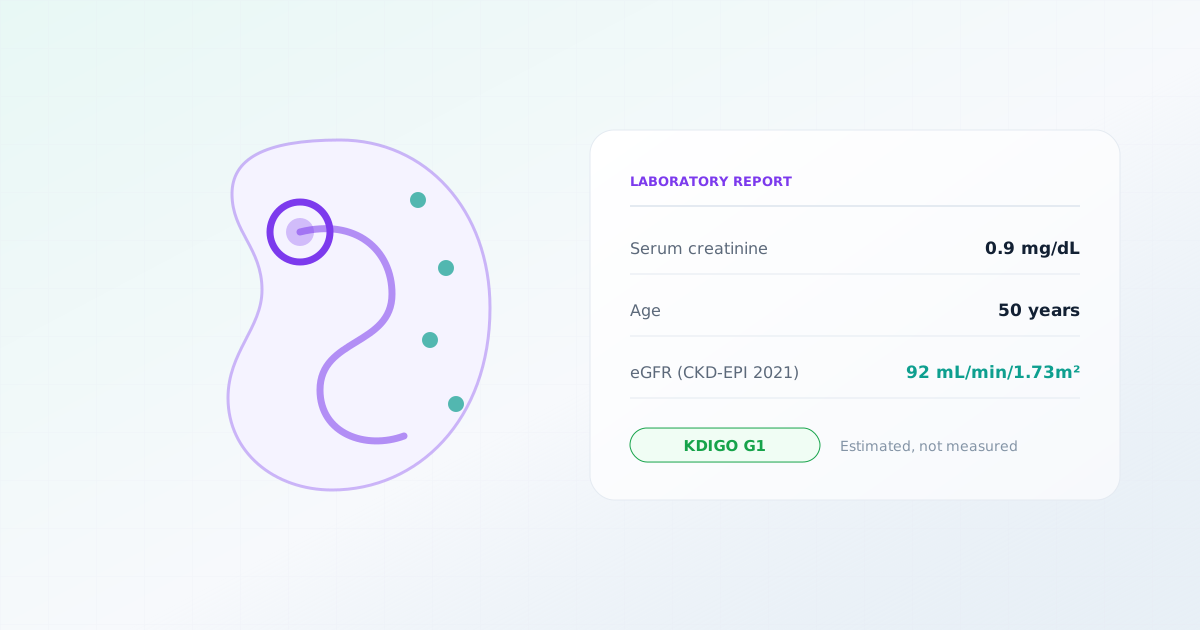 Kidney Health
What Is eGFR? Understanding Kidney Function
eGFR estimates how much blood your kidneys filter each minute, calculated from creatinine, age and sex rather than measured directly. A single result does not establish kidney d…
9 min read
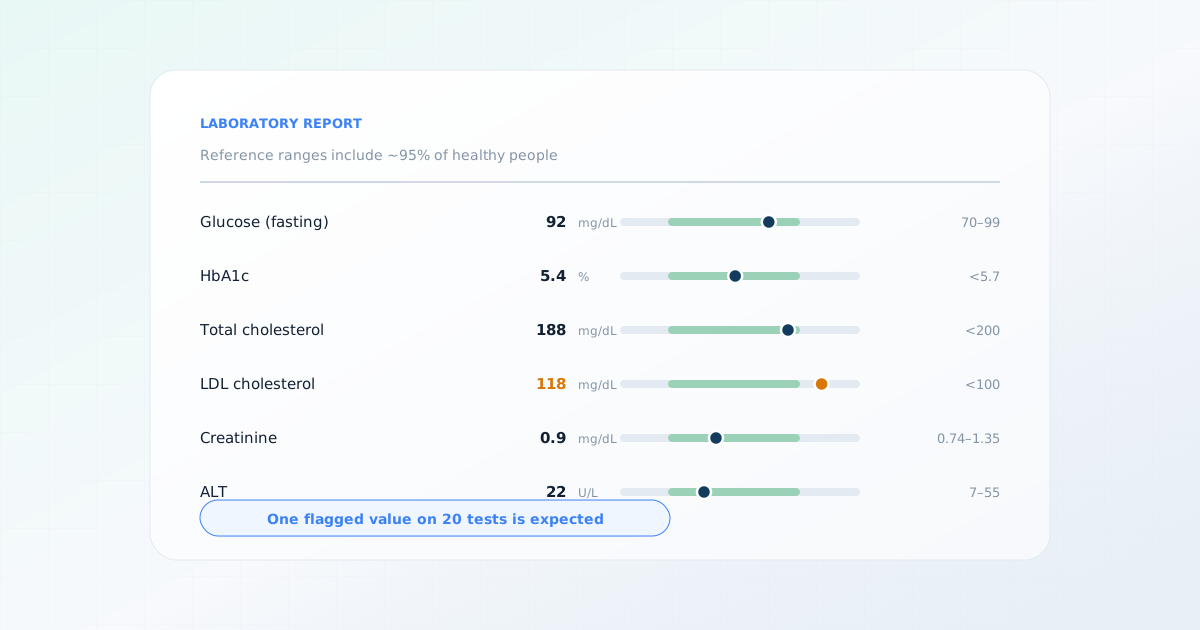 Blood Tests
How to Read Common Blood Test Results
A reference range is built to include about 95% of a healthy population, which means roughly one result in twenty falls outside it by design. This guide explains what the most c…
9 min read
Learn this topic
Guided journeys and short quizzes. Progress is kept in your browser — no account needed.
Reading Lab Results
Four questions on reference ranges, units, and why a single flagged result is usually expected.
4 questions