Heart Health
Blood pressure, cholesterol and the numbers behind cardiovascular risk.
Most of what a clinician looks at when assessing the heart and circulation comes down to a handful of measurements: blood pressure, the fractions of cholesterol in your blood, and heart rate. None of them means much in isolation. Blood pressure is interpreted across repeated readings rather than one; cholesterol is read against your overall cardiovascular risk rather than a single cut-off; heart rate depends on fitness, medication, caffeine and how you slept. This hub explains what each number actually measures, how the main guidelines categorize it, and — just as importantly — where each measurement stops being informative.
Heart Health tools
Calculators and converters for the measurements in this area.
Blood Pressure
Heart Health
See which guideline category a blood pressure reading falls into.
Open calculator
Pulse Pressure & MAP
Heart Health
Calculate pulse pressure and estimated mean arterial pressure from a blood pressure reading.
Open calculator
Cholesterol Ratio
Heart Health
Calculate your total-cholesterol-to-HDL ratio and non-HDL cholesterol.
Open calculator
LDL
Heart Health
Calculate LDL cholesterol with the NIH Equation 2 or Friedewald method.
Open calculator
Heart Rate Zones
Fitness
Estimate training heart rate zones from your age and optional resting heart rate.
Open calculator
Waist-to-Hip
General Wellness
Compare your waist and hip measurements against the cut-points in the WHO expert consultation.
Open calculator
Cholesterol Converter
Blood Tests
Convert a whole lipid panel between mg/dL and mmol/L, with the correct factor for each value.
Open calculator
Heart Health guides
Plain-English explanations of what these measurements mean.
 Heart Health
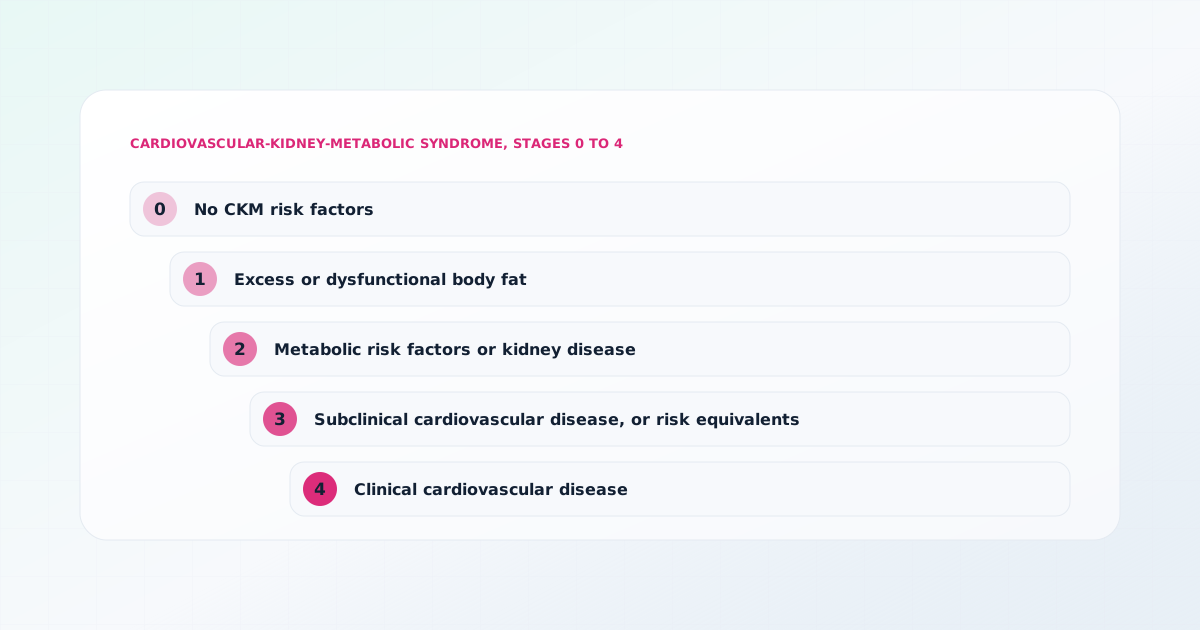
Cardiovascular-Kidney-Metabolic Syndrome: Why Doctors Now Link the Heart, Kidneys and Metabolism
The American Heart Association now describes weight, blood sugar, blood pressure, cholesterol, kidney function and heart disease as one connected syndrome with five stages. Here…
8 min read
 Fitness
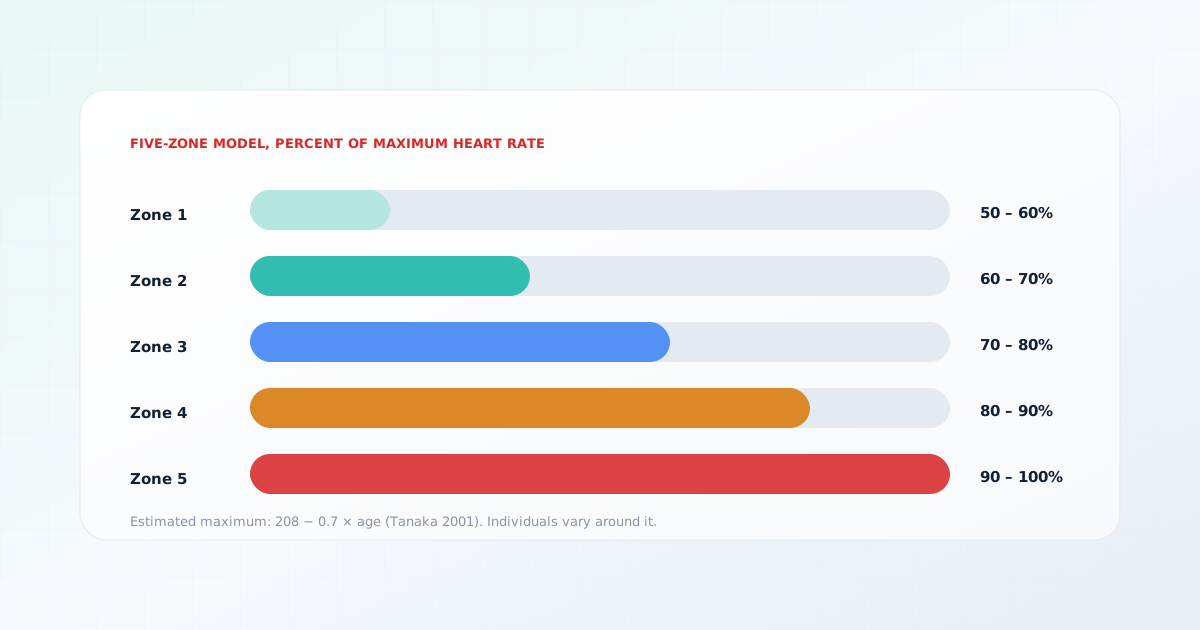
Heart Rate Zones and Maximum Heart Rate: How the Estimates Work
Maximum heart rate is usually estimated from age, using formulas such as 208 minus 0.7 times age, and training zones are percentages of that estimate. The estimate can be off by…
9 min read
 Heart Health
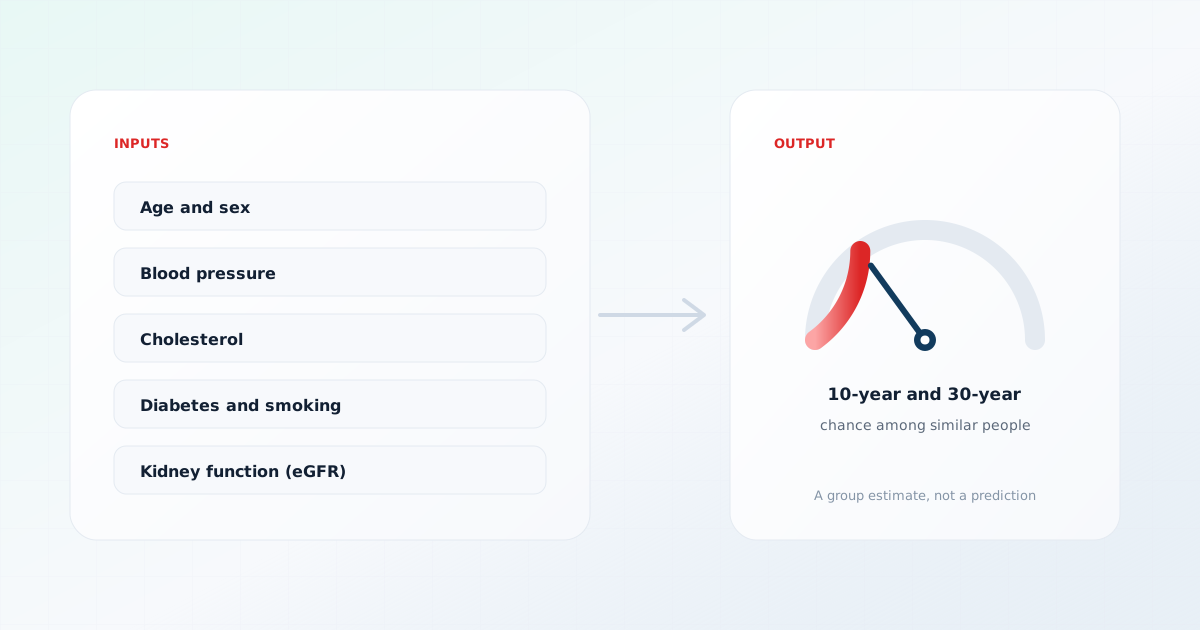
How Heart Disease Risk Is Estimated: The PREVENT Equations Explained
The American Heart Association’s PREVENT equations estimate a person’s 10- and 30-year risk of cardiovascular disease from blood pressure, cholesterol, diabetes, smoking, age an…
8 min read
 General Wellness
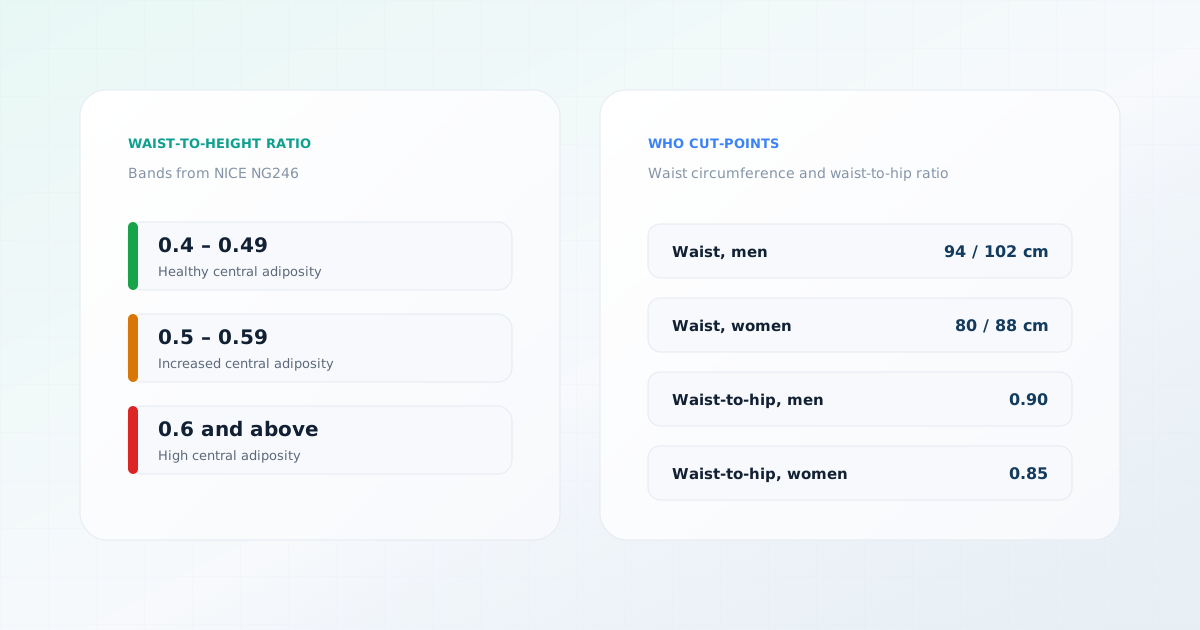
Waist Circumference, Waist-to-Height and Waist-to-Hip Ratio Explained
Where weight is carried says something that BMI cannot. Waist circumference, waist-to-height ratio and waist-to-hip ratio each measure central fat in a different way, with cut-p…
8 min read
 Heart Health
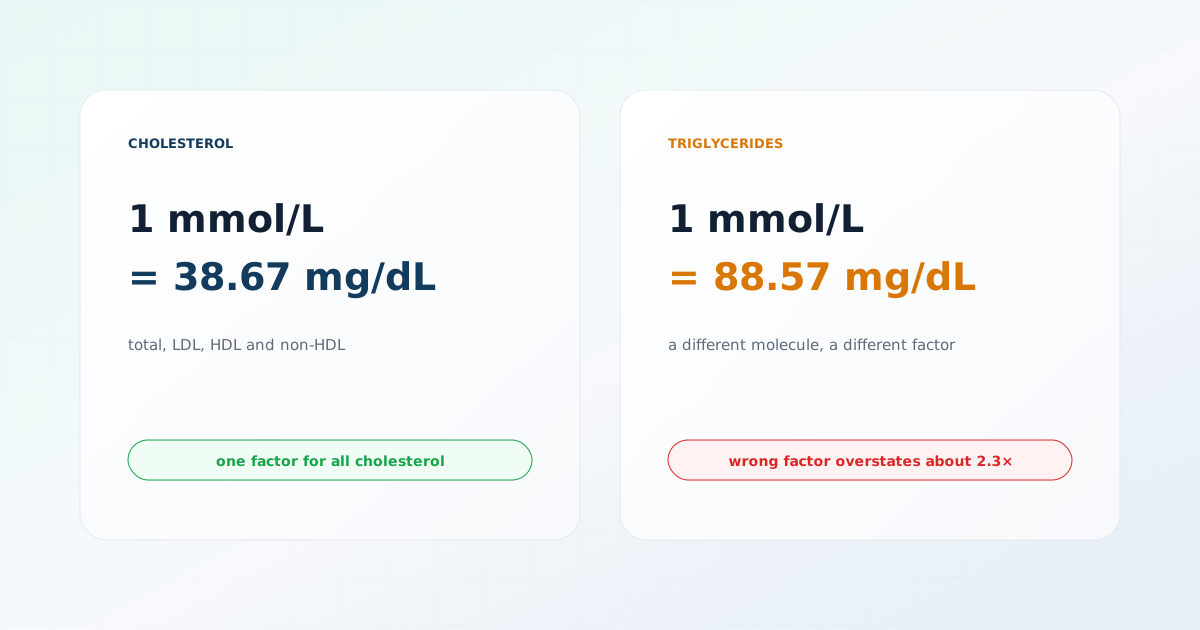
Cholesterol Units Explained: mg/dL vs mmol/L and Why Triglycerides Differ
US labs report cholesterol in mg/dL and most other countries use mmol/L. Cholesterol and triglycerides have different conversion factors, 38.67 and 88.57, and using the wrong on…
7 min read
 Heart Health
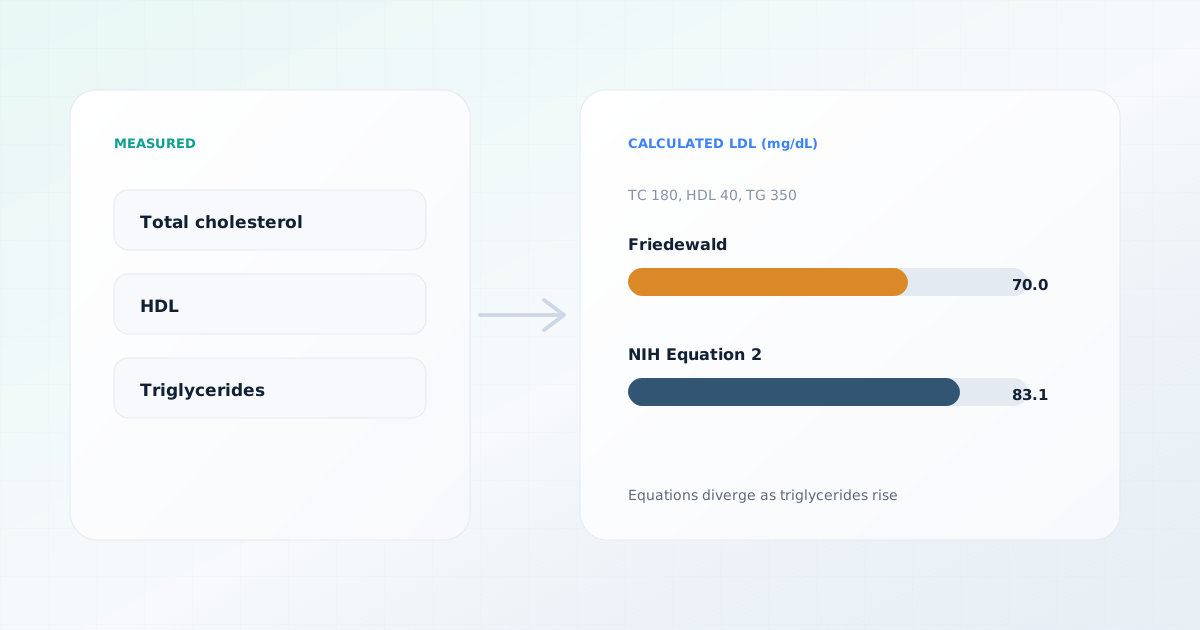
How LDL Cholesterol Is Calculated: Friedewald, NIH and Martin-Hopkins
Most labs calculate LDL cholesterol rather than measure it. The Friedewald equation from 1972 and the newer NIH Equation 2 can return different numbers for the same blood sample…
7 min read
 Heart Health
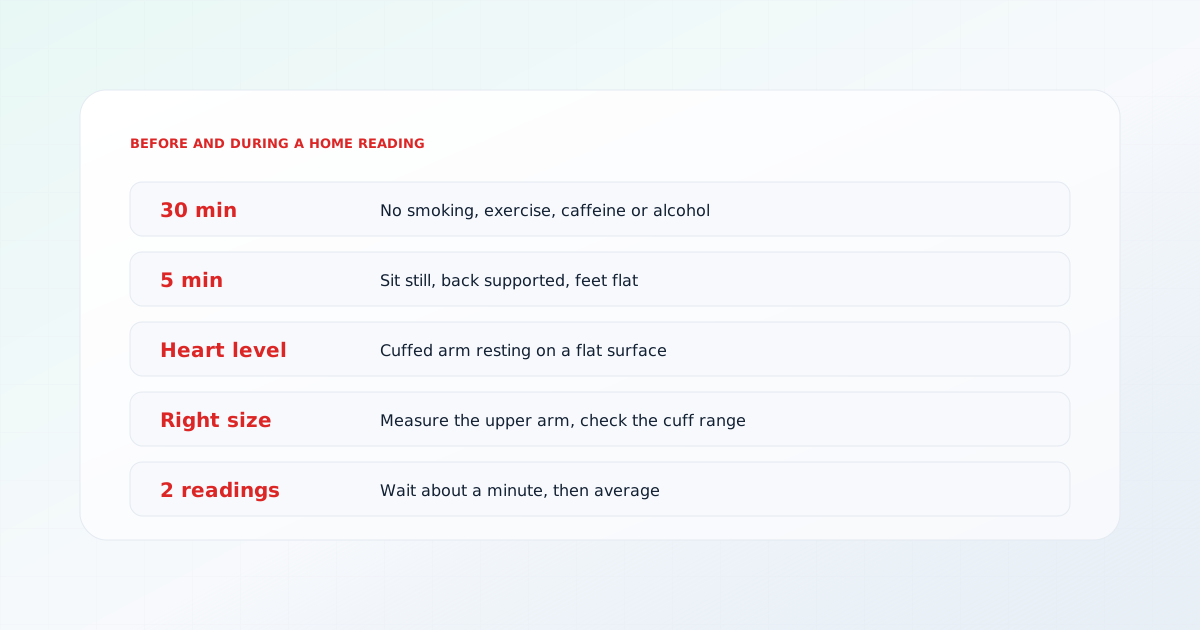
How to Measure Blood Pressure at Home Accurately: A Step-by-Step Guide
Posture, rest, cuff size and timing change a home blood pressure reading by enough to alter how it is classified. Here is the measurement routine the American Heart Association…
7 min read
 General Wellness
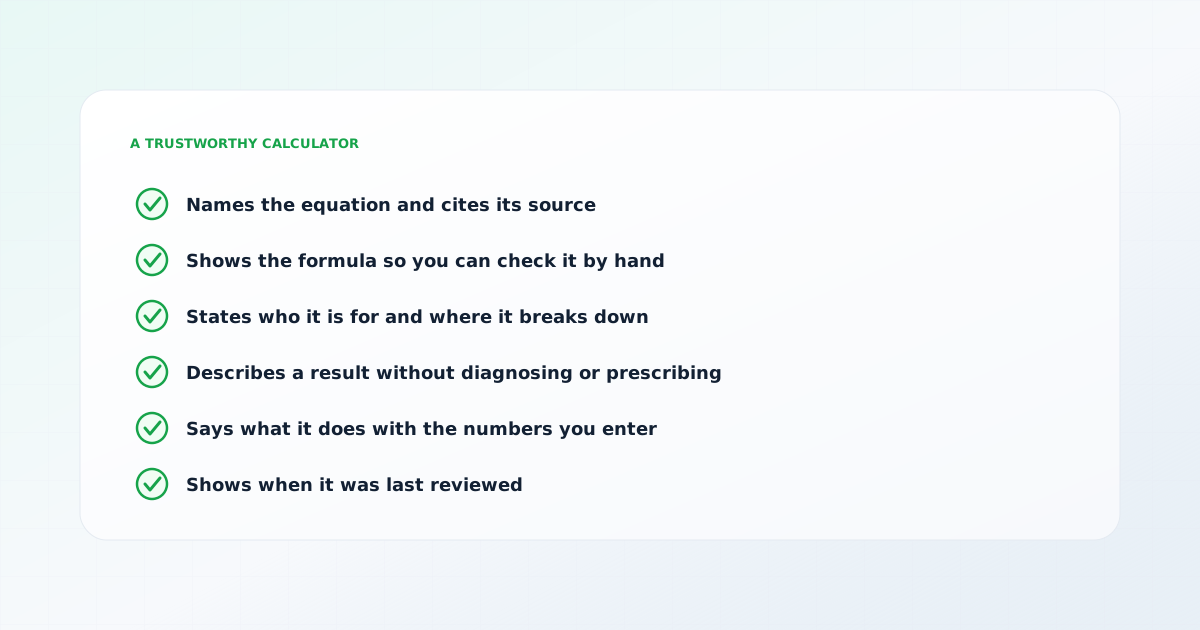
How to Judge an Online Health Calculator: A Checklist for Readers and Clinics
A health calculator is only as trustworthy as its equation, its limits and what it does with your data. This checklist shows how to tell a transparent tool from a risky one, wit…
8 min read
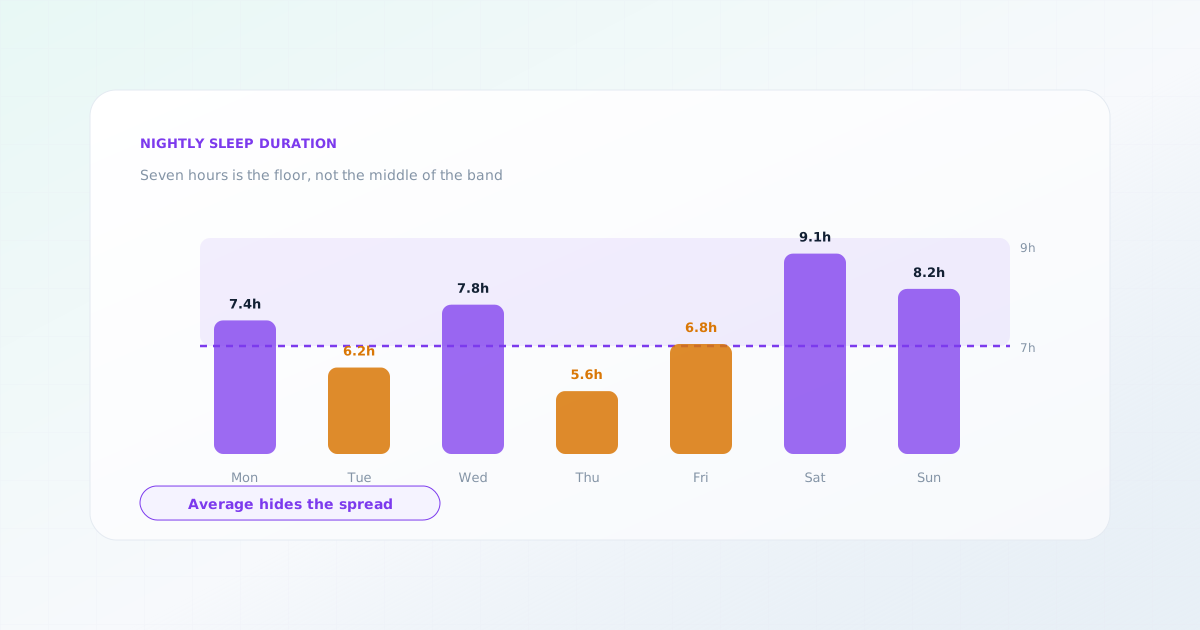 Sleep
How Much Sleep Do Adults Actually Need?
Seven or more hours a night is the figure US sleep and public health bodies converge on for adults. It is a floor rather than a target, the evidence behind it is associative, an…
8 min read
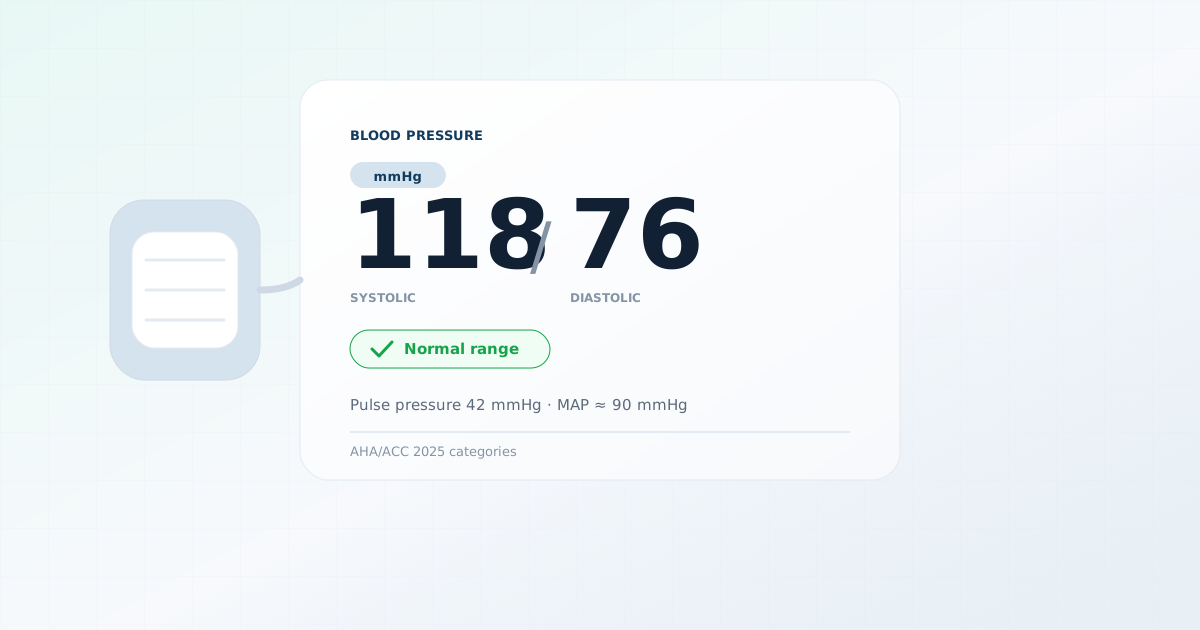 Heart Health
Understanding Blood Pressure Numbers
The top number is the pressure as your heart contracts, the bottom number is the pressure between beats. In the United States the categories come from the 2025 AHA/ACC guideline…
13 min read
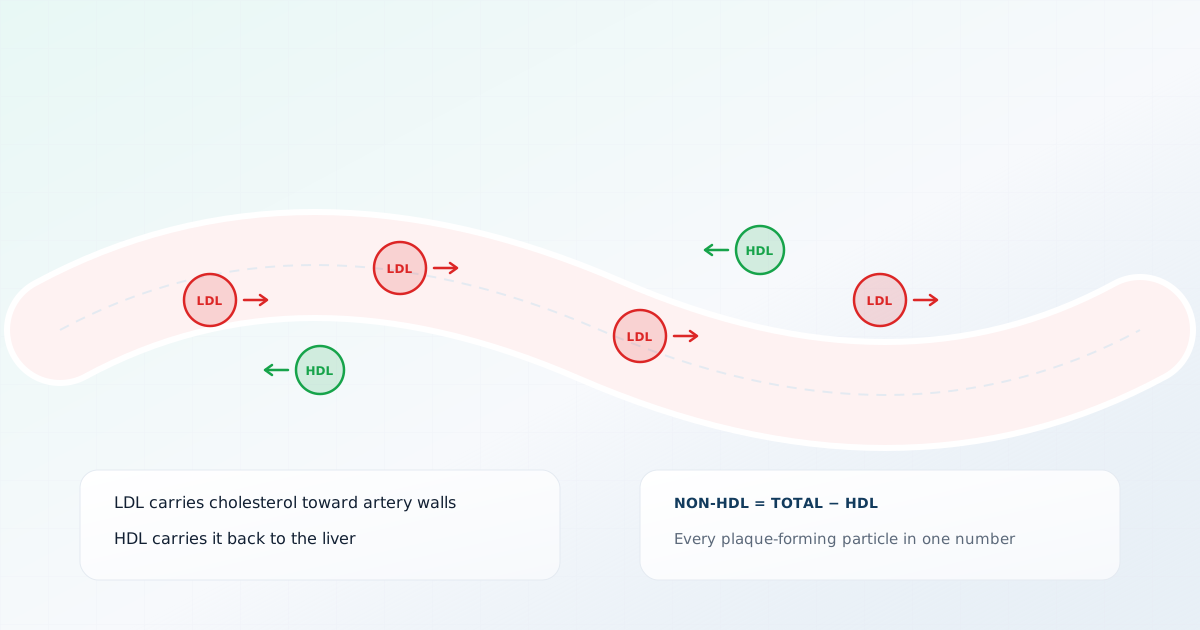 Heart Health
LDL, HDL, Triglycerides and Total Cholesterol Explained
Cholesterol travels in the blood inside particles. LDL carries it toward artery walls, HDL carries it away, and triglycerides are a separate fat in their own particles. The 2026…
13 min read
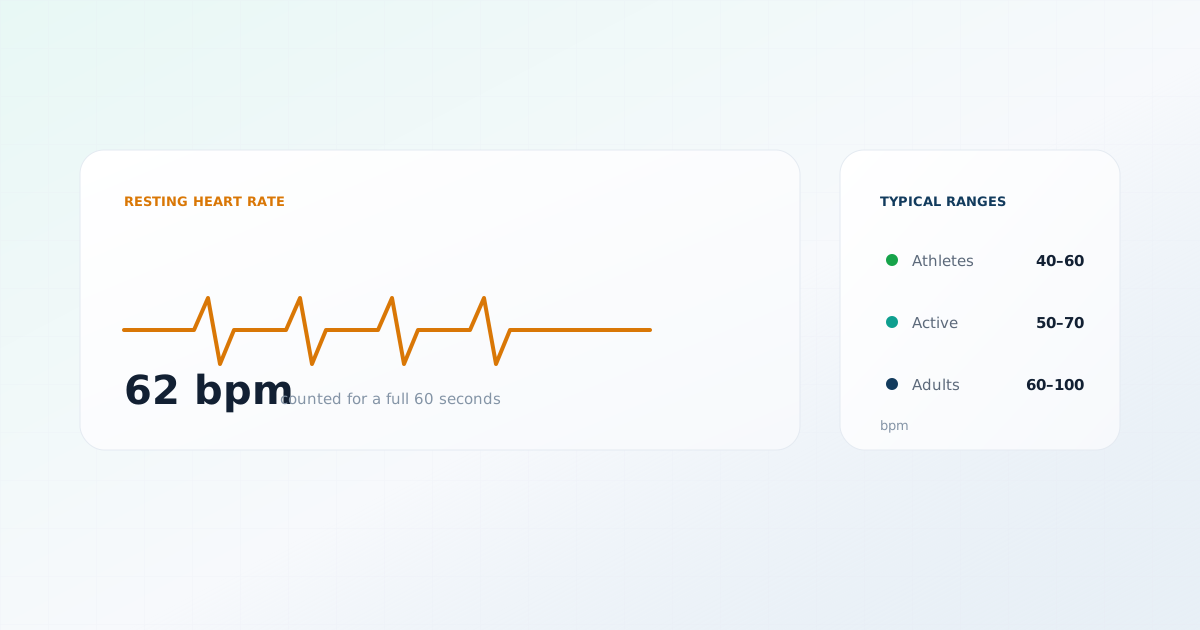 Heart Health
What Is a Normal Resting Heart Rate?
A resting heart rate of 60 to 100 beats per minute is the commonly cited adult range, though trained athletes often sit well below it. What matters more than the absolute number…
7 min read
 Heart Health
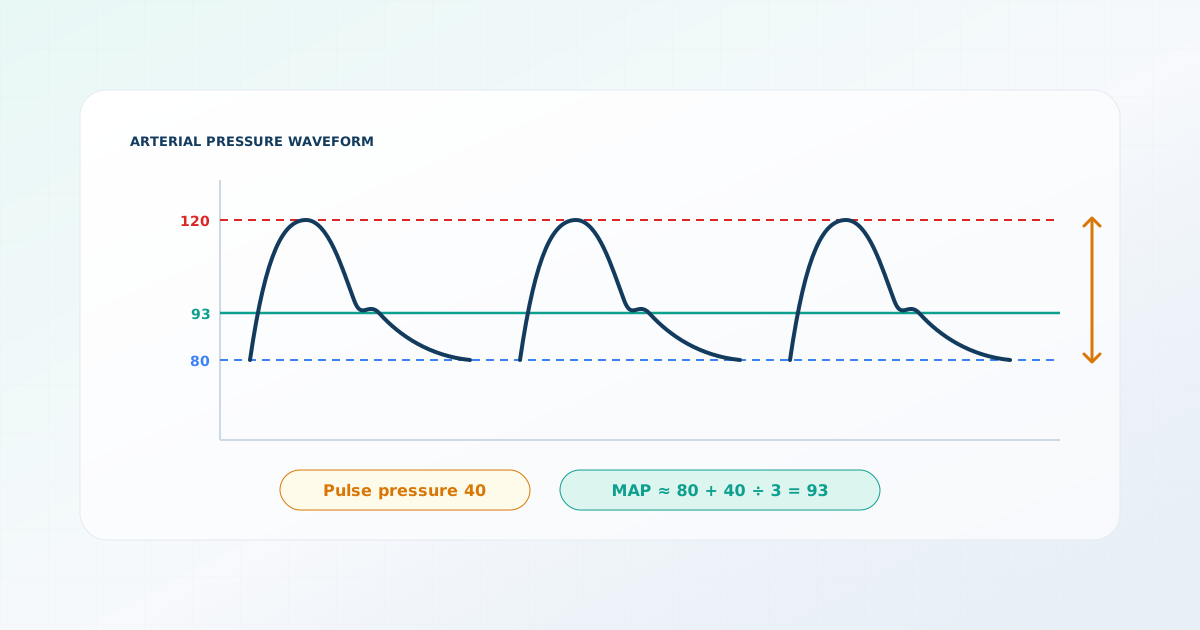
What Are Pulse Pressure and Mean Arterial Pressure?
Pulse pressure is the gap between your two blood pressure numbers and reflects large-artery stiffness. Mean arterial pressure is the average pressure across a full heartbeat, an…
8 min read
 Blood Tests
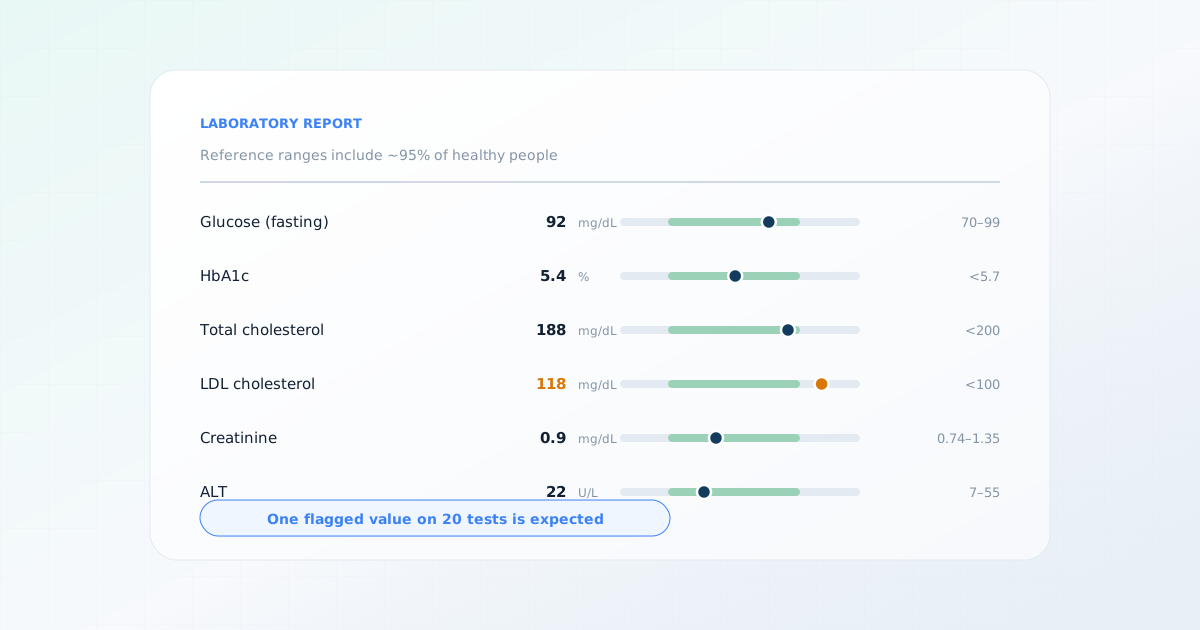
How to Read Common Blood Test Results
A reference range is built to include about 95% of a healthy population, which means roughly one result in twenty falls outside it by design. This guide explains what the most c…
9 min read
Learn this topic
Guided journeys and short quizzes. Progress is kept in your browser — no account needed.
Understand Blood Pressure
Learn what the two numbers mean, how guidelines differ, and what pulse pressure and MAP add.
5 steps
Understand Cholesterol
Work through the lipid panel: what each fraction does, what non-HDL adds, and how LDL is calculated.
4 steps
Blood Pressure Basics
Four questions on what the two numbers mean, how categories differ by region, and why one reading is never enough.
4 questions
Making Sense of Cholesterol
Four questions on LDL, HDL, triglycerides and what non-HDL cholesterol adds.
4 questions