How Heart Disease Risk Is Estimated: The PREVENT Equations Explained
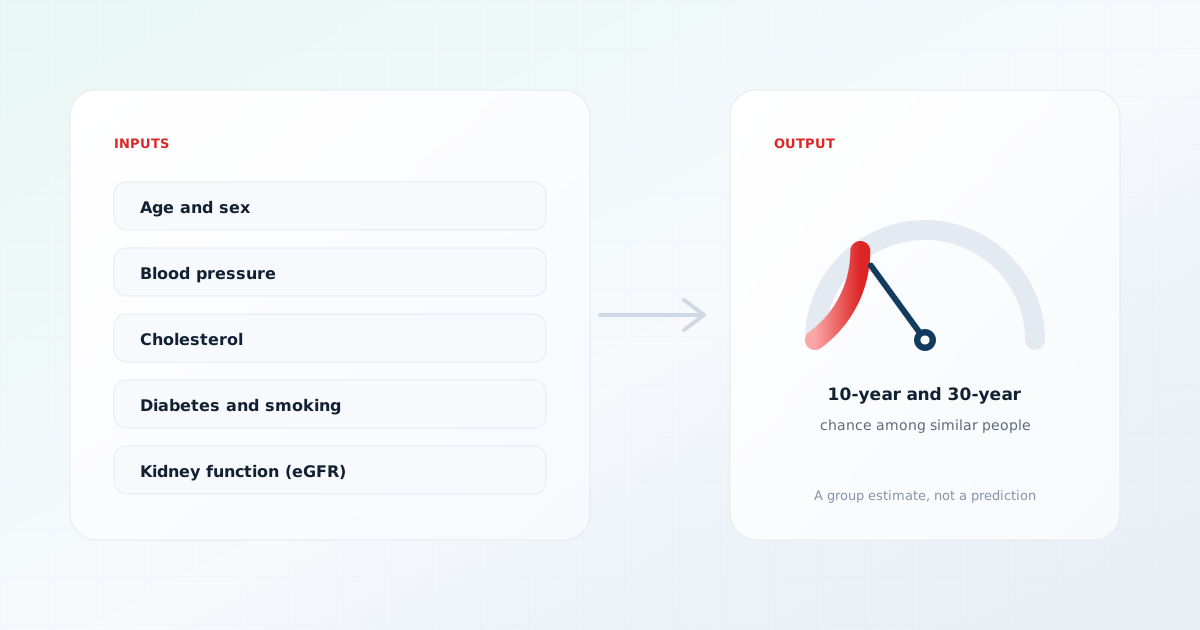
The American Heart Association’s PREVENT equations estimate a person’s 10- and 30-year risk of cardiovascular disease from blood pressure, cholesterol, diabetes, smoking, age and kidney function. Here is what goes in, what comes out and what a percentage does and does not mean.
What a risk equation is for
Most people with high blood pressure or high cholesterol do not feel unwell, and the figures alone do not say how worried to be. A cholesterol result that would be of little concern in a healthy 35-year-old can matter a great deal in a 62-year-old with diabetes who smokes. A risk equation tries to answer that question by combining several measurements into one estimate of the probability of a cardiovascular event over a defined period, such as the next ten years.
The results are used to decide where prevention is worth the most effort. Clinicians use them to guide conversations about statins and blood pressure treatment, and guidelines use them to set thresholds. The point is to focus attention where a reduction in risk will matter, and to avoid treating people whose risk is low.
- Primary prevention
- Preventing a first cardiovascular event in someone who has not had one. Risk equations are designed for this setting, as opposed to secondary prevention, which concerns people who already have established cardiovascular disease.
PREVENT: what the equations are and what is new
The PREVENT equations (Predicting Risk of cardiovascular disease EVENTs) were developed by the American Heart Association and published in Circulation. They replace the Pooled Cohort Equations, which US guidelines relied on for about a decade, and they differ in several ways that matter.
- They estimate risk over two horizons, 10 and 30 years. The longer horizon is particularly useful for younger adults, for whom a ten-year risk is low even when lifestyle changes would pay off over decades.
- They cover a broader set of outcomes. Rather than only atherosclerotic events such as heart attack and stroke, they also estimate heart failure and a combined total cardiovascular disease risk.
- They include kidney function through eGFR, reflecting the evidence that reduced kidney function raises cardiovascular risk independently.
- They were derived from large, more recent and more diverse datasets than the older equations, and they do not use race as an input.
- They allow optional inputs where available: the urine albumin-to-creatinine ratio, HbA1c and a neighborhood-level social deprivation index based on ZIP code.
The equations apply to adults roughly aged 30 to 79 who have no known cardiovascular disease, with the 30-year estimate limited to a younger part of that range. Outside those boundaries the equations were not designed to be used, and a calculator that returns a number for a 20-year-old or an 85-year-old is giving a figure that has no validated basis.
What goes in
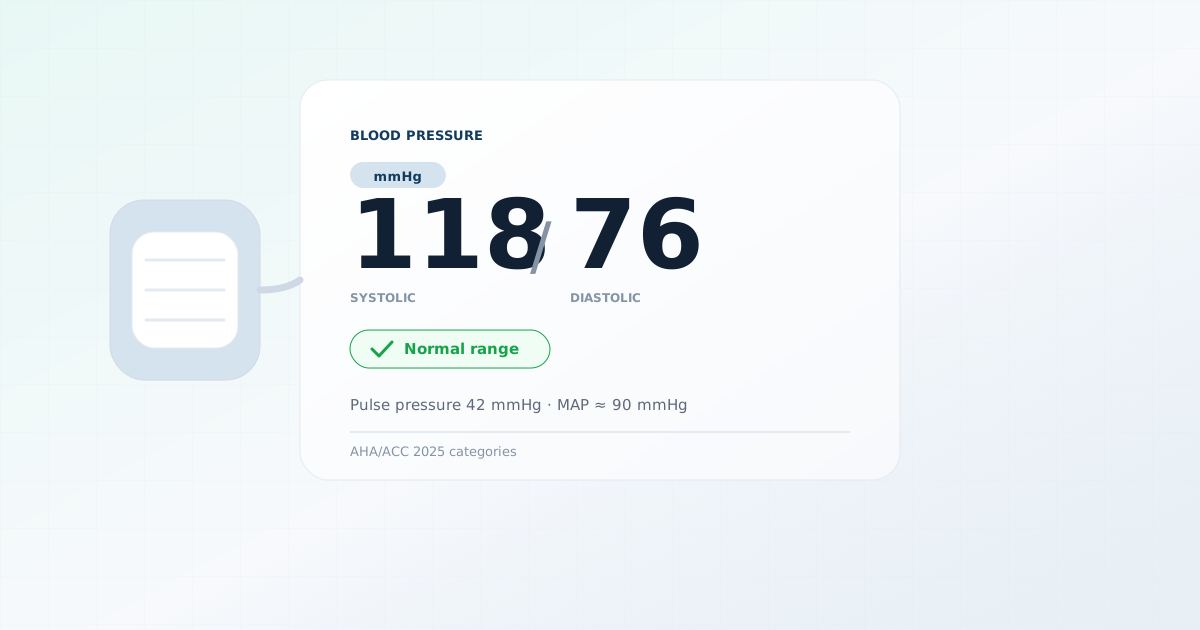
The core inputs are ordinary measurements, which is part of their appeal. Most appear on a standard checkup.
| Input | Why it matters |
|---|---|
| Age and sex | Risk rises steeply with age and differs between men and women |
| Systolic blood pressure | Higher pressure strains arteries and the heart |
| Treatment for high blood pressure | Distinguishes treated from untreated pressure at the same reading |
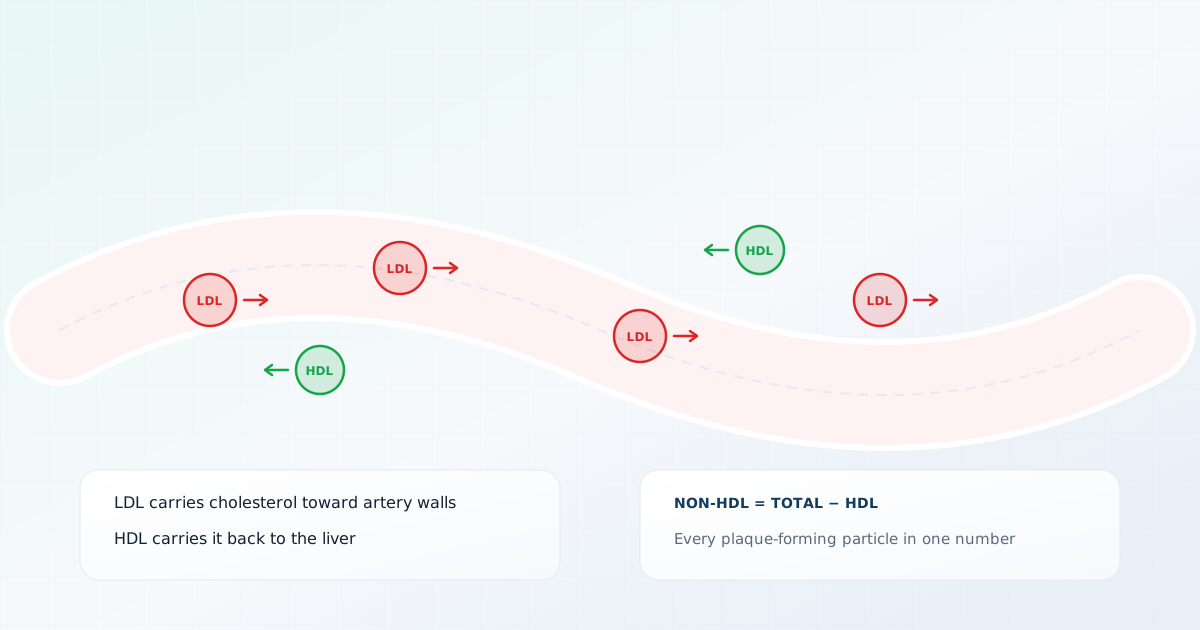
| Total cholesterol and HDL cholesterol | Summarize the lipid contribution to plaque |
| Statin use | Accounts for the effect of treatment on measured cholesterol |
| Diabetes | Raises risk substantially |
| Current smoking | One of the strongest modifiable risks |
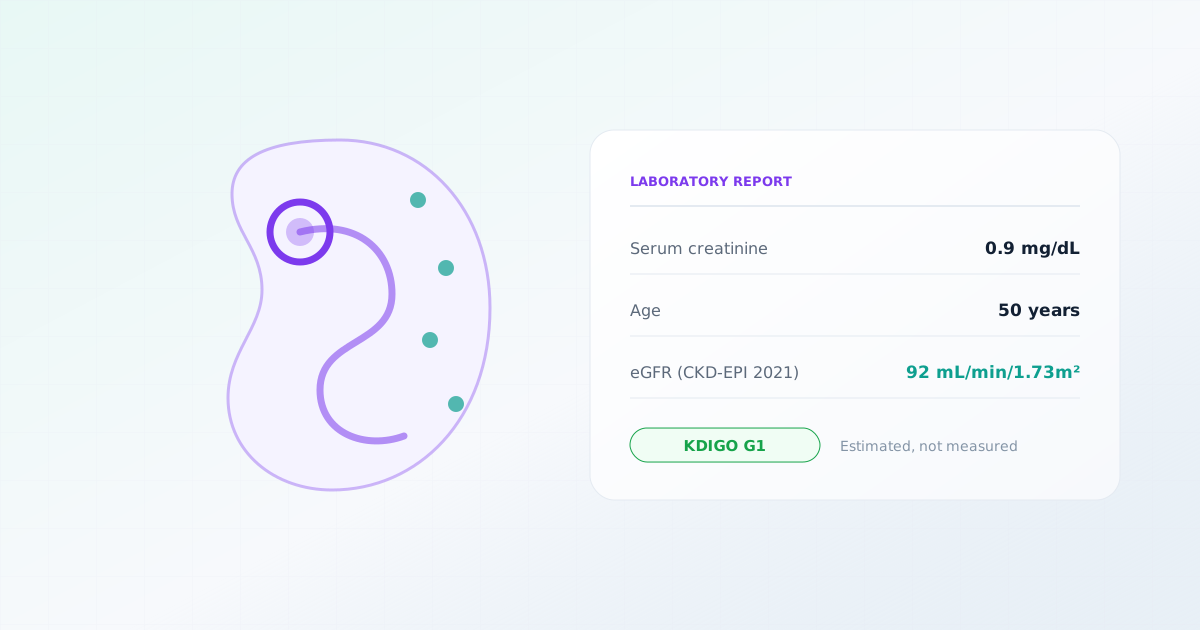
| eGFR | Reduced kidney function independently raises cardiovascular risk |
| Body mass index | Body size is associated with several cardiovascular outcomes, including heart failure |
Note what is not on the list. Family history, coronary artery calcium scores, inflammatory markers, lipoprotein(a) and many other things that a clinician may consider are not inputs, and a person with a strong family history can have a higher true risk than the equation shows. That is why clinicians treat a calculated risk as a starting point.
Try the calculatorCheck how a blood pressure reading is classifiedTry the calculatorEstimate eGFR, one of the inputsHow to read a risk percentage
A result of 6 percent over ten years does not mean you will have a heart attack, and it does not mean that 6 percent of you will. It means that among a large group of people with the same inputs, about 6 in 100 are expected to have a cardiovascular event over ten years. Nobody can tell in advance which six they will be, and the equation does not try to.
It helps to think in whole numbers of people. A risk of 6 percent means that, of 100 people like you, roughly 94 are not expected to have an event in that period. A risk of 20 percent means roughly 80 are not. Both framings are accurate, and they convey different things about the same number, which is why clinicians often present risk both ways.
Estimates from PREVENT tend to be lower
Risk is also relative to a period. A 30-year risk is always larger than the 10-year risk for the same person, simply because more time passes, so numbers from the two horizons should not be compared with one another.
What a risk estimate is used for
In clinical practice a calculated risk is combined with what the equation does not capture. Guidelines describe so-called risk-enhancing factors, such as a family history of early heart disease, chronic inflammatory conditions, a history of pregnancy complications like preeclampsia, and persistently raised triglycerides, which can move a borderline case toward treatment. Those factors are part of why two people with the same calculated risk may reasonably be advised differently.
The conversation that follows is usually about the combination of lifestyle and, where appropriate, medicines. Lifestyle measures such as not smoking, regular physical activity, a healthy eating pattern, adequate sleep and a healthy weight apply at every level of risk. Medicines such as statins and blood pressure treatment are weighed against the size of the expected benefit, the person’s preferences and possible side effects, which is a shared decision.
The 2026 guidelines from the AHA, the American College of Cardiology and partner organizations place these risk estimates inside a broader framework in which weight, blood pressure, lipids, glucose and kidney function are considered together.
Limits worth knowing about
- The equations were derived from groups of people and describe groups. They cannot tell you what will happen to one person.
- They are validated for adults roughly aged 30 to 79 without existing cardiovascular disease, and not outside that range.
- Inputs that vary from day to day, such as blood pressure and cholesterol, can move the result. A single reading taken under unusual circumstances is a weak basis for a risk estimate.
- Important contributors are missing, including family history and several newer markers.
- Performance varies between groups, and researchers continue to examine how well the equations estimate risk in different populations.
- Online calculators differ in whether they implement the published model faithfully, and a result from an unverified tool should not be relied on.
This site does not calculate cardiovascular risk
Frequently asked questions
Sources
This page is based on the following sources. Each was reviewed on the access date shown.
- Development and Validation of the American Heart Association PREVENT Equations(opens in a new tab)
Circulation (American Heart Association)
Peer-reviewed articleAccessed October 1, 2026DOI 10.1161/CIRCULATIONAHA.123.067626
- 2026 AHA/ACC/ADA/ASN Guideline for the Prevention, Detection, Evaluation, and Management of Cardiovascular-Kidney-Metabolic Syndrome(opens in a new tab)
Journal of the American College of Cardiology
Clinical guidelinePublished June 9, 2026Accessed October 1, 2026DOI 10.1016/j.jacc.2026.03.056
- 2026 ACC/AHA/Multisociety Guideline on the Management of Dyslipidemia(opens in a new tab)
Journal of the American College of Cardiology
Clinical guidelinePublished March 13, 2026Accessed October 1, 2026DOI 10.1016/j.jacc.2025.11.016
- 2025 AHA/ACC Guideline for the Prevention, Detection, Evaluation and Management of High Blood Pressure in Adults(opens in a new tab)
Circulation (American Heart Association)
Clinical guidelinePublished August 14, 2025Accessed October 1, 2026DOI 10.1161/CIR.0000000000001356