Fitness
Heart rate zones, training intensity and measuring effort.
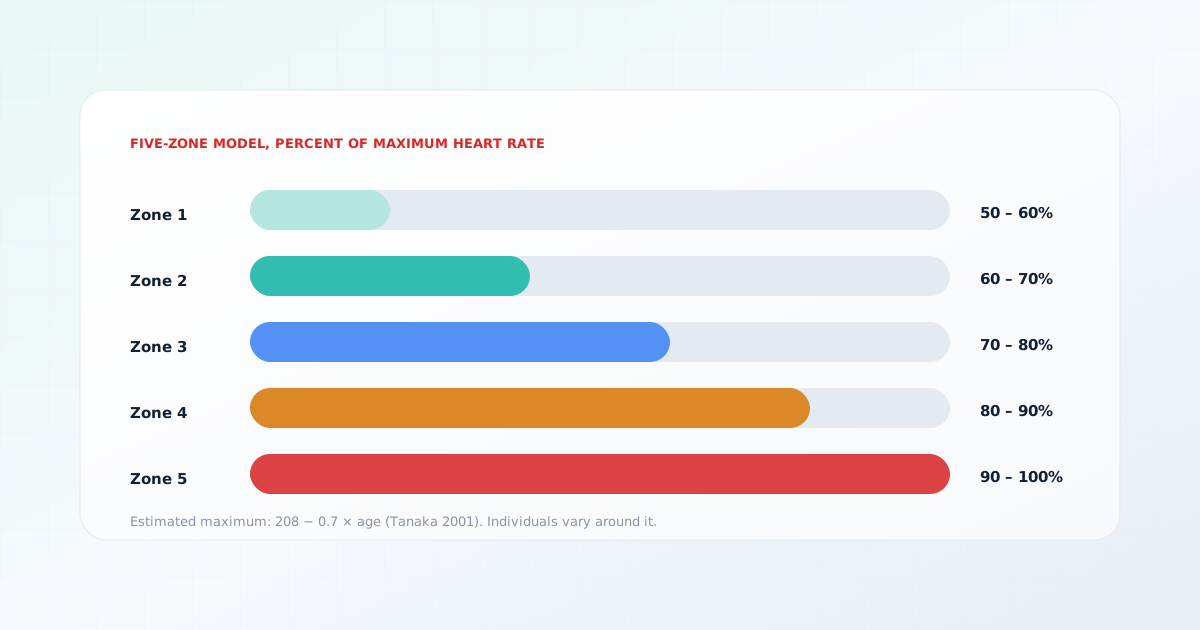
Training intensity is usually expressed as a percentage of maximum heart rate, which raises an immediate problem: almost nobody knows their actual maximum. It is estimated from age using an equation whose individual spread is roughly 10–20 beats per minute in either direction. Zones built on that estimate are still useful — they give structure to a training week — but they are guides rather than boundaries. This hub explains how the estimates are derived, when to trust perceived effort over a number, and what wrist-based monitors do and do not measure well.
Fitness tools
Calculators and converters for the measurements in this area.
Heart Rate Zones
Fitness
Estimate training heart rate zones from your age and optional resting heart rate.
Open calculator
Body Fat %
Fitness
Estimate body fat from tape measurements with the Hodgdon–Beckett circumference equations.
Open calculator
Protein Intake
Nutrition
See the protein RDA and the published ranges for older adults and regular training.
Open calculator
Macros
Nutrition
Turn a daily calorie figure into grams of carbohydrate, protein and fat inside the published ranges.
Open calculator
Fitness guides
Plain-English explanations of what these measurements mean.
 Fitness
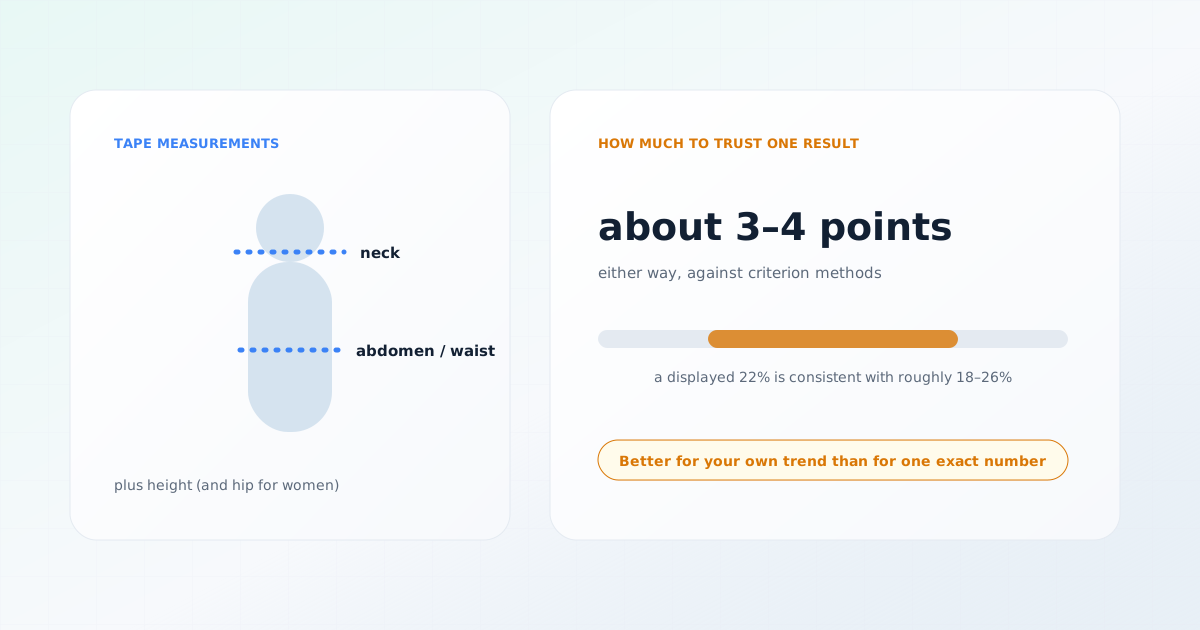
Body Fat Percentage and the Navy Tape Method: How Accurate Is It?
The tape-measure method used by the US military estimates body fat from neck, waist and height, and hip for women. It is typically accurate to within three to four percentage po…
8 min read
 Fitness
Heart Rate Zones and Maximum Heart Rate: How the Estimates Work
Maximum heart rate is usually estimated from age, using formulas such as 208 minus 0.7 times age, and training zones are percentages of that estimate. The estimate can be off by…
9 min read
 Nutrition
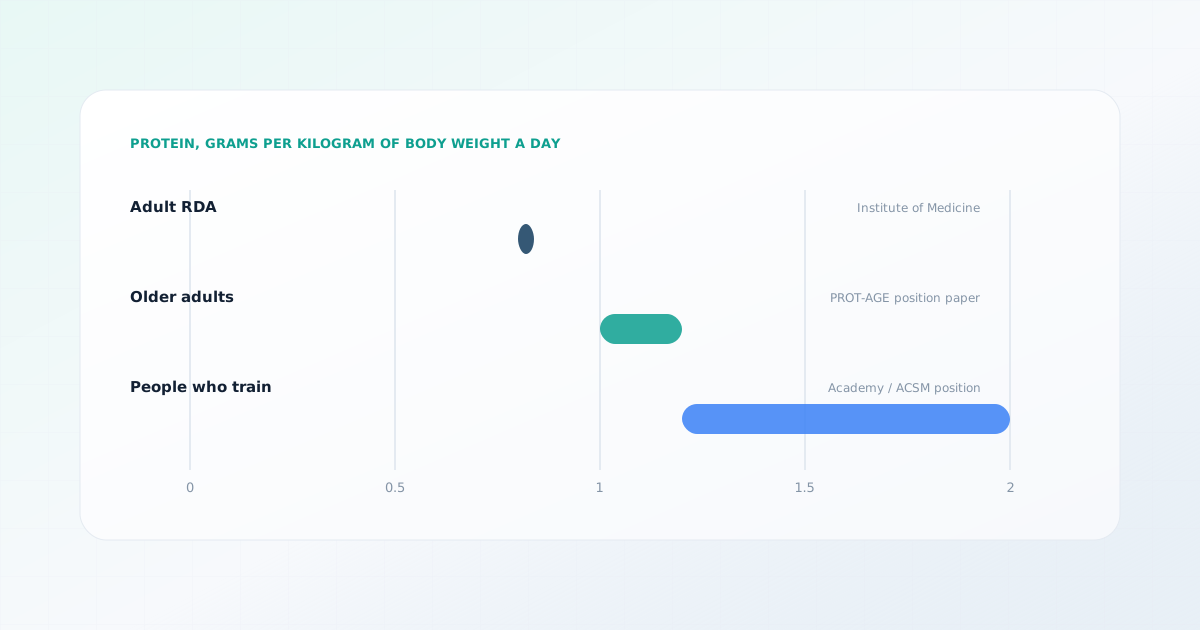
How Much Protein Do Adults Need? Three Different Answers
The US Recommended Dietary Allowance is 0.8 grams per kilogram a day, but the figure is a minimum for avoiding deficiency, and position statements for older adults and people wh…
8 min read
 Nutrition
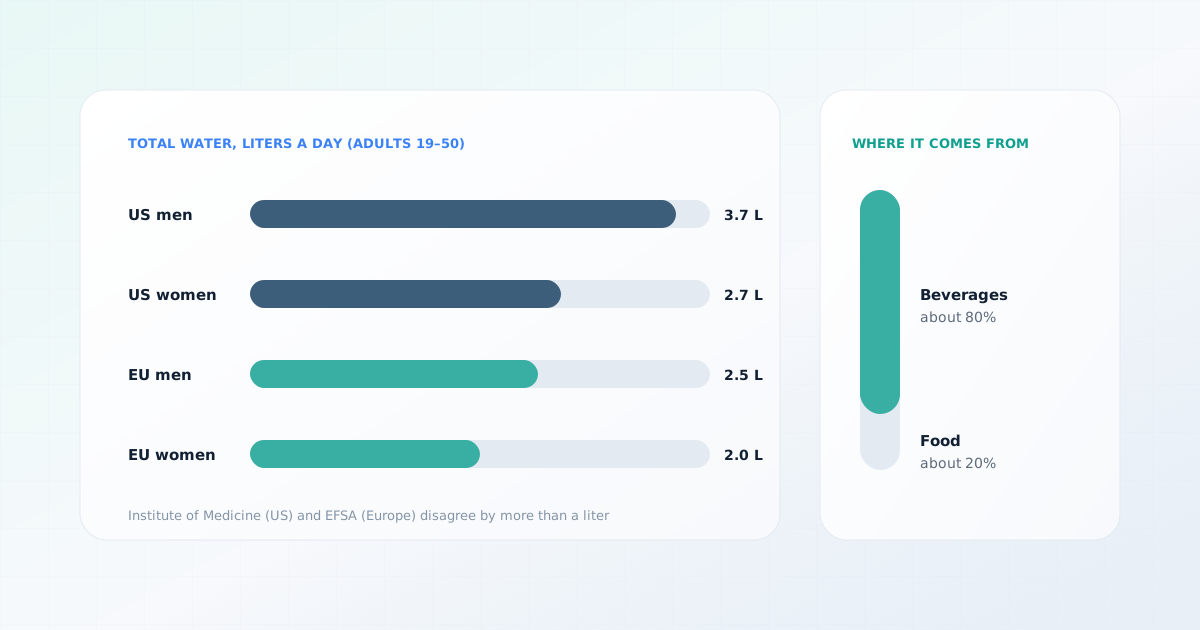
How Much Water Do You Need Each Day? What the Numbers Mean
US and European reference values for daily water intake differ by roughly a liter, they count water from food and every beverage, and thirst is a workable guide for most healthy…
8 min read
 Nutrition
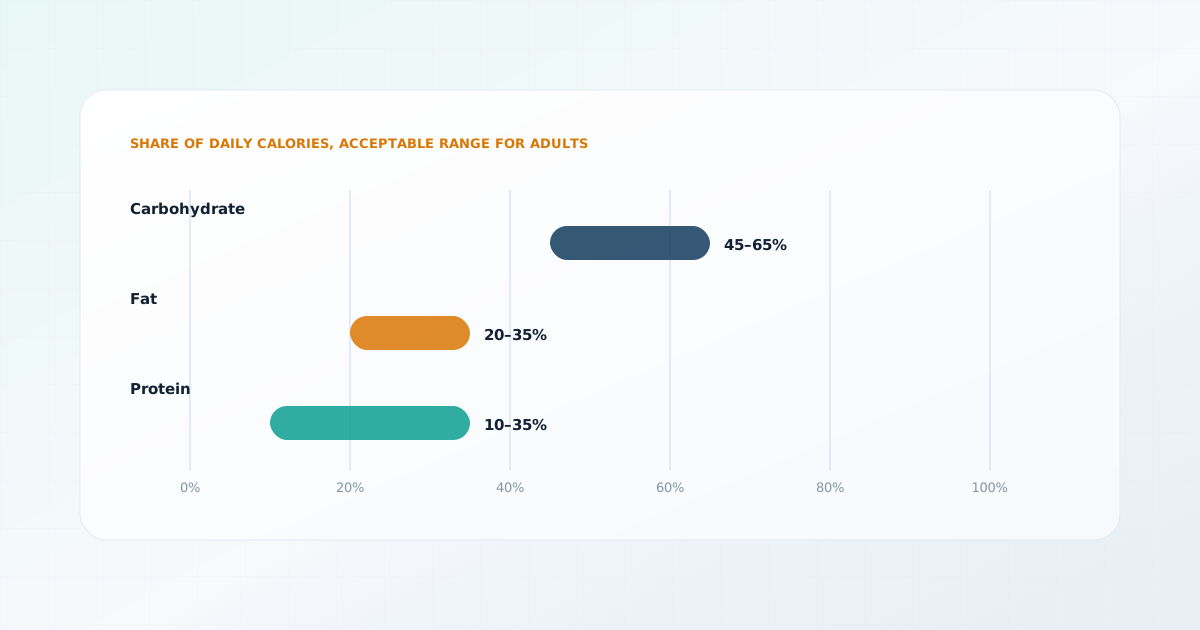
Carbs, Protein and Fat: What the Official Macronutrient Ranges Mean
US reference ranges allow carbohydrate to supply 45 to 65 percent of calories, fat 20 to 35 percent and protein 10 to 35 percent. The ranges are deliberately wide, and a split i…
8 min read
 General Wellness
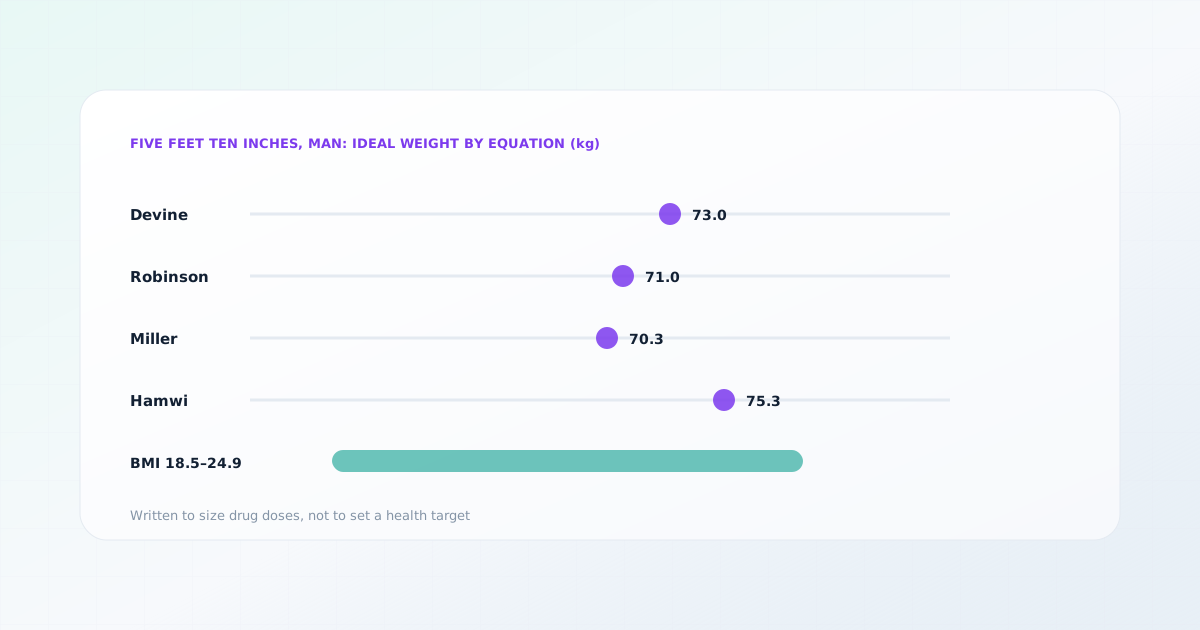
Ideal Body Weight Formulas: Where Devine, Robinson, Miller and Hamwi Came From
The four ideal body weight equations in common use were written to size drug doses, not to say what weight is healthiest. They disagree by several kilograms at the same height,…
7 min read
 Sleep
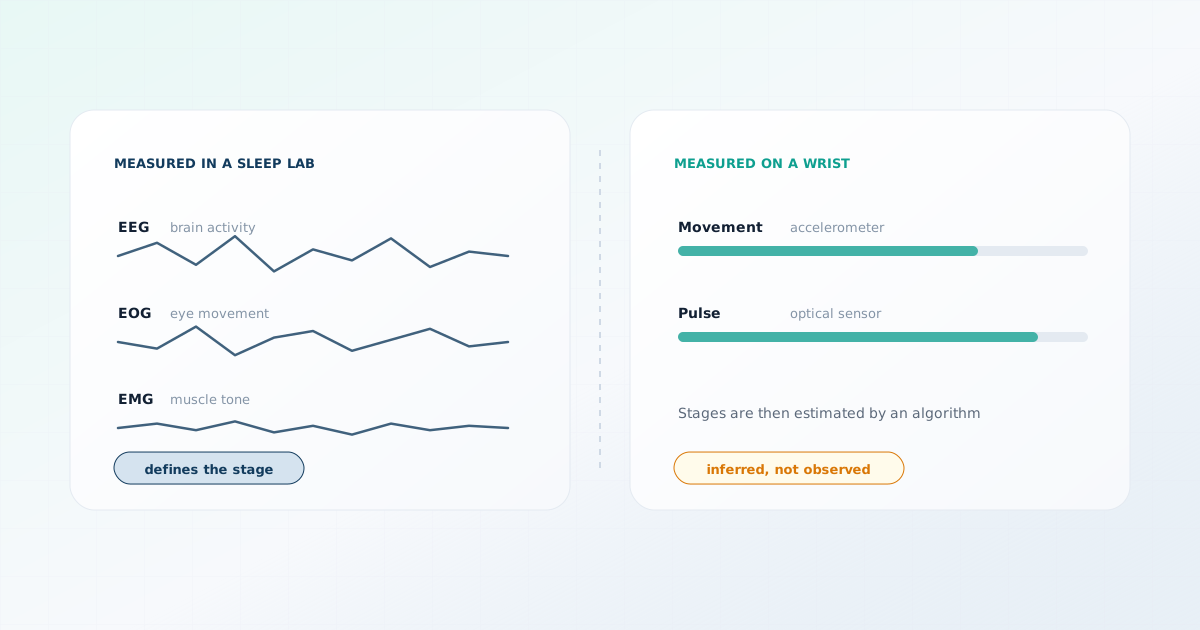
What Sleep Trackers Actually Measure
A wrist tracker measures movement and pulse, then infers sleep from them. Total sleep time comes out reasonably well; the stage percentages are estimates from an algorithm that…
8 min read
 Men's Health
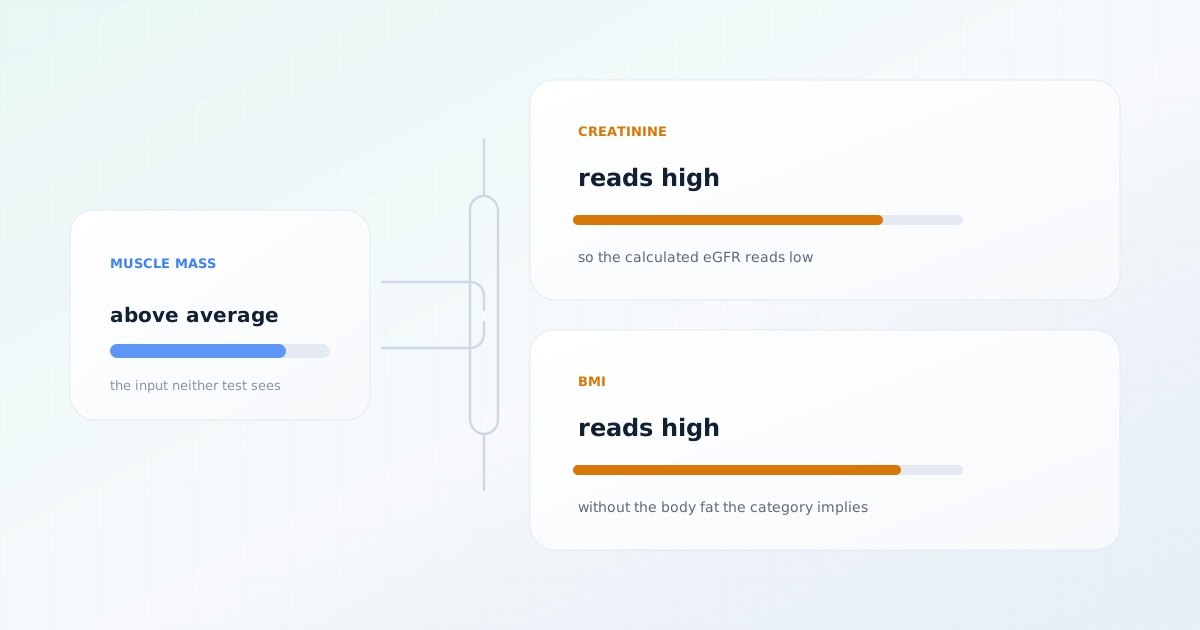
How Muscle Mass Distorts Creatinine, eGFR and BMI
Creatinine comes from muscle, so more muscle means a higher blood creatinine at the same kidney function — which is why eGFR equations carry a sex term. The same muscle shifts B…
8 min read
 Heart Health
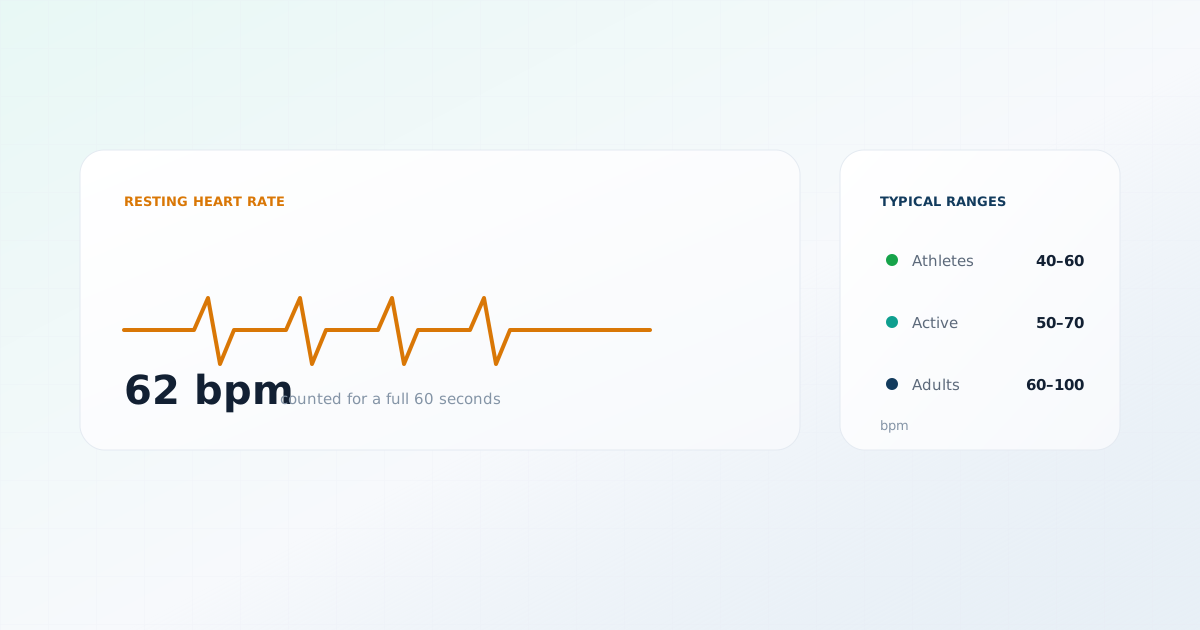
What Is a Normal Resting Heart Rate?
A resting heart rate of 60 to 100 beats per minute is the commonly cited adult range, though trained athletes often sit well below it. What matters more than the absolute number…
7 min read
 Nutrition
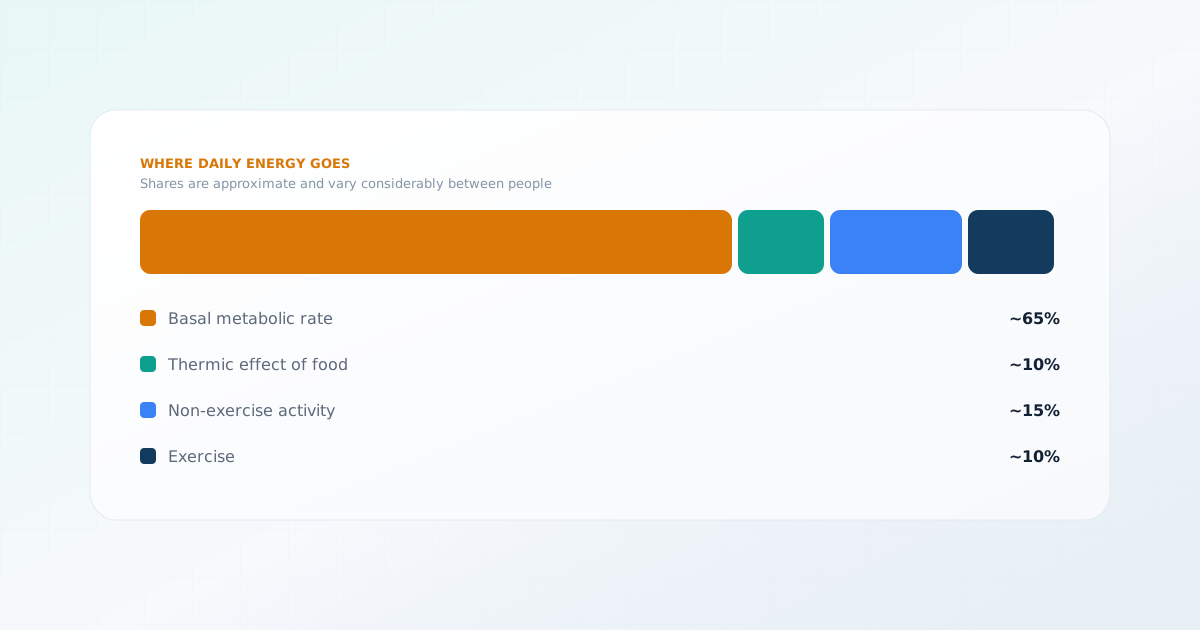
BMR vs TDEE: Understanding Daily Calorie Needs
BMR is the energy your body uses at complete rest; TDEE adds everything else you do. Both are predicted from equations rather than measured, and the predictions carry a margin o…
8 min read