Iron, Hemoglobin and Ferritin: Why the Ranges Differ for Women
Hemoglobin reference ranges are lower for women and ferritin ranges differ too, largely because menstrual blood loss makes iron deficiency far more common before menopause. Ferritin can also be low while hemoglobin is still within range.
Two reference ranges for the same test
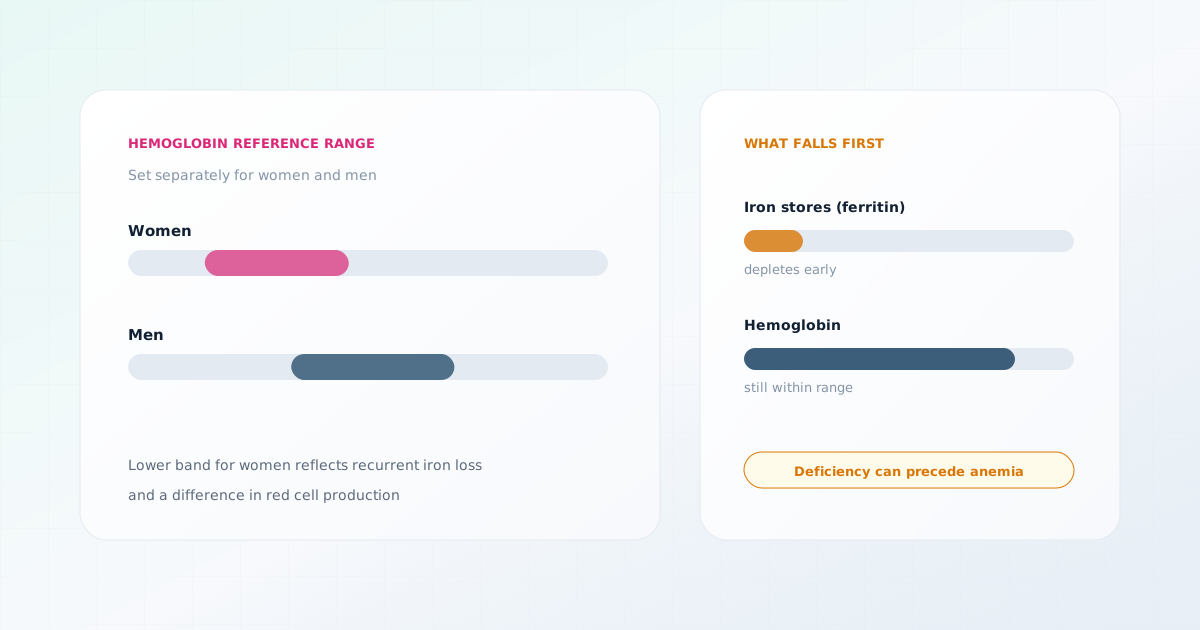
A complete blood count reports hemoglobin and hematocrit against a reference range, and on almost every laboratory report that range is sex-specific. The band for women sits below the band for men, typically by about 1 g/dL of hemoglobin. The same is true of hematocrit, which measures the proportion of blood volume occupied by red cells.
The exact numbers differ between laboratories, which is why a result should always be read against the range printed beside it rather than against a figure found elsewhere. The sex difference itself, however, is consistent across laboratories and across national guidelines.
- Reference range
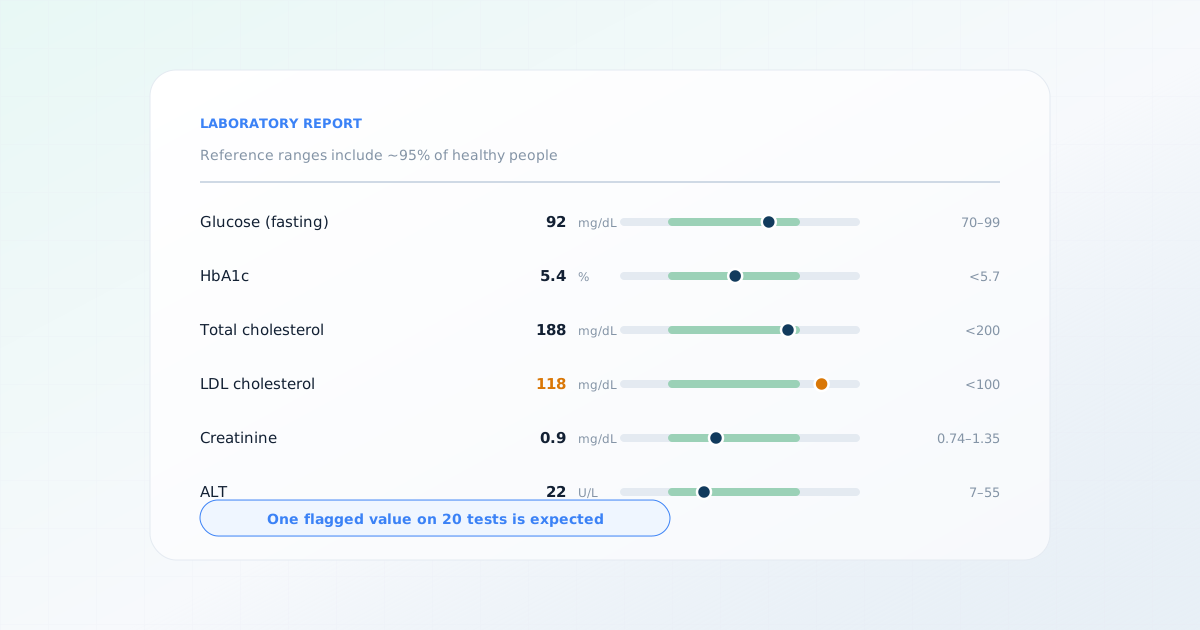
- The interval containing the results of most people in a defined healthy population, conventionally the central 95%. It is a description of a population, not a statement about what is healthy for any individual — which is why 1 in 20 healthy people fall outside it by construction.
Why "normal" is the wrong word
Why the range for women is lower
Two mechanisms account for most of the difference, and they pull in the same direction.
- Recurrent blood loss. Menstruation removes iron every cycle, and iron is the limiting ingredient for making hemoglobin. Over years, that loss has to be matched by absorption from the diet, which is often marginal.
- Hormonal drive to red cell production. Testosterone stimulates the production of red blood cells, so the average level is higher in men for reasons unrelated to iron supply.
The relative contribution shows up in what happens after menopause. Hemoglobin levels in women rise somewhat once menstrual loss stops, moving toward the male range without reaching it — which is consistent with blood loss explaining part of the gap and the hormonal difference explaining the rest.
This has a practical consequence worth stating plainly. A lower reference range for women is a description of a population in which iron deficiency is common, not an assertion that a lower hemoglobin is optimal. A result at the bottom of the female range is still worth a conversation if there are symptoms to go with it.
Ferritin, and why it falls first
Hemoglobin measures the oxygen-carrying protein currently circulating. Ferritin is a different kind of measurement: it estimates how much iron is held in storage. The two change at different points in the same process.
| Stage | Iron stores | Hemoglobin | What a report shows |
|---|---|---|---|
| Replete | Full | In range | Both results unremarkable |
| Storage depletion | Falling | In range | Ferritin low, hemoglobin still in range |
| Iron-deficient production | Empty | Falling but may stay in range | Red cells begin to appear smaller and paler |
| Iron deficiency anemia | Empty | Below range | Both results abnormal |
This sequence explains a common and genuinely confusing situation: feeling persistently tired, being told the blood count is within range, and still having depleted iron stores. The complete blood count alone does not measure iron stores. Ferritin does, and it is a separate test that has to be requested.
Ferritin has an important catch
How much iron is recommended, and why the figures differ
The NIH Office of Dietary Supplements publishes the Recommended Dietary Allowances for iron, and the sex difference in them is larger than most people expect.
| Group | RDA (mg/day) |
|---|---|
| Women aged 19–50 | 18 |
| Women aged 51 and over | 8 |
| Men aged 19 and over | 8 |
| Pregnancy | 27 |
| Lactation (19–50) | 9 |
Absorption complicates the picture further. Iron from meat, poultry and fish is absorbed considerably more readily than iron from plant sources, so two diets providing the same milligrams of iron can deliver quite different amounts. Vitamin C taken with a meal improves absorption of the plant form; tea and coffee with a meal reduce it.
Do not start iron supplements on the basis of symptoms alone
Pregnancy changes the interpretation again
During pregnancy, plasma volume expands proportionally more than red cell mass does. The result is that hemoglobin concentration falls even when the total quantity of hemoglobin in the body has increased — a dilution effect rather than a loss.
Because of this, pregnancy has its own hemoglobin thresholds, which differ by trimester, and they are not the non-pregnant ones. Iron requirements rise substantially at the same time, to 27 mg per day, which is why iron is a standard component of prenatal supplementation and why anemia screening is part of routine prenatal care.
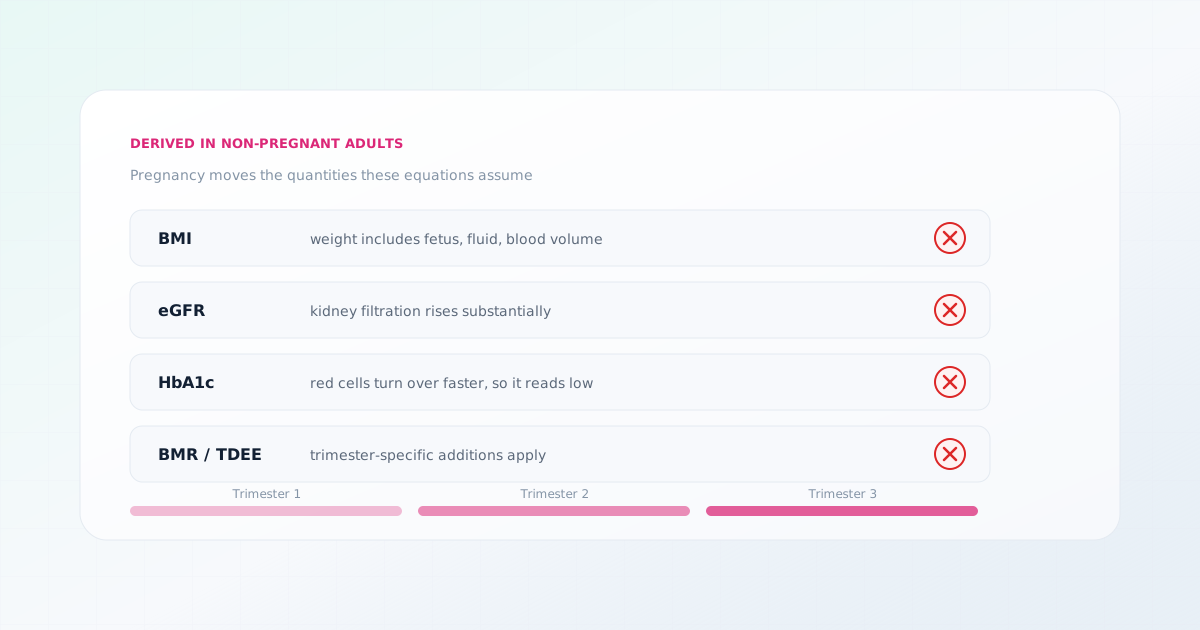
The general point generalizes beyond iron: several standard reference ranges and calculators do not carry over into pregnancy, and the frame has to come from a maternity care team rather than from a general-population figure.
Try the calculatorRelated: what BMI does and does not measureWhat is worth raising with a clinician
Iron deficiency is common, and it is also a finding with a cause. Identifying the cause matters at least as much as correcting the number, because recurrent blood loss from elsewhere can present the same way as menstrual loss.
- Persistent fatigue, breathlessness on mild exertion, unusual pallor, brittle nails, hair shedding, or an urge to chew ice are all worth mentioning together rather than individually.
- Heavy menstrual bleeding — soaking through protection hourly, passing large clots, or periods lasting more than seven days — is a treatable cause and is frequently under-reported.
- Iron deficiency in a postmenopausal woman, or in any man, needs its source investigated, because menstrual loss is not the explanation.
- If a complete blood count came back within range but symptoms persist, asking specifically whether ferritin was measured is a reasonable question.
- Any blood in the stool, or black tarry stools, should be reported promptly.
What this page can and cannot do
Frequently asked questions
Sources
This page is based on the following sources. Each was reviewed on the access date shown.
- Iron — Health Professional Fact Sheet(opens in a new tab)
NIH Office of Dietary Supplements
Government health agencyAccessed October 1, 2026
- Anaemia — WHO fact sheet(opens in a new tab)
World Health Organization
Government health agencyAccessed October 1, 2026
- Ferritin Blood Test(opens in a new tab)
MedlinePlus (US National Library of Medicine)
Government health agencyAccessed October 1, 2026
- Hematocrit Test(opens in a new tab)
MedlinePlus (US National Library of Medicine)
Government health agencyAccessed October 1, 2026
- Medical Tests(opens in a new tab)
MedlinePlus (US National Library of Medicine)
Government health agencyAccessed September 27, 2026