Sleep
Sleep duration, quality and what trackers actually measure.
Sleep has fewer clean numbers than most areas of health, and the numbers that consumer devices report are the least well validated. Total sleep duration is measured reasonably well by modern trackers; sleep *stages* are inferred from movement and heart rate rather than measured, and agree only moderately with polysomnography, the laboratory standard. This hub covers what sleep measurements mean, how resting heart rate and heart rate variability relate to recovery, and how to read a sleep score without over-interpreting it.
Sleep guides
Plain-English explanations of what these measurements mean.
 Sleep
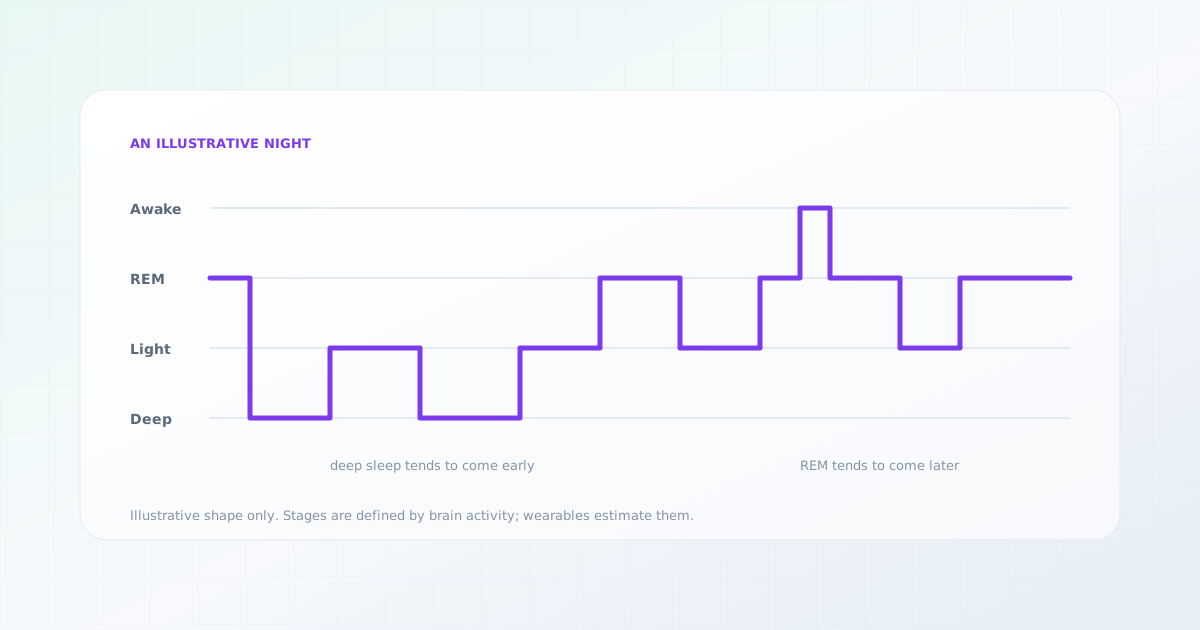
Sleep Stages Explained: Light, Deep and REM Sleep
Sleep cycles through NREM stages and REM sleep, each defined by brain and muscle activity. Understanding what the stages are, and why a wrist device can only estimate them, help…
7 min read
 Sleep
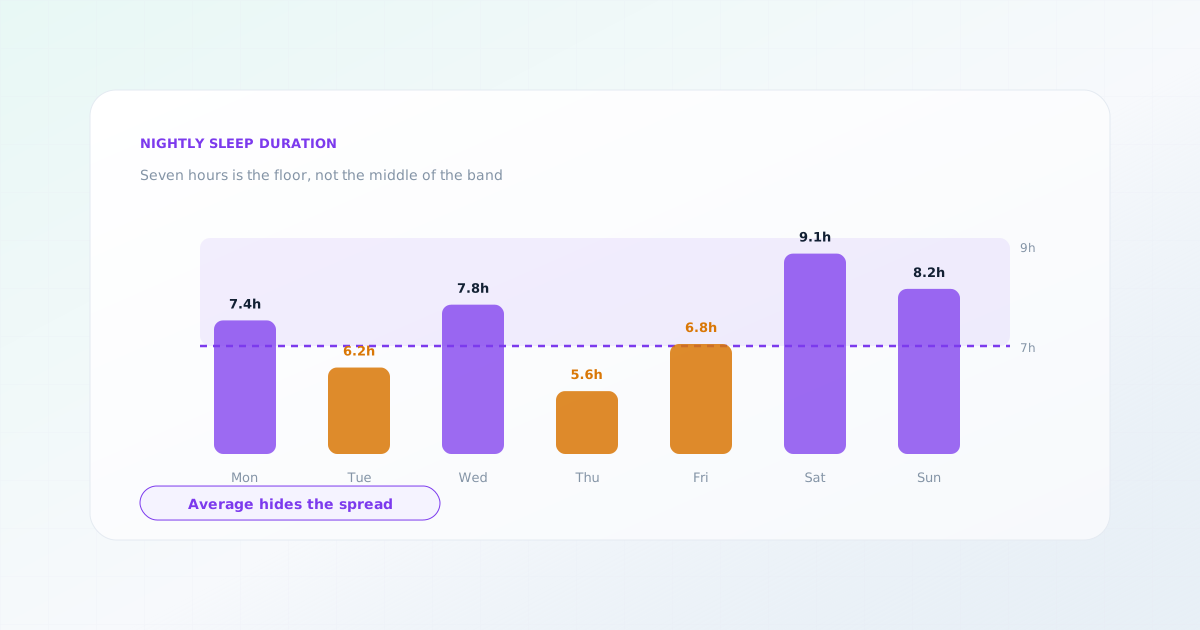
How Much Sleep Do Adults Actually Need?
Seven or more hours a night is the figure US sleep and public health bodies converge on for adults. It is a floor rather than a target, the evidence behind it is associative, an…
8 min read
 Sleep
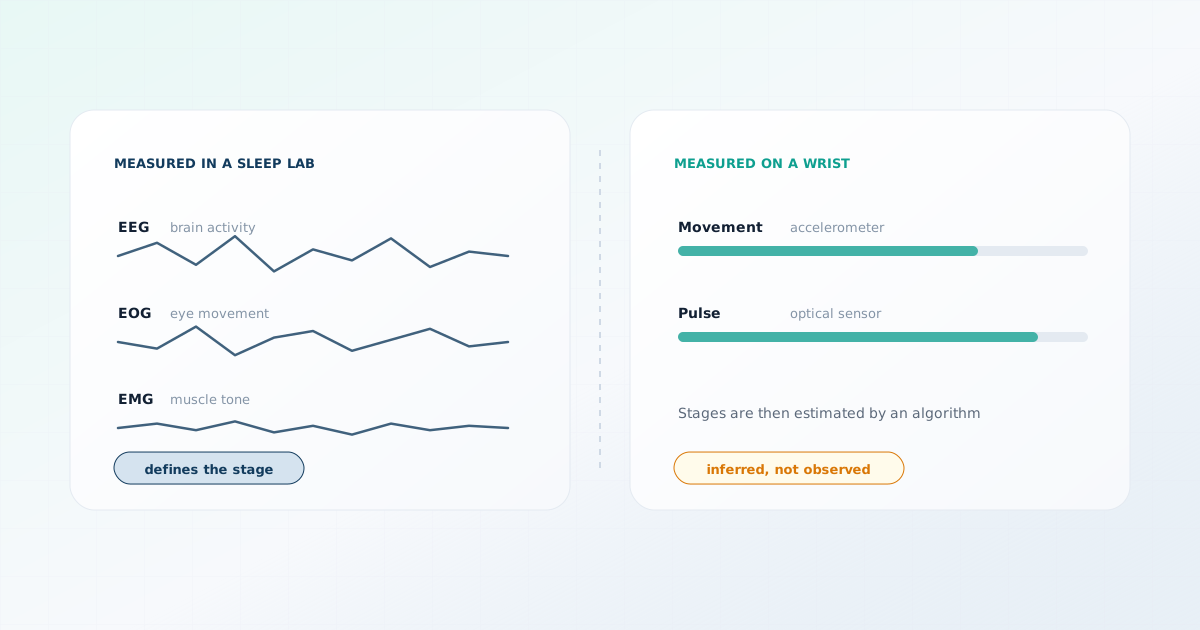
What Sleep Trackers Actually Measure
A wrist tracker measures movement and pulse, then infers sleep from them. Total sleep time comes out reasonably well; the stage percentages are estimates from an algorithm that…
8 min read
 Heart Health
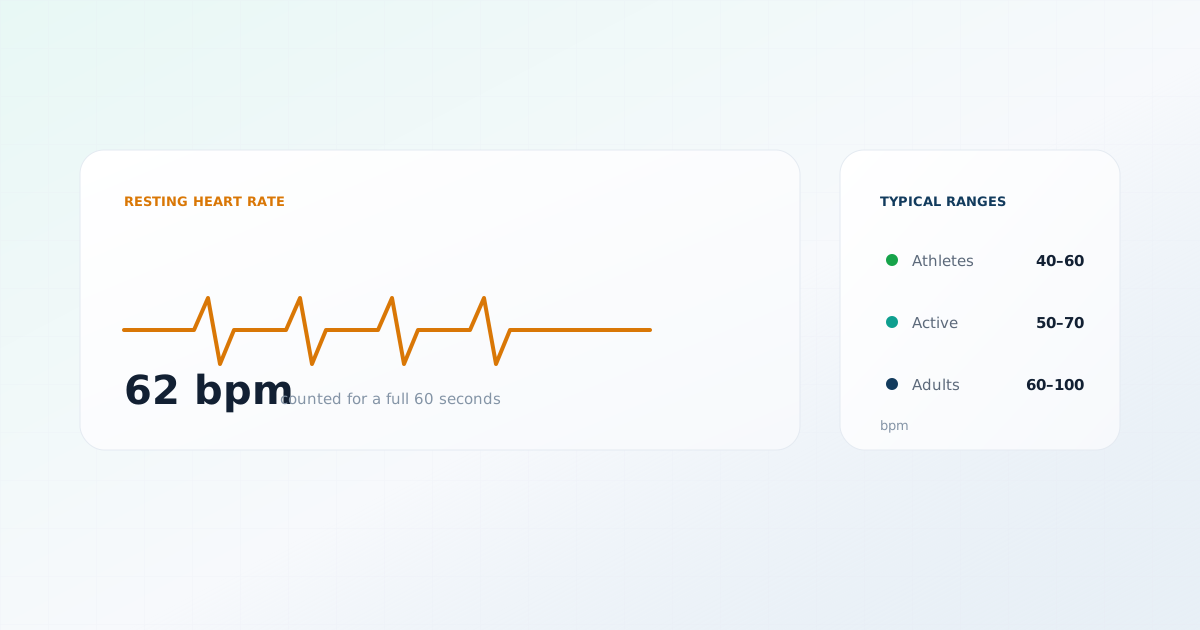
What Is a Normal Resting Heart Rate?
A resting heart rate of 60 to 100 beats per minute is the commonly cited adult range, though trained athletes often sit well below it. What matters more than the absolute number…
7 min read